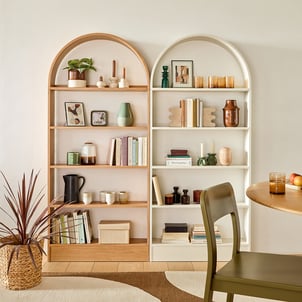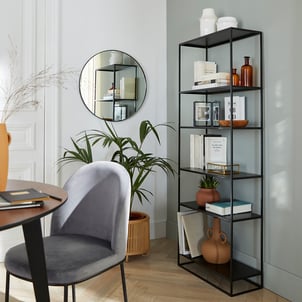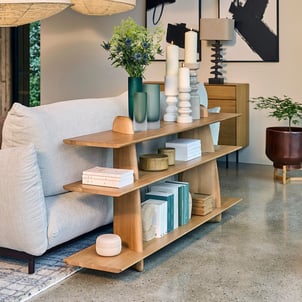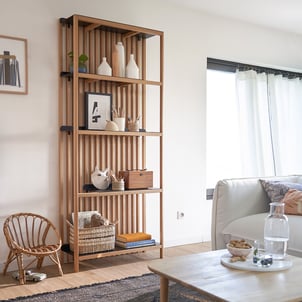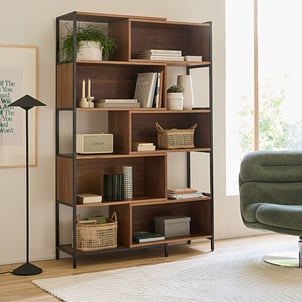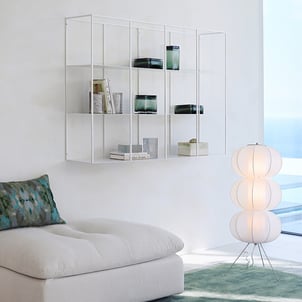

A bookcase can fit against a wall yet still be wrong for your books. Shelves may be too shallow for larger volumes, too widely spaced for paperbacks or unable to carry the weight you intend. The best choice starts with what you need to store, then considers strength, placement and daily use. Whether you are furnishing a living room or finding space for work materials, a few careful checks make the decision clearer. Here, we explain which measurements matter, how to read load information and how to choose shelving that remains useful when the contents change.
What shelf depth do your books actually need?
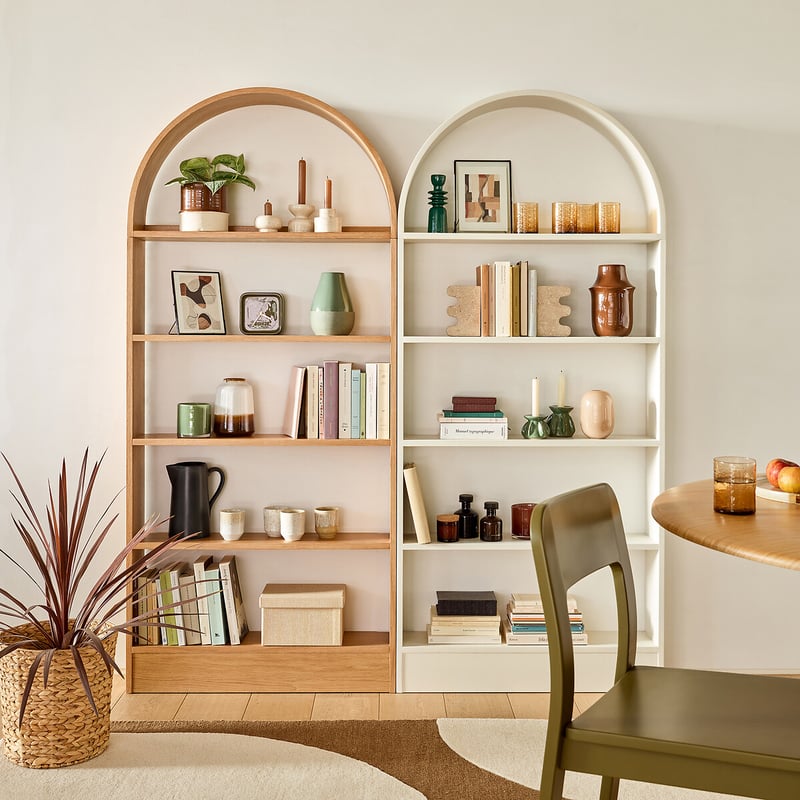
Start with the contents, not the furniture dimensions. Gather a representative selection of your books, including the tallest and the ones that reach furthest from spine to page edge. Stand them as you would on a shelf, then measure their height and depth. Include folders or storage boxes if they will share the unit. For office storage, check the outside dimensions of the files you use rather than assuming they match the paper inside. This gives you a working size to match, rather than a vague idea of how much shelving you need. You can then compare units against real requirements. Next, distinguish overall depth from usable shelf depth. The outside measurement may include a back panel, doors or a projecting frame, so it does not always tell you how much room your books have. Around 25 cm (10 inches) of usable depth accommodates many everyday books, but larger illustrated volumes need checking individually. There is no single standard depth that suits every collection. Look at the internal measurements and any drawings provided. If these are missing, ask before choosing. Also allow enough space above the books to take them out comfortably, rather than matching their height exactly to the shelf opening. Deeper is not automatically more useful. A deep bookcase can suit large volumes, but small paperbacks placed in two rows leave the back row difficult to see and reach. If you need only a shallow shelf, extra depth takes space from the room without helping retrieval. Conversely, choosing a narrow unit and letting heavy books project beyond its front edge is not a sound way to gain capacity. We would suggest you separate awkward sizes: give oversized books a suitable compartment rather than making every shelf larger. Check adjustable shelf positions too, because their spacing determines whether you can create the openings your contents actually need.
How can you tell whether shelves will carry the load?
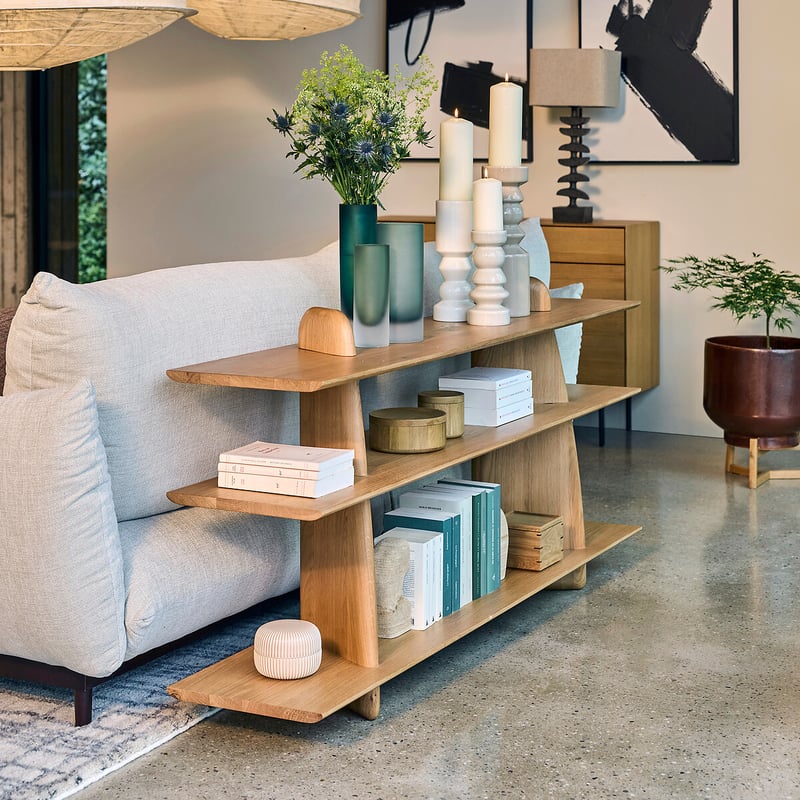
Once the contents fit, check whether the furniture is intended to carry them. Books packed along a shelf create a different demand from a few decorative objects. Look for the maximum load per shelf and any separate limit for the whole unit. These figures answer different questions: staying below each shelf limit does not necessarily keep the entire bookcase within its total allowance. Read whether the stated load must be spread evenly and whether it applies to every shelf, including adjustable ones. If the information is absent or unclear, ask for confirmation rather than estimating strength from a photograph or description. The distance between supports also matters. A long, uninterrupted shelf can bend more readily than a shorter shelf of the same material and thickness carrying a comparable load. A central upright may therefore be useful when you want wide storage for books. Thickness alone does not prove strength, and a solid-looking finish tells you little about what sits beneath it. For wall shelves, the safe load also depends on the wall and the specified fixings, not just the shelf itself. Check the complete arrangement, including brackets and attachment points, against the manufacturer’s instructions. Do not assume that fittings suit every wall type. When you fill the unit, spread weight as instructed rather than concentrating dense books in one spot. Keep heavier items low where possible, while respecting the capacity of the lower shelves; their position does not make them unlimited. Avoid treating a centre support or a thick shelf as permission to exceed a stated load. If you cannot establish an appropriate capacity, choose furniture with clearer information before committing it to full book storage. Once in use, visible bowing, loose connections or movement deserve attention: remove the contents from the affected area and check the instructions or seek advice. Adding another support without guidance is not a reliable substitute for choosing suitable shelving.
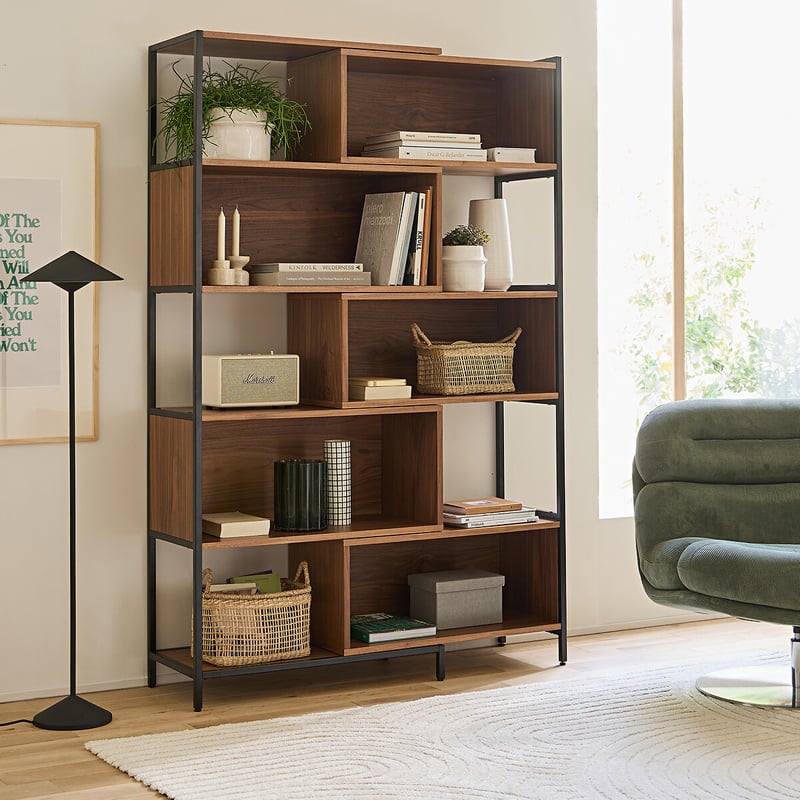
Where should shelving sit without getting in the way?
With depth and capacity settled, map the furniture’s footprint in the room. Mark its width and depth on the floor with removable tape, first checking that the tape will not damage the surface. Walk past it carrying something you regularly move through that space. Open nearby doors and cupboards fully, and check that the unit will not block switches, sockets or access you need. A bookcase can fit a gap on paper yet feel intrusive beside a busy doorway. Test your usual movements rather than relying on an empty-room view. Also consider whether someone can browse without blocking another person’s route. Now inspect the wall and floor, because they affect the final position. Skirting boards can hold a bookcase away from the wall, while an uneven floor may prevent it standing level. Follow the manufacturer’s method for levelling and securing the unit, including any approved spacers needed behind it. Do not omit an instructed restraint because the furniture feels steady when empty. If you choose a wall shelf unit, establish whether it is designed to hang on the wall or stand against it; the name alone does not settle this. Confirm the fixing method and get competent help if you cannot identify the wall construction or suitable fittings. Consider placement from sitting height as well as standing height. Tall shelving beside a window may obstruct daylight, and a deep unit close to a chair can make reaching or moving around awkward. Keep furniture clear of heat sources according to the relevant instructions, and avoid locations where books are regularly exposed to splashes or damp. Before choosing a large bookcase, check the delivery route through doorways, stairs and tight turns, using its delivery dimensions rather than only its assembled size. Leave the room needed for assembly too. Plan access before assembly, then secure and position the empty furniture as directed before loading it.
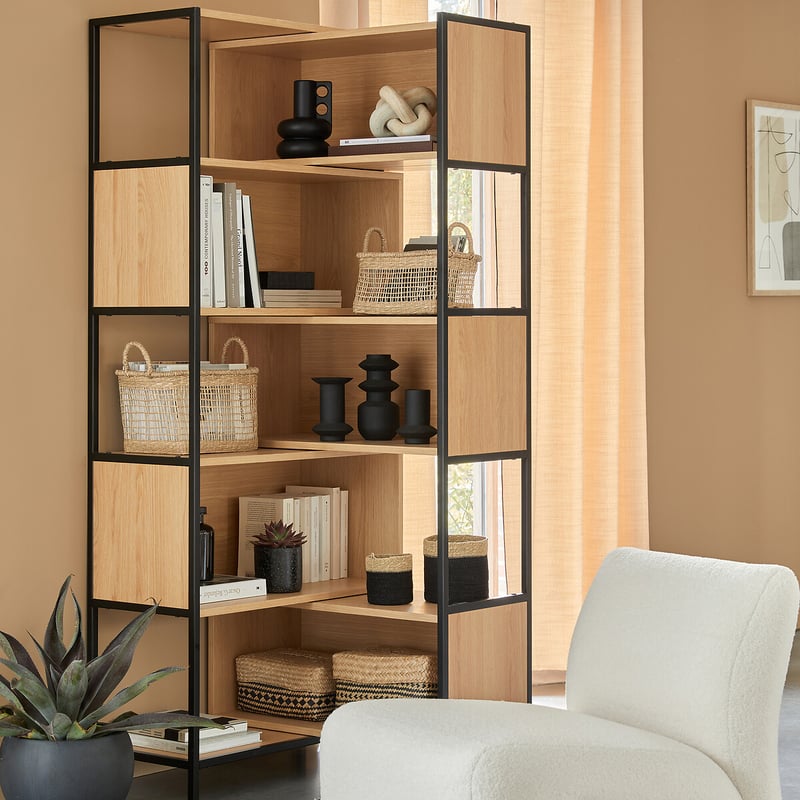
Which shelf layout will make everyday use easier?
Once the furniture is safely positioned, organise it around retrieval rather than appearance alone. Put books you consult often where you can see their spines and reach them comfortably. Reserve less convenient spaces for items you seldom need, without placing heavy objects overhead. If several people share the shelving, agree a simple system everyone understands: subject, author or activity can work better than sorting by colour. Give everyday books priority so that returning them is as easy as taking them out. For children using shared storage, keep suitable books within their reach and do not create an arrangement that encourages climbing. Adjustable shelves help when the contents vary, but they are useful only if the available positions suit your books. Group items of similar height so you can reduce wasted gaps without squeezing everything into tight openings. Check that the supports are correctly seated whenever you change a shelf’s position. Where small work items would otherwise scatter, office storage accessories can keep them together; measure their outside dimensions and check that you can remove them easily. Organise by the task if that suits your routine, keeping related reference books and materials close together. Avoid filling a useful compartment with objects that must be moved every time you need something. Finally, consider how open shelving contributes to the room’s design. In a living space, a shelf can hold books alongside a small framed work of art, provided the frame stands securely and does not obstruct access. You do not need a fixed proportion of empty space or decorative objects: leave gaps where they help you handle books or accommodate likely additions. Closed compartments may suit items you prefer out of sight, while open ones make frequently used contents easy to identify. Keep the arrangement adaptable. Judge the finished layout by whether you can find, remove and return things comfortably, not by whether every shelf looks equally full.