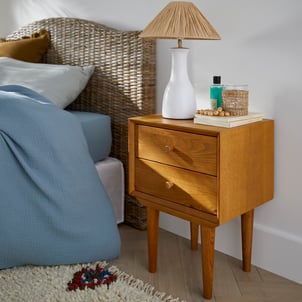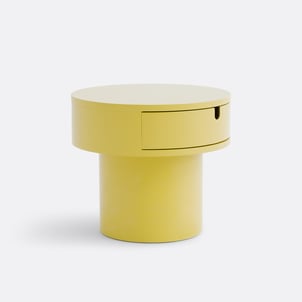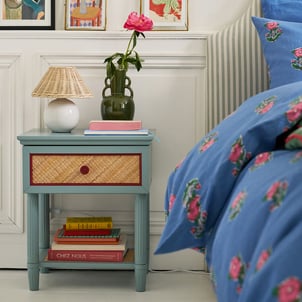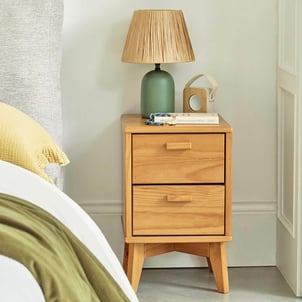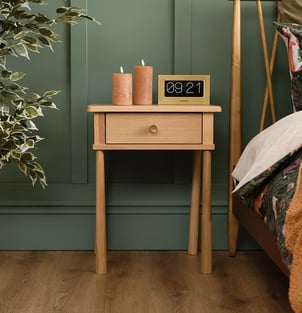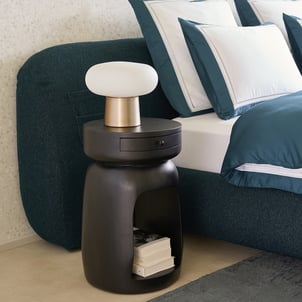

A bedside table needs to do more than fill the gap beside your bed. It should put a drink within easy reach, hold what you use at night and leave enough space to move comfortably. Getting it right starts with your mattress, not the photograph of a finished bedroom. From there, you can work out the right footprint, useful storage and a design that sits comfortably alongside your other furniture. This guide takes you through those decisions in order, with practical checks to help you choose a table that works when you are getting into bed, waking up or changing the sheets.
What height should your bedside table be?
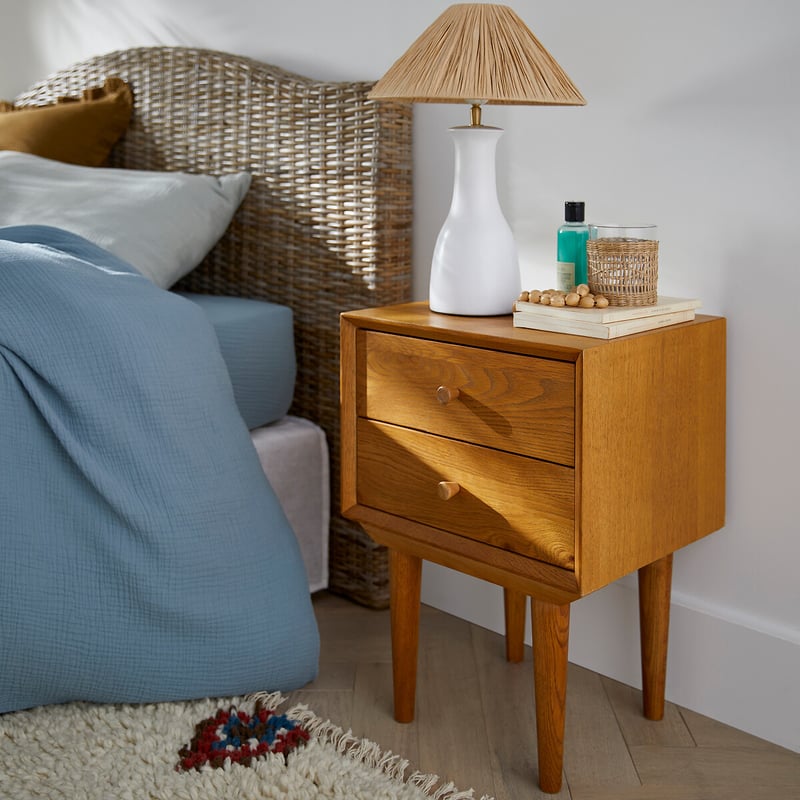
Start with the bed you use, rather than a general furniture measurement. Measure from the floor to the top of your mattress, with your usual bedding in place but without including the loose folds of a duvet. A tabletop roughly level with the mattress is a useful starting point: it keeps everyday objects close to the height of your hand when you are lying down. Think of this as a starting point, not a fixed rule. Your sleeping position, the depth of the mattress and the way you reach sideways all affect whether that height feels comfortable to you. Check the final sleeping height before ordering anything. If you are comparing mattress toppers, remember that adding one can raise the surface of your bed and change its relationship with the table. A new bed frame can do the same. To test a proposed table height, use a stable surface beside your existing bed and place an empty cup on it. Lie down as you normally would, then reach towards the cup without twisting sharply or lifting your shoulder awkwardly. You are checking comfort from lying down, rather than whether the arrangement looks right when you stand across the room. Also consider where the tabletop begins, not just how high it sits. A deep bed frame or a headboard that extends sideways can leave a gap between your mattress and the table. Even a well-matched height may then feel inconvenient. Check that you can reach without stretching, while leaving enough separation to avoid rubbing against the bed frame. If you share the bed, assess each side separately: different sleeping positions or mobility needs may justify different table heights. Keep your own access needs ahead of symmetry, and avoid a very low surface if bending down from bed feels uncomfortable or unsteady.
How much space should you leave beside the bed?
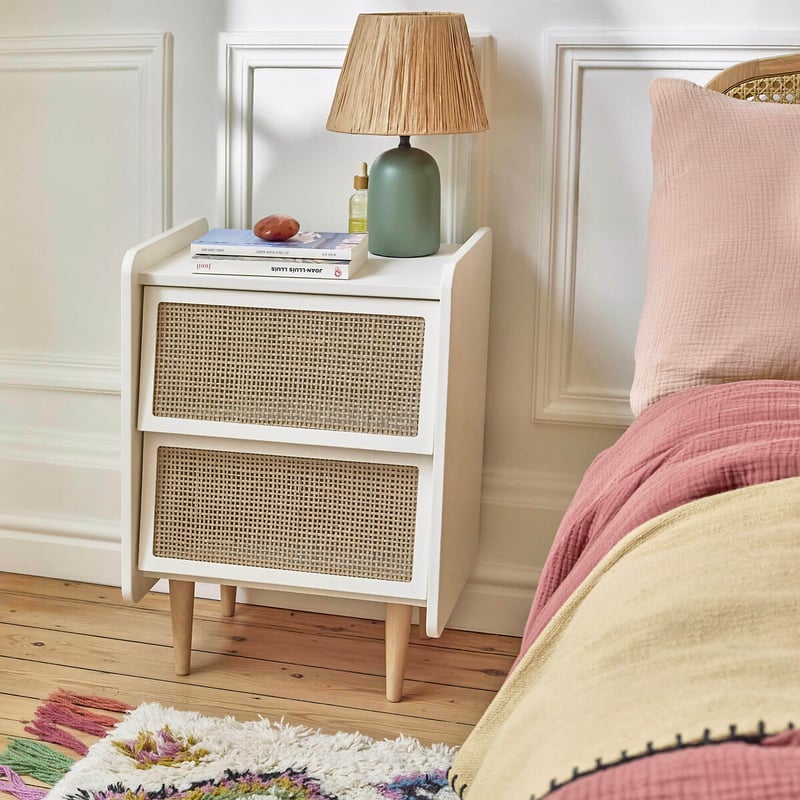
Once you know the height you need, measure the available floor space. Record the width beside the bed and the depth from the wall towards the foot of the bed. Include skirting boards, sockets and any projecting parts of the bed frame, because these can stop furniture sitting where you expect. Then mark the proposed table outline on the floor with removable tape, checking first that it will not damage the finish. This gives you the real footprint in your room. A table can fit within a measured gap yet still feel intrusive when you walk past it every morning. Test the outline during the movements you make every day. Walk to your side of the bed, sit down and stand up again. Check whether you can change the sheets without repeatedly moving the table. If you have storage beds in mind, allow for the way their compartments open before settling on the bedside width and position. A side drawer needs clear floor space beyond the bed frame; a lifting base has different access requirements. Your priority is usable walking space, not filling every available centimetre. Repeat the check with nearby bedroom furniture open, especially wardrobe doors that swing towards the bed. Proportion comes next, once movement is comfortable. A broad bed with a substantial headboard can make a very narrow table look undersized, but that does not mean you should sacrifice access for visual balance. Look instead at the table’s overall shape: a compact design with a solid front may have more visual presence than a wider, open frame. In a tight corner, rounded edges can make passing less awkward, though they do not reduce the measured footprint. Check the widest point in the product dimensions, including any projecting top or handles, rather than judging size from the legs alone.
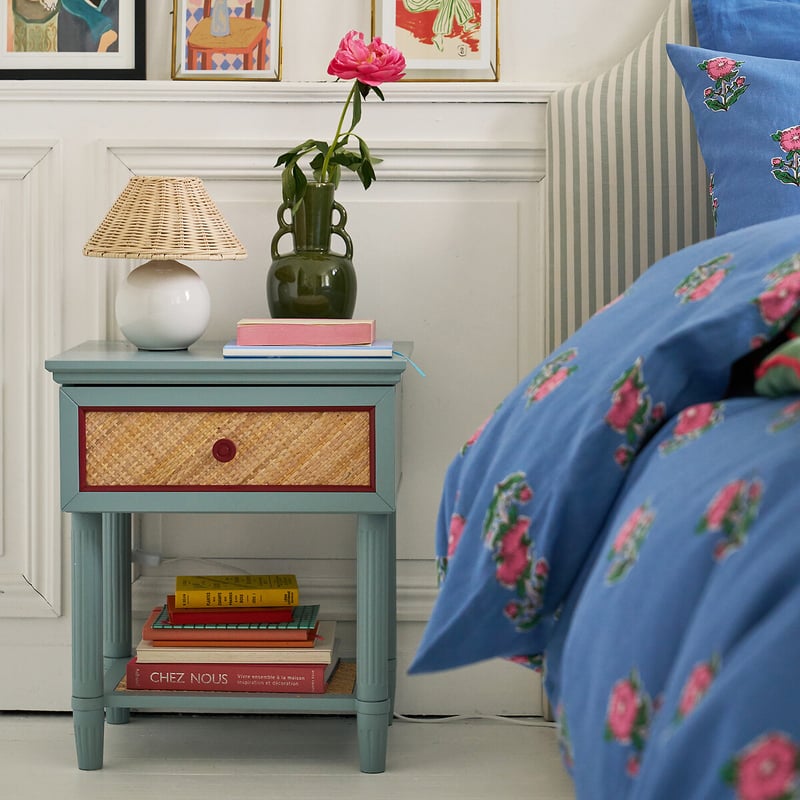
Which storage will make your bedside easier to use?
Decide what belongs beside your bed before choosing storage. Gather the things you genuinely use there, such as reading glasses, a book, a phone and a drink. Separate these from belongings that have simply accumulated because there was somewhere to put them. The aim is storage for your routine, rather than the greatest possible capacity. Leave enough clear surface to put something down without moving several other objects first. If a lamp will stand on the table, account for its base at this stage: the advertised tabletop size is not the same as the space left for your everyday items. Choose enclosed storage when small belongings otherwise spread across the top. A drawer keeps them out of sight and makes wiping the surface easier, but its internal dimensions matter more than the cabinet’s external width. Among bedside cabinets, compare usable drawer space, opening clearance and how easily you can grasp the handle from bed. A deep drawer may hold more, yet small objects can become difficult to find unless you divide the contents. For books or a larger item, an open compartment may be easier to use. Match access to frequency: the things you reach for nightly should not sit behind rarely used belongings. If you need very little storage, a smaller surface may serve you better than a cabinet with unused drawers. A bedside shelf can free the floor beneath, provided the wall and fixings are suitable and installation follows the supplied instructions. Check its stated weight limit before deciding what to keep there. An open shelf below a tabletop offers another arrangement, although exposed belongings will remain visible and collect dust. Think about charging, too: a cable needs a route that does not catch in a drawer or trail across your walking space. Keep the top easy to clear, so everyday use does not become a nightly rearrangement.
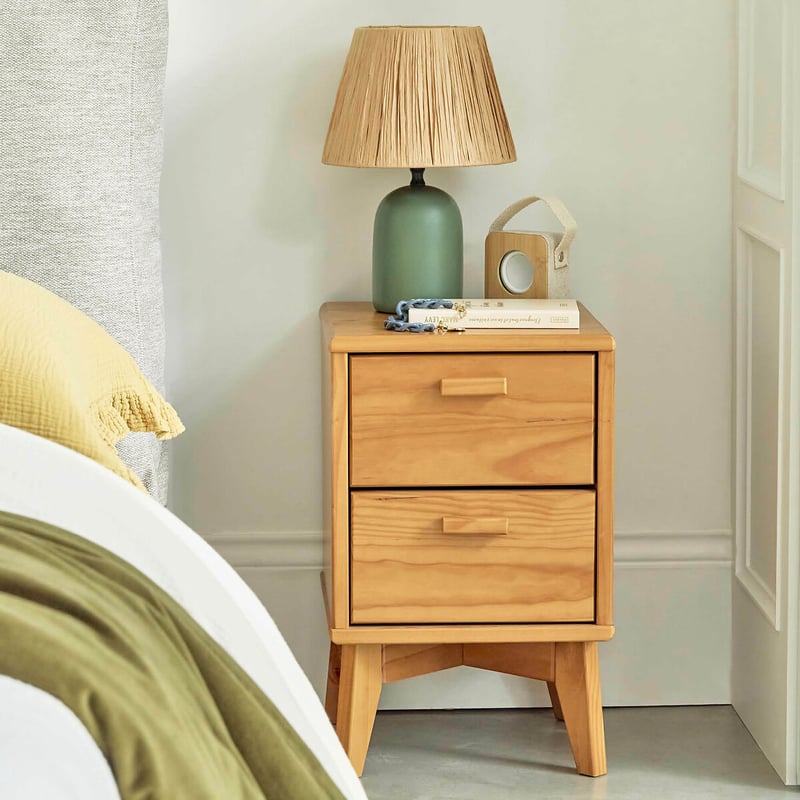
Where should design and finish influence your choice?
With size and storage settled, use the bed as your main visual reference. Notice its shape, colour and how much of the frame is visible once it is made. A bedside table does not need to match every finish in the room. It usually helps to repeat one visual detail, such as a similar wood tone, a curved outline or a handle colour already present in your bedroom furniture. This gives the arrangement a clear connection without requiring identical pieces. If the headboard is patterned or strongly shaped, a simpler table can keep the bedside area from looking too busy. Matching tables can make a shared bed feel balanced, but different designs can work when each side has different needs. You might need more storage while the person beside you prefers a smaller surface. Keep a common feature between them, then judge the pair from the bedroom doorway as well as from the bed. Consider visual weight as well: furniture raised on slender legs tends to look less bulky than a closed cabinet of similar size. The practical trade-off is cleaning underneath. Check whether your usual cleaning equipment can reach beneath the table, or whether a base that sits close to the floor would suit your routine better. Finally, inspect the details that affect daily use. Check whether the finish needs protection from water marks and follow the care instructions rather than assuming every surface can take the same treatment. If you regularly keep a drink beside you, easy wiping deserves attention. Look for clear assembly information, care guidance and any instructions about securing the furniture to the wall. Never use a bedside table as support when standing unless it is specifically designed for that purpose. Before making your choice, check the complete arrangement: comfortable height, clear access, useful storage and a finish you are happy to look after.