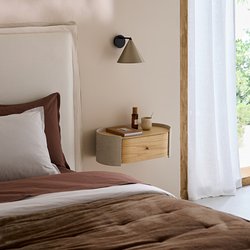
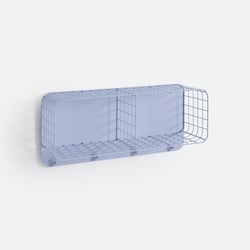
Wall shelves that make vertical space work harder
A clear stretch of wall can provide useful storage without taking another piece of furniture across your floor. Wall shelves let you display framed family photos above the sofa, keep cookbooks beside the kitchen counter or arrange towels within reach of the basin. The right choice starts with the wall itself: its width, its construction and the weight it can safely support. Once you know those limits, you can compare shelf dimensions, materials and fixings with a specific job in mind.
At La Redoute, we suggest planning around what you need to store rather than choosing by appearance alone. A narrow shelf for postcards has different requirements from shelving loaded with hardback books. Measure the space, estimate the load and check the installation instructions before deciding which options suit your home.
Start with wall dimensions and fit
Measure the usable space, not just the empty wall
Measure the width and height of the area you want to use, then note nearby door frames, switches, sockets, radiators and curtains. Open any cupboard doors that could swing towards the shelf. In a narrow hallway, check how far a shelf would project into your walking route, especially at shoulder height. A design that fits between two door frames can still feel obstructive if its corners extend into a busy passage.
Use masking tape to mark the proposed shelf position and depth. This gives you a practical outline to assess from the doorway and from your usual seat. Above a sofa, leave enough clearance for people to sit, lean back and stand without knocking their heads. Keep heavy or breakable objects away from positions where they could fall onto someone below.
Match shelf depth to the objects
Measure your largest item before choosing the shelf depth. Include the frame stand behind a photograph, the full base of a plant pot or the widest part of a storage box. A paperback may fit on a shallow ledge, while a large cookbook needs more support beneath it. Check internal usable measurements as well as overall dimensions, because raised edges, brackets and side panels can reduce the space available.
- For framed photos, check whether the shelf accommodates standing frames or is designed as a picture ledge.
- For books, compare the depth with the largest cover and allow enough height to remove each volume comfortably.
- For baskets and boxes, measure the base and leave room to lift them out without catching the shelf above.
- For towels, fold one as you normally would and measure the finished stack before planning shelf spacing.
If you are fitting several shelves, sketch their positions together. Consistent spacing works well for similar-sized objects, but adjustable or varied gaps can be more useful when you need to accommodate both tall bottles and short jars.
Check the wall and the load before installation
Identify what sits behind the surface
Paint and plaster can hide very different wall constructions. Solid masonry, plasterboard on timber studs and plasterboard fixed over masonry each need an appropriate fixing method. The fixing must suit the wall construction and the intended load. Do not assume that screws or plugs included in a product box are suitable for every surface. Read the manufacturer's instructions, and seek advice from a qualified installer if you cannot identify the wall or assess its condition.
Before drilling, check for concealed cables and pipes using suitable detection equipment and safe working guidance. Take particular care near sockets, switches, taps and radiators. In rented accommodation, confirm permission for drilling and any requirements for making good the wall later. This avoids choosing a shelf that you cannot safely or permissibly install.
Compare load limits carefully
A load capacity may apply to one shelf, the whole unit or a particular installation method. Check which meaning applies before placing books, ceramics or stacked crockery on it. Count everything the fixings will support, including the shelf itself where required by the instructions. If the published information is unclear, ask for clarification rather than estimating from the thickness of the board.
Distribute objects as instructed and avoid concentrating heavy items along the front edge. A deep shelf gives you more storage area, but placing weight farther from the wall increases leverage on its supports. Decorative brackets are not automatically suitable for heavy loads, and concealed fixings do not automatically mean a lower capacity: the complete design and installation determine what is safe.
Check fixings periodically, particularly after changing the contents. Stop using a shelf if it begins to sag, pull away from the wall or move at its fixing points. Adding extra screws without checking the underlying cause can leave the original problem unresolved.
Compare materials through everyday use
Wood, oak and painted finishes
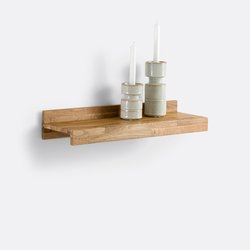
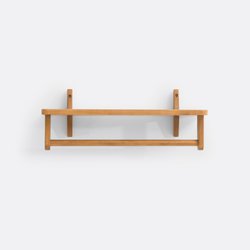
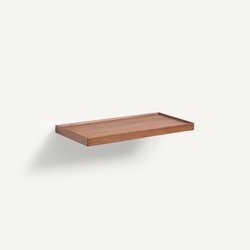
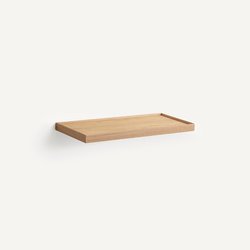
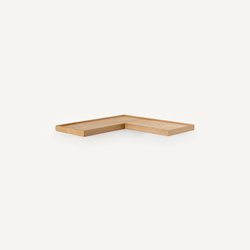
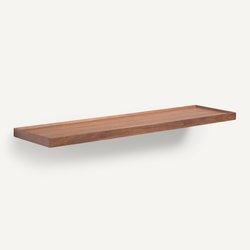
Wood shelves work well where you want visible grain alongside books, framed prints or woven baskets. Oak can sit comfortably beside an oak dining table or contrast with painted kitchen cabinetry. However, appearance alone does not tell you how much weight a shelf can carry. Board thickness, unsupported span, construction and brackets all affect performance, so compare the stated specifications rather than relying on the material name.
A white shelf can blend into a pale wall, keeping attention on colourful book spines or photographs. It can also make dust and spills easier to spot in a kitchen. Check the recommended cleaning method before using sprays, and wipe up splashes promptly. For plant pots, use a suitable watertight tray so moisture does not sit directly against the surface.
Metal frames and mixed materials
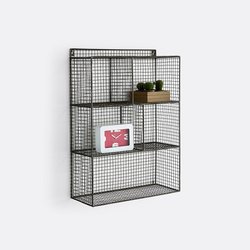
A black shelf creates a clear outline against a light wall and can repeat the colour of nearby handles, lighting or picture frames. This is useful above a desk where you want storage to relate to existing accessories. Check whether the finish can tolerate the conditions in your chosen room, particularly if steam or splashes are likely.
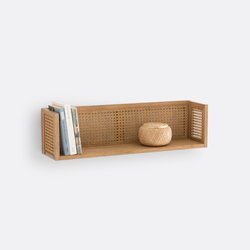
When comparing wood and metal wall shelves, look at how the frame connects to the boards and where the fixing points sit. Side rails can help contain books, while open ends give you flexibility for wider objects. Neither arrangement replaces bookends or secure placement where items could slide. In a compact room, a slim frame may leave more visible wall around the contents, but its load limit still needs checking.
Choose a layout that suits the room
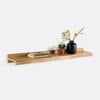
Floating shelves for a clear wall line
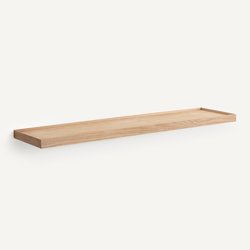
Floating shelving hides its support system, which can be useful above a sideboard or along an alcove. It gives framed photographs and small objects a clear horizontal base without visible brackets beneath. Check the mounting requirements before choosing a floating design. Concealed brackets may need precise drilling and a particular wall type, so the clean appearance should come after the installation check, not before it.
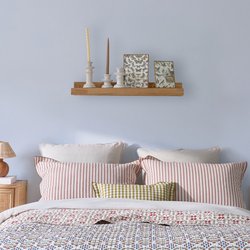
For family photos above the sofa, group smaller frames on a suitably rated ledge rather than balancing them on a shelf that is too shallow. Follow any guidance on retaining lips and frame placement. Leave space between groups so you can lift a frame out for dusting without moving every object.
Ladder layouts and multi-level storage
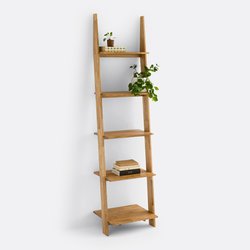
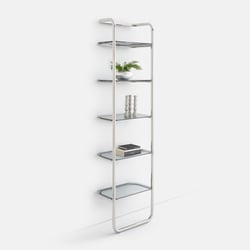
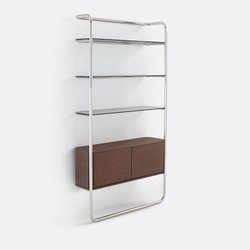
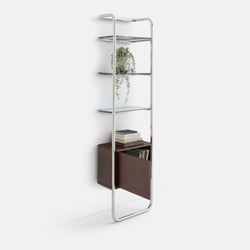
A wall ladder shelf can organise several levels of storage within a relatively narrow footprint. Check whether the design is fully wall-mounted or stands on the floor with wall restraints, as these arrangements have different installation and clearance requirements. Measure any projecting feet or lower sections rather than assuming the whole design sits close to the wall.
At La Redoute, our Domeno Wall-Mounted Ladder Bookcase in Solid Oak, in an oak finish from LA REDOUTE INTERIEURS, offers a practical way to furnish small spaces by arranging storage vertically within a few square metres. Compare its dimensions and installation requirements with your available wall before planning the contents.
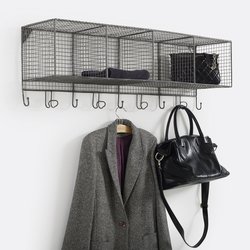
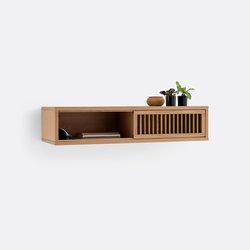
A wall shelf unit with several compartments can separate books, baskets and everyday accessories. Check each compartment's usable width, especially if you want matching storage boxes. When browsing so'home shelves and shelving units, use the same measurements and load checks to compare layouts consistently rather than choosing solely by the number of tiers.
Plan storage around daily routines
Keep kitchen essentials close to the counter
Place cookbooks and spice jars beside the kitchen counter where you prepare meals, while keeping them away from direct heat, steam and splashes. Check clearances around appliances and follow their installation guidance. A shallow shelf can keep small jars visible without occupying worktop space, while larger cookbooks need a deeper surface and sufficient load capacity.
Arrange frequently used ingredients at a comfortable reaching height. Put taller containers where you can lift them without tilting them under the shelf above. Leave enough clearance to remove items safely, not just enough space to store them. If you use baskets for loose packets, measure their handles as well as their bases.
Organise bathroom towels and toiletries
In a bathroom, use a wall-mounted shelf to keep folded towels and everyday toiletries off a small basin surround. Choose a product whose stated materials and finish are suitable for the room's moisture levels. Check that bottles cannot be knocked into the basin when you reach for a towel, and keep heavier containers on an accessible level.
Leave ventilation space around stored textiles and avoid crowding damp towels into a closed basket. For shelving near tiles, the fixing needs to suit the structure behind the tiled surface as well as the tile itself. If you are unsure about drilling without damaging tiles or concealed services, use a qualified installer.
Make your final comparison practical
Before you order, compare the product dimensions, usable shelf space, load capacity and fixing information side by side. A customer rating can help you identify recurring feedback, but read the accompanying review for context: someone storing lightweight ornaments has different needs from someone arranging a row of large books. Look for comments about assembly clarity and dimensions, then confirm technical details against the product information.
Check what arrives in the box, including brackets, wall restraints and any supplied fixings. Review the delivery arrangements and whether the packaged size will fit through your access route. If a collect service or free delivery is available, check the current terms and eligibility rather than assuming it applies to every item.
A useful wall shelf fits both your belongings and your wall. When dimensions, materials and fixings work together, you can keep the floor clear, reach everyday items comfortably and give each shelf a specific role in your home.