Find the right duvet for the way you sleep
The right duvet should keep you comfortably warm without leaving you throwing it off halfway through the night. Your choice depends on the filling, the warmth level and how easily you can care for it. A warm sleeper in a heated flat will usually need something lighter than someone sleeping in a cool bedroom, even during the same season.
Start with your usual night-time experience: do you wake feeling hot, reach for an extra blanket or struggle with bedding that feels heavy? We recommend using those everyday clues to narrow down your options. Then compare duvet fillings, tog ratings and care requirements before choosing the size for your bed.
Compare duvet fillings for comfort
A filling affects how a duvet feels around your body, how much it weighs and how you look after it. Natural and synthetic options can both provide warmth, but they offer different benefits when you need frequent washing, prefer a lighter feel or share with someone who sleeps at a different temperature.
Down and feather: warmth with different levels of weight
Down consists of fluffy clusters that trap air, helping a duvet retain warmth without necessarily feeling heavy. Feather filling includes the firmer outer feathers, so a duvet with a higher feather content generally feels more substantial. If you enjoy bedding that settles closely around you, that extra weight may feel reassuring; if you dislike pressure over your feet, compare lighter options.
Many duvets combine down and feather. Check the proportions rather than relying on the product name alone, as these influence feel and price. Also look at the internal construction: stitched compartments help limit filling movement, reducing the chance of it collecting at one end. Care instructions vary, and some products need professional cleaning or a large-capacity machine.
Wool: a different feel for changing temperatures
Wool can absorb and release moisture vapour, which may help you feel less clammy when your temperature changes during sleep. It often lies flatter than a lofty down duvet, so it suits you if you prefer a more settled layer rather than a puffy appearance.
Compare the stated warmth guidance carefully. Some wool duvets use seasonal descriptions or filling weight rather than a conventional tog rating. Washing requirements also vary: a washable wool product may need a dedicated cycle and specific drying method, while another may require specialist cleaning. If you wash bedding frequently, check this before buying rather than assuming all wool options can go into your usual wash.
Synthetic: practical options for regular washing
Synthetic fillings, commonly made from polyester fibres, are available in a wide range of warmth levels and prices. Some feel light and springy; others have a denser finish. They can be a practical choice for children's beds, guest rooms or households where the duvet needs washing more often.
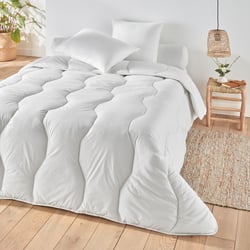
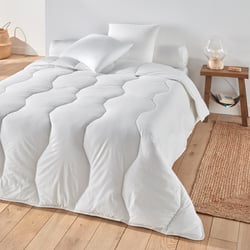
Check both washing and drying instructions before choosing a filling. A machine-washable duvet is only convenient if it fits your machine and you can dry it thoroughly. At La Redoute, our white Warm Anti-Dust Mite Duvet with Cotton Cover from LA REDOUTE INTERIEURS comes with a cotton cover. When comparing a product like this, check its warmth rating and care label alongside the filling description to see whether it suits your bedroom and washing routine.
Choose a warmth level that suits your bedroom
A tog rating measures thermal resistance: broadly, a higher number means more warmth. It does not describe the duvet's weight, softness or quality. Two duvets with the same tog can therefore feel noticeably different, particularly if one contains down and the other contains a denser synthetic filling.
Use tog as a starting point, then adjust for room temperature and how you sleep. The following ranges are common guides for adult bedding, rather than fixed rules:
- Around 2.5 to 4.5 tog: a lighter option for warm bedrooms, summer nights or people who regularly wake feeling hot.
- Around 7.5 to 10.5 tog: a middle range for cooler spring and autumn nights, depending on your heating and personal comfort.
- Around 12 to 15 tog: a warmer option for cold bedrooms or sleepers who need more insulation during winter.
Layer a lightweight duvet over sheets for chilly spring nights when a winter duvet feels too warm. During warm summer sleep, choose a breathable duvet with a lower warmth rating, and consider whether a sheet alone is enough during a hot spell. If you share a bed and your needs differ considerably, two individual duvets can let each person choose their own warmth level.
For babies and young children, follow age-specific safe-sleep guidance rather than applying adult tog recommendations. A duvet intended for an adult bed is not a suitable substitute for infant sleep bedding.
Check the cover, construction and size
Look beyond the filling
The outer casing helps contain the filling and influences how the duvet feels. Cotton is a common option because it can provide a soft, breathable surface. However, the removable duvet cover matters too: a thick brushed cover can feel warmer than a lightweight cotton one, even when the duvet inside stays the same.
Look for stitching that distributes the filling across the duvet. With feather and down products, well-contained sections help maintain coverage when you move at night. If you are sensitive to rustling, check product descriptions or reviews for comments about the casing, as tightly woven fabrics can sound different when handled.
Match the duvet to your bed and cover
Measure your mattress and check the duvet's dimensions in centimetres, especially when buying bedding from different ranges. Named sizes can vary between countries, so matching the measurements is safer than choosing by “double” or “king” alone.
Your duvet and duvet cover should have matching dimensions. A cover that is too large can leave empty fabric at the edges, while one that is too small can bunch the filling. If you and your partner often pull the duvet away from each other, a larger duvet may offer more coverage, provided it suits your bed and you buy the corresponding cover.
Make care part of your buying decision
A duvet needs enough room to move during washing and must dry fully before returning to the bed. Check your washing machine's capacity against the manufacturer's instructions; a large winter duvet may need a commercial-sized machine even when its label permits machine washing.
Use a removable cover to protect the duvet from everyday contact, and wash that cover regularly according to its label. Follow the duvet manufacturer's guidance for washing frequency, detergent and drying. Avoid applying one routine to every filling: wool, down and synthetic fibres can need different treatment.
- Fluff the duvet each morning to redistribute the filling and help restore its loft and warmth.
- Allow bedding to air before making the bed fully, particularly after a warm night.
- Check that the centre and corners are completely dry after washing, not just the outer casing.
- Store a spare duvet clean and dry in a suitable bag, following any product-specific advice about compression.
If allergies influence your choice, look at the whole product rather than assuming one filling will suit everyone. Check any anti-dust-mite treatment details and washing instructions. A treated duvet does not replace regular cleaning of covers, sheets and the surrounding sleeping area.
Choose bedding that fits your routine
The best duvet for you is one that balances comfort with the care you can realistically manage. A lower purchase price may appeal for an occasional guest bed, while a duvet used every night deserves closer attention to weight, warmth and washing requirements. Compare those features before paying more for a filling that may not suit your preferences.
For year-round flexibility, consider an all-seasons duvet made from two layers that fasten together. You can use the lighter layer in warmer weather, the warmer layer during milder cold spells and both when your bedroom gets colder. Check the individual and combined warmth ratings, plus whether each layer fits your washing machine.
Understand your duvet options before buying
What are the different types of duvets?
The main types of duvets are down, feather, wool and synthetic, with some products combining fillings. You will also find different formats, including single-layer duvets and detachable all-seasons designs. Filling describes what is inside; tog describes thermal resistance; format describes how you use the layers. Separating those three features makes comparisons easier when several products have similar names.
- Choose down if you prefer warmth with a relatively light feel, while checking the down content and care requirements.
- Consider feather or feather-and-down blends if you like a more substantial covering.
- Look at wool if moisture management and a flatter feel appeal to you.
- Compare synthetic options if regular washing and a broad choice of prices are priorities.
- Consider an all-seasons design if you want separate layers for different bedroom temperatures.
A common pitfall is choosing by filling alone. A high-tog down duvet can still feel too warm in a heated bedroom, and a synthetic duvet is not automatically suitable for every domestic washing machine. For example, if you sleep in a warm flat and wash your duvet at home, start by comparing lower-tog washable options, then check dimensions and drying instructions. If your bedroom is cold but you dislike heavy bedding, compare lighter-feeling fillings at a suitable warmth level. This approach connects the duvet type to how you will actually sleep and care for it.