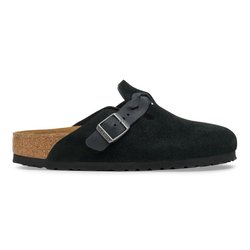
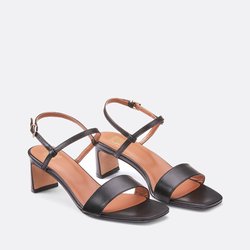
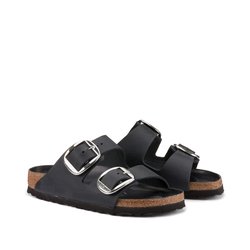
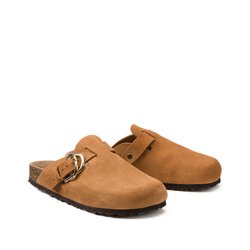
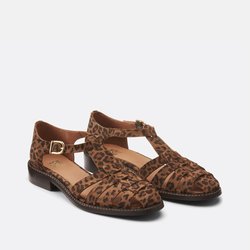
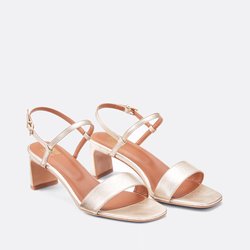
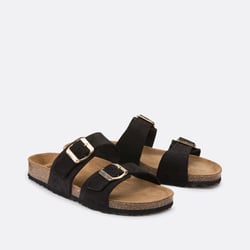
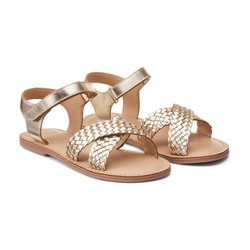
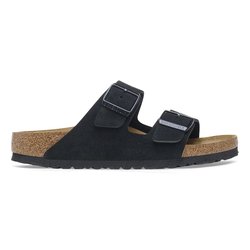
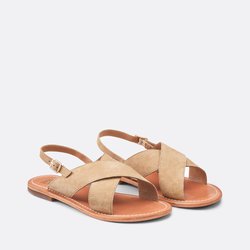
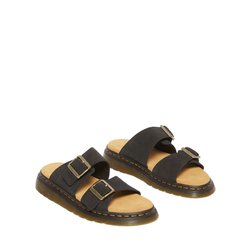
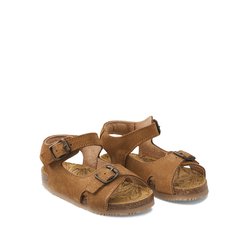
Choose comfort for everyday wear
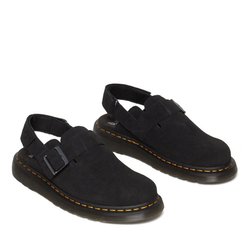
Comfort starts with sandals that stay securely on your feet, whether you are walking to the shops or heading out for a weekend lunch. With suede mules, the open back makes them easy to slip on, but it also means the upper and footbed need to do more of the work. Your toes should not have to grip with every step, and your heel should sit fully within the sole rather than hanging over the edge.
Check the fit first, then consider foot support and the care your suede will need. A soft-looking upper does not guarantee comfort: strap position, sole flexibility and the room around your toes all affect how a mule feels after half an hour of walking.
Start with the fit of your suede mules
Give your toes and heel enough room
Try new sandals later in the day, when your feet may be slightly fuller after normal activity. Stand with your weight evenly distributed and check both feet, as one may be longer or wider than the other. Keep your entire heel and every toe within the edge of the footbed. A little visible space around your foot is useful, but a large gap can allow it to slide.
Walk across a clean indoor floor rather than judging the fit while seated. The upper should hold your forefoot without pressing across the toe joints. If your little toe is pushed sideways or your heel repeatedly lands on the raised rim of the sole, try a different width or shape. Going up a size does not always solve a width problem; it may simply leave you with extra length and less control.
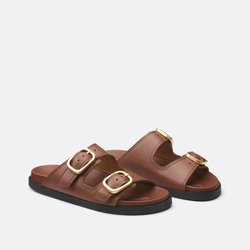
When comparing women's leather mules with suede options, check the lining as well as the outer material. A smooth lining, a thick seam or a firmly bound edge can change how the upper feels against bare skin. Two pairs in the same labelled size will not necessarily fit alike.
Check how the upper holds your foot
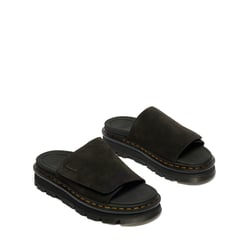
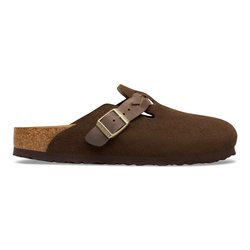
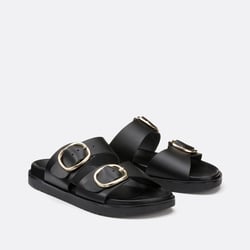
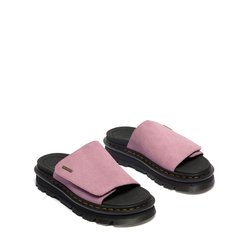
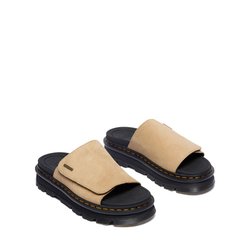
A broad suede upper can spread contact across the forefoot, while an adjustable buckle lets you fine-tune the fit within its available settings. Fasten it so the sandal stays with your foot without leaving deep pressure marks. If the buckle is already on its tightest setting and your foot still slides forwards, a narrower style may work better.
You should not need to curl your toes to keep a mule on. Some movement at the open heel is normal, but repeated gripping can leave your feet tired during errands or a walk to lunch. Take several steps at your usual pace, turn around and stop. If the sandal twists beneath you or slips sideways, reassess the fit before wearing it outside.
Suede can soften with wear, but stretching is not a reliable remedy for painful pressure. Choose a pair that feels comfortable from the first indoor fitting, allowing for gentle softening rather than a major change in size.
Look beyond softness to foot support
Match the footbed to your walking plans
A cushioned footbed may soften the feeling of pavement underfoot, but cushioning and support are not the same thing. If you usually feel more comfortable with arch support, look for a shaped footbed and check that its contours sit in the right places. An arch ridge that presses too far forwards or backwards can be uncomfortable even when the sandal is the correct length.
For women who spend much of the day standing, a secure upper and a stable sole deserve particular attention. Press gently at the forefoot to assess flexibility: the sandal should allow your foot to bend naturally without folding loosely through the middle. Check the outsole too. A smooth sole may offer less grip on polished indoor floors than one with a textured tread, although no sole guarantees traction on every surface.
- For short errands, test whether the upper keeps your foot centred as you change direction.
- For longer periods standing, assess cushioning beneath both the heel and the ball of your foot.
- For uneven paving, favour a stable base and avoid a heel shape that feels unsteady during your indoor trial.
- For existing foot pain or prescribed orthotics, ask your podiatrist whether a backless sandal suits your needs.
Choose a heel height you can walk in comfortably
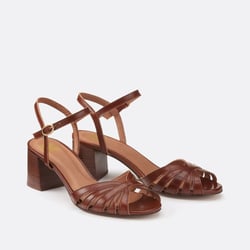
A low, broad heel can feel steadier than a narrow one, but comfort still depends on the slope of the footbed and how securely the upper holds your foot. Walk at your usual pace when trying sandals on. If your weight tips heavily onto the front of your foot, consider a lower heel or a flatter profile.
If you search for flat leather mules, look beyond the product name and check photographs, sole details and measurements. A flat-looking sandal may still have a firm, thin base that feels uncomfortable on a long walk. When comparing brands, use each product's size guide rather than relying on your previous purchases.
Wear suede sandals around your warm-weather plans
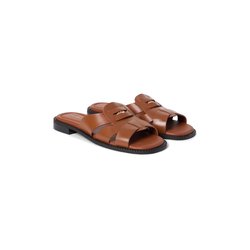
Pair brown suede sandals with linen trousers for relaxed weekend brunches. Choose a trouser hem that clears the ground so it cannot become trapped beneath the open heel as you walk. If brunch involves a longer route through town, wear a pair you have already tested on shorter outings rather than taking new mules straight out for several hours.
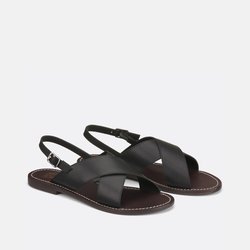
For warm evening patio dinners, pair suede sandals with sundresses and check the surface where you will be sitting. A broad heel is usually more practical than a narrow one around gaps between decking boards. Black suede works with printed dresses when you want footwear that does not introduce another colour; a lighter brown pairs well with cream or pale blue clothing.
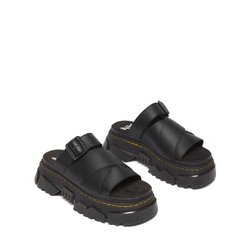
If you are considering black studded sandals for an evening outfit, feel inside the upper for any hard fittings or raised seams before wearing them for a long evening. For daytime dressing, white flat sandals offer a lighter colour option, although their suitability for walking still depends on fit and construction rather than shade.
After a beach walk, allow your feet to dry and brush away sand before slipping into suede sandals. Keep suede away from wet feet and salt water. The open design leaves parts of your feet uncovered, but it does not make the material suitable for the shoreline. Carry washable footwear for the beach itself and save your suede pair for the dry journey to a nearby café.
Keep suede looking tidy with simple, regular care
Protect and brush the upper carefully
Before the first outing, read the care label and check whether a protector is suitable for the particular finish. Test any recommended spray on a discreet area, allow it to dry and inspect for colour changes before treating the whole upper. Follow the product instructions for distance, ventilation and drying time. A protective spray does not make suede waterproof.
When dry dirt collects, use a suede brush to gently lift it from the surface. Work lightly rather than scrubbing, especially around edges and buckles. A suede eraser may help with small dry marks if the care instructions allow it, but test it first. Avoid ordinary leather polish, which can flatten the nap and alter the appearance.
If you choose a pale shade, check it after outings where dust or food spills are likely. The same care is needed when comparing suede styles with white flat mules: colour alone does not determine the cleaning method, so identify the upper material before reaching for a cleaner.
Dry and store your sandals properly
If suede becomes damp, blot gently with a clean, absorbent cloth without rubbing. Let the sandals dry naturally in a ventilated place away from radiators and direct heat. Loosely placed, unprinted paper can help support the shape, provided it does not stretch the upper. Brush only when the suede is fully dry, following the manufacturer's guidance.
Between wears, leave your shoes somewhere airy before putting them away. Store them without heavy footwear pressing onto the uppers, which can flatten the nap or distort the shape. For grease, stubborn stains or a noticeable change in texture, seek advice from a cleaner experienced with suede rather than repeatedly wetting the affected area.
Practical advice before you buy and wear suede sandals
Is it better for sandals to be too big or too small?
Neither is a good choice: sandals should fit securely without squeezing your foot or leaving excessive space. Too-small sandals can force toes over the front edge, press the heel against the rim and cause rubbing where the upper crosses the foot. Too-big sandals can slide, catch at the front and make you grip with your toes to keep them on. In a backless mule, that lack of security may be particularly noticeable when walking quickly or climbing steps.
If you are between sizes, compare both sizes indoors and consult the product's size guide. A larger size may suit you if the smaller one lacks length, but it will not necessarily help if the style is simply too narrow. Use these checks before deciding:
- Stand up and confirm that your toes and heel remain fully on the footbed.
- Walk and turn to check for forward sliding or sideways movement.
- Adjust any buckle without tightening it enough to cause pressure.
- Check both feet rather than fitting only the smaller one.
For example, if your usual size leaves your little toe over the side but the next size slips off, try a wider-fitting design instead. Avoid buying a painful pair on the assumption that suede will stretch enough; the sole and footbed will not grow with the upper.
When not to wear suede shoes?
Avoid suede shoes when you expect heavy rain, puddles, muddy paths or direct contact with sea water. Moisture can leave marks and change the texture, while mud and salt may require more involved cleaning. Suede mule sandals are also a less practical choice for activities that need a firmly secured heel, such as brisk walks over rough ground. Choose footwear designed for the conditions rather than relying on a protective spray to make suede suitable.
Consider both the surface and the activity before leaving home:
- For a wet commute, wear weather-appropriate shoes and change into suede indoors if needed.
- For gardening or walking across muddy grass, choose footwear that tolerates dirt and washing.
- For the beach edge or poolside, use footwear intended for water exposure.
- For long, uneven routes, prioritise secure fastening and suitable grip.
For example, suede sandals can work for a dry patio dinner, but think twice if reaching your table means crossing damp grass. Carry an alternative pair if the forecast is uncertain. On very hot days, also consider whether your feet slide against the lining: extra movement can cause rubbing even when the length is correct. Let damp feet dry before putting the sandals on, and give the shoes time to air afterwards. With a comfortable fit and dry conditions, your suede mules are better suited to everyday warm-weather outings.