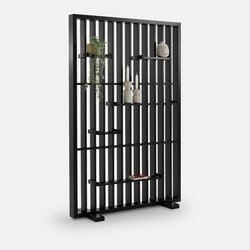
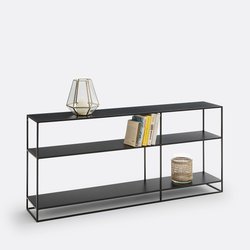
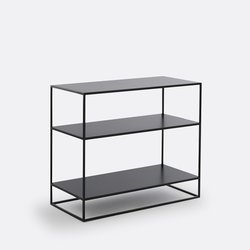
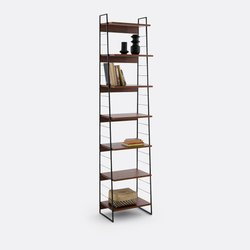
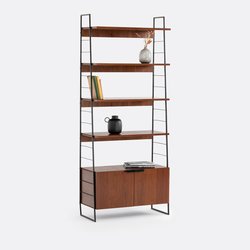
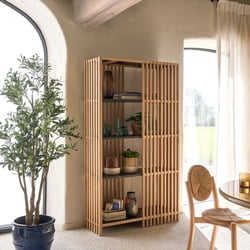
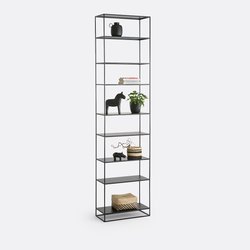
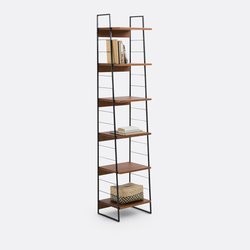
Compact storage that fits books and decor
When you are choosing a black shelving unit, the first thing to look at is not colour or style, but size. A compact bookcase works best when it answers a clear need: holding paperbacks in a small sitting room, keeping jars and cookbooks within reach in the kitchen, or giving you extra storage in a narrow hallway or spare corner. If the dimensions are right, the unit will feel useful from day one rather than awkward to place.
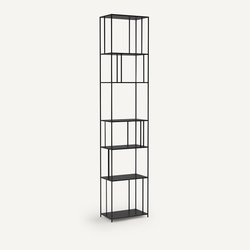
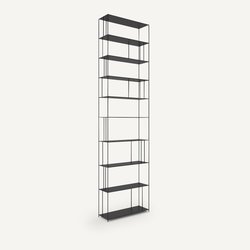
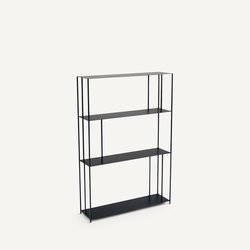
A compact black bookcase suits homes where every centimetre matters. A slim unit can sit beside a sofa, under a window, near a desk or against a kitchen wall without making the room feel crowded. Because the finish is black, it often creates a neat outline that helps books, ceramics, baskets and framed prints stand out clearly on each shelf. That is especially useful if you want one piece of furniture to do two jobs at once: keep everyday things organised and give your home a more ordered look.
Start with dimensions, shelf capacity and room compatibility
Before you compare style details, check the height, width and depth of the shelving. A compact black bookcase is often chosen for tighter spaces, so depth matters as much as width. For novels and decor, a shallower design can be enough. For larger hardbacks, archive boxes or kitchen containers, you may need deeper shelves. If you are planning to place it near a door, radiator or dining table, remember to leave space to move around it comfortably.
Shelf capacity is the next practical point. Ask yourself what you will actually store there in daily life. Books are heavy, while vases, bowls and photo frames are lighter but need visual spacing. A shelving unit with several evenly spaced levels can help you separate categories: reading on one level, decorative objects on another, baskets below for cables, papers or toys. If you live in a flat with limited built-in cupboards, this kind of visible shelving can reduce clutter without taking over the room.
Room compatibility is just as important. A black finish is easy to place because it works with pale walls, wood floors, patterned rugs and metal lighting. In a living room, it can frame a reading corner. In a kitchen, it can bring order to a blank wall. In a bathroom, it can keep spare items accessible. Even in a utility area or garage, a small black shelving piece can help separate household products, folded cloths and storage boxes so they are easier to find.
- Choose a narrow width for alcoves, hallways and corners.
- Pick enough depth for the items you use most often, not just for display.
- Count how many shelves you need for books, baskets and decor before you buy.
- Check whether the top shelf will be used for taller objects such as plants or lamps.
- Measure skirting boards, sockets and nearby furniture so the unit sits neatly in place.
Why a compact black bookcase works so well
The appeal of a compact black bookcase is simple: it fits books and decor without needing a large footprint. If you enjoy styling a small area, the black finish gives contrast, which helps colourful book spines, white ceramics or green plants stand out. If you prefer a tidier look, black can also make baskets and matching boxes feel more unified. This is one reason the bookcase category remains so useful across different rooms rather than being limited to a study.
For example, you can show plants and photo frames on a black living room shelving unit while keeping novels, magazines and a speaker on the lower levels. In practice, that means the top shelf might hold a trailing plant and two frames, the middle shelf a stack of current reads, and the bottom shelf two woven baskets for chargers and remote controls. The result is not just decorative; it makes daily routines smoother because the items you use often are easy to reach.
Another practical use is to display cookbooks and spices in a black kitchen shelving unit. A compact model can sit near a dining table or against a free section of wall, giving you a place for recipe books, oil bottles, spice jars and serving bowls. This keeps worktops clearer and avoids overfilling cupboards. In a busy kitchen, having the right shelf height for taller grinders or storage tins makes a noticeable difference, especially if you cook regularly and want ingredients visible rather than hidden away.
How black shelving fits different interiors
Black is one of the easiest finishes to integrate because it can look graphic and modern or softer and more classic depending on the surrounding furniture. If your room already includes pale wood, a black shelving unit adds contrast. If you have darker furniture, it can continue the palette without making the space feel mismatched. It also works well with metal table legs, black-framed mirrors and monochrome textiles.
If you are comparing styles across our wider ranges, you may also browse bookcases La Redoute Interieurs for everyday storage ideas or look at bookcases am.pm if you want a more architectural feel. Some customers prefer the warmth of an oak bookcase, while others need the smaller footprint of a wooden ladder shelf or a ladder unit. The best choice depends on what you plan to place on it and how much floor space you can spare.
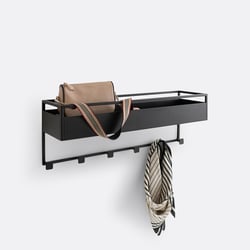
According to our catalogue, the Spirollo L60cm Metal Wall Shelf, black, AM.PM, shows how a compact wall-mounted format can be useful when floor area is limited, and our selection shows that this Spirollo wall shelf system turns storage into a style statement. That can be a helpful option if you want black shelving in a kitchen, office nook or entrance but prefer to keep the floor clear for stools, shoes or bins.
Material choices and what they mean in everyday use
Once dimensions and capacity are sorted, material becomes the next deciding factor. In this product category, you may find black shelving units made from metal, wood-based panels, solid wood with a painted finish, or a mix of materials. Each one changes how the unit looks and how you use it at home.
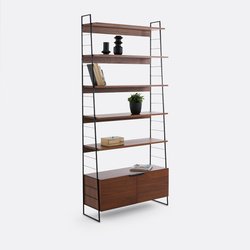
Metal can be a good choice if you want a cleaner outline and easier wipe-down care. It often suits kitchens, utility rooms or contemporary living spaces. Wood-based panels can offer a more substantial bookcase look and are often practical when you need flat, stable surfaces for books, decorative boxes or table lamps. Mixed-material designs combine the warmth of wood tones with a black frame, which can work well in open-plan spaces where the shelving needs to connect visually with both dining and lounge furniture.
Think about the practical consequence of the material rather than only the appearance. If you plan to stack heavy hardbacks, check the load guidance for each shelf. If the unit will be used in a bathroom for folded towels and toiletries, make sure the finish can handle regular wiping and occasional splashes. If you intend to move the unit between rooms later, a lighter construction may be easier to manage during assembly and repositioning.
Assembly and placement: what to expect
Assembly affects whether a shelving unit feels convenient or frustrating, particularly in small homes. A compact bookcase is often easier to build than a wide wall-to-wall model, but it still helps to check how the shelves fix into place and whether wall attachment is recommended. If the unit is tall relative to its width, anchoring it can add reassurance, especially in family homes or in rooms where children may reach for books and toys.
Placement also changes how useful the unit becomes. In a living room, leaving a little visual breathing space around the sides can make the shelving feel lighter. In a kitchen, keeping it close to the prep area saves time when you are reaching for a cookbook or spice jar. In a bathroom, placing baskets on the lower shelves helps group smaller items such as cotton pads, spare soap and travel toiletries so they do not look scattered.
If you are checking practical buying points such as delivery, current price, available finishes or whether there are other options in the same line, it helps to compare dimensions carefully rather than relying on photos alone. A product image may make a unit look larger or smaller than it is. Looking at the measurements first is the easiest way to avoid ordering something that blocks a window ledge, overlaps a plug socket or leaves too little walking space.
Care and maintenance for regular use
Daily care is usually straightforward, but it should match the material and the room where the shelving will live. For most black finishes, a soft cloth used regularly is enough to remove dust from each shelf. In kitchens and bathrooms, where marks appear more quickly, a gentle wipe with a slightly damp cloth can help keep the surface looking clean. Drying the shelf afterwards is a good habit, especially if bottles, jars or soap dispensers sit there every day.
To keep the unit looking tidy, it helps to avoid overloading one area while leaving another empty. Spread books across several shelves instead of stacking all the weight at the bottom or centre. Use trays or baskets for smaller items that would otherwise make the shelving look busy. In real terms, this means one shelf can hold books upright with bookends, another can hold a tray for candles and matches, and a lower one can contain a box for chargers or paperwork.
If your shelving unit is used in a harder-working area such as a utility room or garage, clean spills quickly and avoid dragging rough containers across the finish. For homes with pets or children, rounded accessories and baskets can make the setup more practical than lots of loose objects placed near the edge. Small care habits like these help the product stay useful and easier to maintain over time.
Buying with confidence: practical details that matter
When you are ready to choose, look beyond appearance and compare the details that affect day-to-day use. Check how many shelves are included, whether the spacing suits books or baskets, and whether the unit is available in more than one size. If you shop online as well as in stores, you can often compare a wider set of storage formats in the same finish, from compact floor-standing bookcases to wall-mounted shelves.
You may also want to look at customer rating and stars for clues about assembly, sturdiness and how the shelf works in real rooms. Reviews can be useful when they mention a concrete setup, such as using the unit for paperbacks in a box room or for spices in a kitchen corner. They can tell you more than a studio image because they show whether the proportions feel right in an everyday home.
Practical shopping details matter too: whether delivery slots suit your week, whether a free service threshold applies, whether any additional duty or access constraints affect your address, and whether the product is currently available for quick dispatch. Looking at these points early can save time, especially if you need a shelving solution before guests arrive, before a move, or before starting a room reorganisation.
A compact black shelving unit earns its place when it gives you clear, usable storage for the things you reach for often. Whether you use it to hold novels and frames in the living room, cookbooks and spices in the kitchen, or practical supplies elsewhere in the home, the best results come from checking dimensions, shelf capacity and room fit first. Once those basics are right, the black finish, material and care needs become much easier to judge, and you can choose a bookcase that works hard every day without taking up more space than necessary.