Black bookcase storage starts with your room dimensions
Before choosing a black bookcase, measure the space where it will stand. Note the available width, ceiling height and distance from the wall to the nearest sofa, table or doorway. A unit that looks compact in a photograph can feel deep beside a narrow walkway, while a tall design may sit awkwardly beneath a sloping ceiling. Check width, height and depth together, then mark the footprint on the floor with masking tape. This gives you a practical outline to walk around before you rearrange the room.
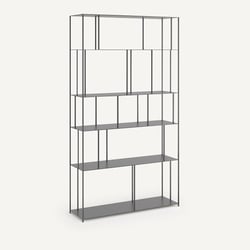
A black finish creates a clear outline around books and everyday belongings, so position matters as much as capacity. Against a pale wall, the frame will be noticeable; beside darker furniture, it can sit more quietly within the layout. At La Redoute, we suggest planning your bookcase around the things you need to store and the space you use each day, rather than choosing by appearance alone.
Measure the space around the bookcase, not just behind it
Allow for skirting boards, sockets and movement
Measure at floor level and higher up the wall, especially in an older room where surfaces may not be straight. Skirting boards can prevent a bookcase from sitting flush, while plugs and cables may require clearance behind the back panel. If the unit has doors or drawers, include their opening space in your measurements. You should be able to reach a lower compartment without moving an armchair every time.
Check nearby curtains, radiators and light switches too. A tall side panel should not trap a curtain or block access to a switch. Follow any clearance guidance for nearby heating appliances. In a shared living room, test the route between the doorway and the main seating area with the proposed footprint marked out. Leave enough room for your household to pass comfortably, including anyone using a mobility aid.
- Record the maximum width available between neighbouring furniture and door frames.
- Measure depth from the wall, allowing for skirting boards and any necessary rear clearance.
- Check height beneath shelves, beams or sloping ceilings.
- Mark door and drawer opening areas separately from the unit footprint.
- Locate sockets before deciding where lamps or charging cables will go.
Match the proportions to the room
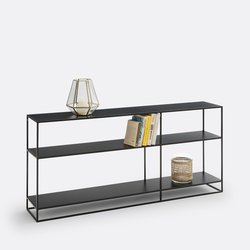
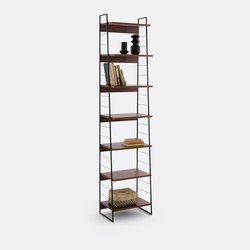
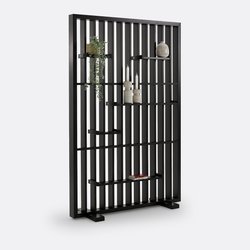
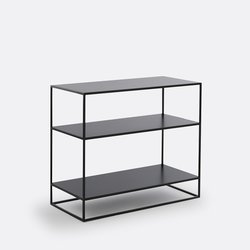
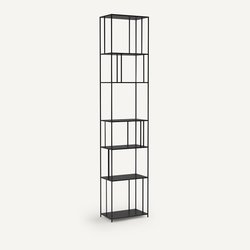
A narrow, tall bookcase can provide useful storage beside a desk without occupying the wall space needed for a chair. A low, wide unit may suit the space beneath a window, provided it does not obstruct the window opening or a radiator. In an open-plan room, check the back of the product before considering it as a divider: not every bookcase has a rear surface intended to remain visible, and stability requirements still apply.
When browsing La Redoute Interieurs bookcases, keep your room dimensions beside you so you can compare each design against the same limits. Measure the usable shelf space as well as the outer frame; thick sides and internal dividers reduce the room available for books and boxes.
Compare bookcase storage with what you actually own
Check shelf height and depth against your books
Gather a few representative items before comparing shelving: your tallest cookbook, an ordinary novel, a large hardback and any storage basket you plan to use. Measure them upright, including handles or lids on containers. Adjustable shelves can help accommodate different book heights, but check how many positions are available and whether any shelves are fixed.
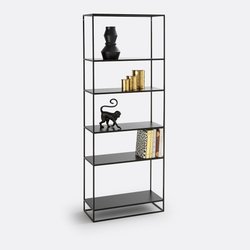
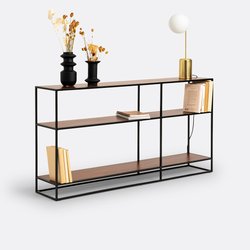
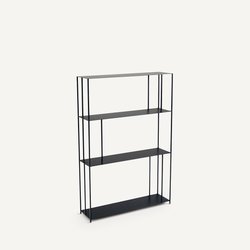
Store novels and framed photos neatly on the black bookcase shelves by grouping books in short runs and leaving a clear space for each frame. Place photographs where they remain visible without pulling books forwards to make room. If you use bookends, allow for their width too. A shallow shelf may suit paperbacks but leave a large illustrated book projecting beyond the front edge.
Compare the stated load limit for each shelf, rather than assuming every level can hold the same weight. A row of large hardbacks can be heavy. Follow the product instructions on weight distribution and avoid placing a dense stack in the centre of a shelf unless its stated capacity allows it.
Use lower compartments for bulky everyday items
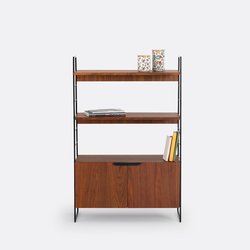
Keep board games and baskets organised in the lower compartments, where you can lift them out without reaching overhead. Measure the widest game box before choosing a compartment layout, and check that baskets can slide out without catching on hinges. Labelled baskets work well for charging leads, notebooks or children's drawing supplies because each category has a defined place.
Open shelves keep book spines visible, while closed compartments conceal loose items that would otherwise spread across the room. Compare these options according to your routine. If you use a board game several evenings a week, an accessible lower opening may be more practical than a small cupboard behind a dining chair. Leave a little free space around frequently handled items so that putting them away does not become a squeezing exercise.
Make a black finish work with the furniture you have
Balance dark shelving with nearby colours
A black bookcase can sit comfortably beside brown leather seating, pale walls or timber furniture when you repeat one or two existing colours on its shelves. For example, cream storage boxes can connect the shelving to a light rug, while brown baskets can echo a nearby chair. Keep these repetitions useful: boxes should hold something, and baskets should fit the belongings assigned to them.
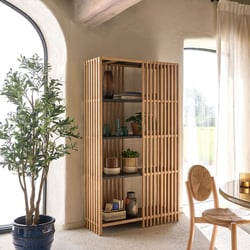
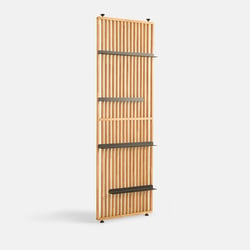
If you are deciding between black and an oak bookcase, compare both finishes against your flooring and largest furniture pieces. Black creates stronger contrast against a pale wall; oak brings a lighter timber colour into that same space. An oak effect surface offers a different appearance from a plain black finish, so check close-up images and material details rather than relying on a distant room photograph.
Keep displays compatible with daily use
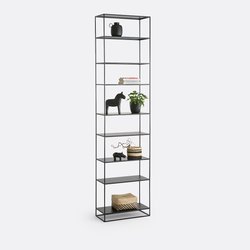
Display favourite cookbooks and a small plant on the black shelves near your dining area, keeping the books within easy reach of the kitchen. Use a watertight outer pot and move the plant elsewhere for watering to avoid spills on books or shelving. Check the plant's light needs before placing it in a shaded corner.
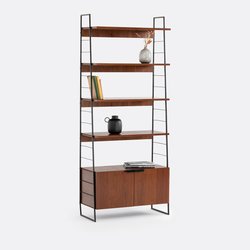
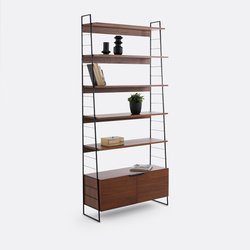
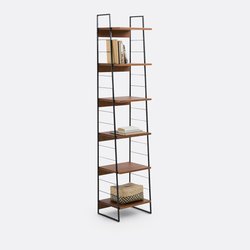
A wooden ladder shelf creates a more open outline than some full-sided bookcases, but its shelf depths may vary from top to bottom. Measure each level if you want to store matching baskets. A ladder unit may also need wall fixing even when it appears to lean securely; follow its own instructions rather than treating its shape as evidence of stability.
Check stability before filling the shelves
Read the fixing instructions and assess the wall
Secure the bookcase as directed by the manufacturer, using fixings suitable for your wall construction. Plasterboard, solid masonry and other surfaces require different approaches. Check whether wall fixings are supplied and whether additional hardware is needed. If you are unsure about the wall or fitting method, seek advice from a qualified installer before loading the unit.
Position the bookcase on a stable, level surface and check the assembly instructions before making adjustments. Put heavier items on lower shelves, within the stated load limits, and keep tempting toys away from high levels where children might try to climb. Neither a low position nor careful loading replaces the required anti-tip fixing.
Allow time for assembly and access
Before delivery, measure doorways, stair turns and any lift that the packaged furniture must pass through. Check the package dimensions as well as the assembled dimensions, because a long flat-pack panel can be awkward on a narrow landing. Clear a working area where parts can lie flat without blocking the only route through the room.
Check whether assembly needs two people and set aside time to complete it without rushing. Keep fittings grouped by the instruction stages, and protect the floor while building. Do not load a partly assembled unit; finish the assembly and any required wall attachment first.
Compare price against useful storage
When comparing price, look beyond the number of shelves. Check usable dimensions, adjustable positions, weight limits, closed compartments and assembly requirements. A lower-priced bookcase that cannot hold your larger books may leave you needing separate storage. Equally, additional cupboards offer little benefit if their doors cannot open comfortably in your room.
As you browse AM.PM bookcases alongside other designs, use the same short checklist for every product. Check current delivery charges, estimated delivery days and any stated service conditions rather than assuming they are identical across the selection. Save the measurements of your preferred options so you can compare them without repeatedly measuring the room.
Before your new black bookcase arrives, sort its contents into books, display pieces and contained storage. Set aside anything that belongs elsewhere, then plan the heavier items for the lower levels. With the dimensions checked, storage needs compared and stability instructions understood, you can give novels, photographs and everyday essentials a place without crowding the routes you use most.