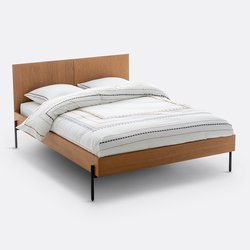
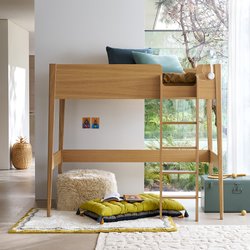
Measure your room before choosing a larger size
Before deciding between a double, king and super king, mark out the space your bed will occupy. A mattress measurement alone will not tell you whether the bedroom door can open fully or whether you can reach the wardrobe without turning sideways. A white wooden bed frame may have projecting posts, a deep headboard or a footboard that adds several centimetres to its footprint. Use the frame’s overall external dimensions, not just its mattress size, when planning your layout.
At La Redoute, we recommend comparing those external measurements with your bedroom layout before choosing a new bed. Start with room fit, then compare the wood, mattress support and assembly requirements. This gives you a practical way to narrow down larger frames without choosing by appearance or price alone.
Compare double, king and super king dimensions
In standard UK sizing, a double mattress measures 135 × 190 cm, a king measures 150 × 200 cm and a super king measures 180 × 200 cm. These are mattress dimensions rather than guaranteed frame dimensions. Check each product description carefully, particularly when a bed uses a different sizing convention or has substantial wooden side rails.
Double: useful when the bedroom has several jobs
A double can suit a bedroom that also needs space for a desk, dressing table or larger wardrobe. Compared with a king mattress, it is 15 cm narrower and 10 cm shorter. That difference may help preserve access to drawers at the foot of the bed, although the external frame measurements remain the deciding factor.
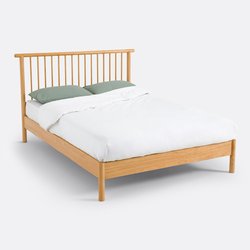
For one sleeper moving up from a single, a double offers more room to change position without taking up as much floor space as a king. For two people, consider whether the available sleeping width feels comfortable before committing. If you are also comparing an oak double bed, check its overall footprint separately: two frames made for the same mattress can occupy noticeably different amounts of space.
King: extra width and length without the largest footprint
A king gives two sleepers more width than a double and adds useful length for a taller person. In a room where the bed sits between fitted wardrobes or beside a radiator, those additional centimetres need checking at floor level and around any projecting furniture.
If you are comparing a white frame with a king size oak bed frame, assess construction as well as colour. Note the headboard depth, footboard height, centre support and clearance beneath the rails. A slim white design may take up less room than a chunky oak design, but colour alone tells you nothing about its dimensions.
Super king: generous sleeping space with greater access demands
A super king mattress is 30 cm wider than a king. That extra width can help two sleepers spread out, but it also brings the bed closer to bedside tables, wardrobes and doorways. Mark its full frame outline on the floor before ordering, including any posts that extend beyond the side rails.
When looking at a super king bed base alongside a wooden frame, compare what each product includes. Check whether slats, centre rails and support legs are supplied, and confirm that the mattress dimensions match. Also measure the delivery route: a long headboard or side rail still needs to pass through your hallway and around the stairs.
Make room for everyday movement
Aim for around 60 cm of clear walking space beside the bed where possible, while allowing more room where furniture needs to open. This is a planning guide rather than a guarantee of accessibility. Your layout may need wider routes, particularly if you use mobility equipment or regularly help a child get into bed.
- Measure from the outermost part of the frame to the nearest wall or furniture edge.
- Open wardrobe doors and drawers fully, then check the remaining standing space.
- Allow room to pull back the duvet and tuck in sheets without moving furniture.
- Keep the route from the bedroom door to the bed clear of projecting corners.
- Check that sockets remain reachable after the headboard and bedside tables are in place.
Compare wooden materials and white finishes
Look beyond the colour description
A white finish does not identify the material underneath it. A wooden bed may use solid pine throughout, combine solid wood with engineered panels, or use different materials for the headboard and rails. Read the component-level material details so you know what supports the mattress and what forms the decorative panels.
Solid pine is one option you may encounter when comparing white beds. Rather than judging strength from the wood name alone, check the stated load limit, joint design and support arrangement. A substantial centre rail and correctly fitted support legs matter when a larger mattress carries two sleepers every night.
Finish details also affect day-to-day use. A painted surface gives a different appearance from a whitewashed finish that leaves the grain visible. Check close-up images and the product description, especially if you want the bed to sit beside existing white furniture. Warm white and cooler white finishes can look noticeably different when placed next to each other.
Choose the design around the room’s furniture
A low footboard can leave the view towards a window less obstructed, while a taller footboard adds a defined edge at the end of the mattress. Measure either design carefully if your route to the wardrobe passes the foot of the bed. Rounded posts may also feel less awkward than projecting corners in a narrow passage.
White can help a wooden frame look less visually prominent against pale walls, though it does not reduce the space it occupies. If you are weighing it against a black wood bed frame, compare both against your flooring and bedding in daylight. The darker option may create a stronger outline; the white option may blend more closely with existing painted furniture.
Check slats, mattress support and storage clearance
During nightly sleep, sturdy wooden slats support the mattress by distributing its load across the frame. Their spacing and construction need to suit the mattress you intend to use. Check your mattress manufacturer’s base requirements before buying, including any maximum permitted gap between slats.
For double, king and super king sizes, look closely at centre supports. Follow the instructions for positioning support legs and adjusting them to meet the floor. An incorrectly fitted central leg can leave the middle rail unsupported even when the outer frame looks properly assembled.
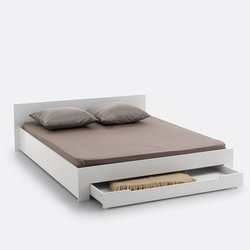
Under-bed storage needs its own measurements. Check the distance from the floor to the lowest obstruction, not simply the height of the side rail. A central support leg can stop a wide box sliding all the way underneath. For a frame with built-in drawers, measure the space needed to extend them and make sure bedside tables will not obstruct the nearest drawer.
Plan assembly before delivery day
Larger wooden frames need enough clear floor space to lay out parts and work around both sides. Read the assembly information before ordering, noting the recommended number of people, tools and estimated time. Assemble the bed in the room where it will be used, unless the instructions specify otherwise, because a completed frame may not fit through the doorway.
For example, parents assembling a white frame beside matching wooden bedside tables should move the tables aside first. This leaves room to connect the rails without knocking their corners or trapping access to the fixings. Keep screws grouped by type, protect painted components with the supplied packaging and follow the stated tightening sequence.
- Check all components against the parts list before starting.
- Identify the headboard, footboard and left and right rails before fitting connectors.
- Fit the centre rail, legs and slats exactly as instructed.
- Check that the frame sits evenly before adding the mattress.
- Retighten fixings later only as directed by the care instructions.
Balance price with the details you will use
Compare the total cost of each suitable option, including delivery, any assembly service and components sold separately. A lower price is less useful if you then need to buy a compatible slatted base. Read reviews for repeated comments about assembly clarity, movement or noise, while checking whether those comments concern the same size and model you are considering.
For kids moving into a larger bedroom, a white wooden bed frame can brighten the appearance of a cosy space when it sits against darker walls or beside colourful bedding. Still, leave room for toy storage, a desk and safe movement rather than choosing the largest bed that physically fits. Check the product’s age guidance and load limit as well.
Choose the largest size that leaves your room comfortably usable, then confirm the material, mattress compatibility and assembly details. A double with accessible drawers may serve you better than a king that blocks them; a super king may be worthwhile when both sleepers gain space without losing clear routes around the room. Let those everyday checks guide your final choice.