Check the fit before choosing
Before you choose a king size wooden bed frame, check three measurements: your mattress, the frame’s outer dimensions and the floor space around it. A bed can fit along a wall yet leave too little room to open a wardrobe or walk past the foot comfortably. Start with a tape measure and mark the proposed footprint on the floor. You will quickly see whether a substantial headboard, projecting legs or built-in storage will work with your daily routine.
We suggest making those checks before comparing colours and finishes. Once the dimensions are right, you can concentrate on the wooden materials, mattress support and care requirements that suit your bedroom.
Get your king size mattress fit right
Match the mattress measurements to the frame
A standard UK king size mattress measures 150 x 200 cm. The frame’s mattress recess should be designed for that size, but its external dimensions will usually be larger. Side rails, a footboard and an upholstered or wooden headboard all add to the overall footprint. Check the product measurements rather than assuming that every king bed occupies the same amount of floor space.
Size names can differ between countries and retailers, so compare measurements in centimetres when buying a new mattress or reusing your existing one. A mattress that is too large may sit unevenly on the rails; one that is too small can leave gaps around its edges. Neither problem is solved by adding thicker bedding.
If you are comparing a king frame with a super king bed base, remember that a standard UK super king mattress measures 180 x 200 cm. That extra width gives each sleeper more room, but it also takes another 30 cm from your bedroom layout. Check the dimensions of both products before deciding which size leaves enough walking space.
Plan for two sleepers and everyday movement
Two adults can stretch out comfortably on a king-size wooden bed frame when it holds a correctly sized mattress that suits both sleepers. Compared with a standard UK double mattress measuring 135 x 190 cm, a king offers 15 cm more width and 10 cm more length. That can be useful if one of you changes position frequently or needs extra legroom.
Allow for the way you use the room, too. If you both get up at different times, access on either side is more practical than pushing the bed against a wall. As a planning guide, aim for around 60 cm of clear walking space beside the bed where possible, then allow more wherever drawers or cupboard doors need to open.
Plan the bedroom around the whole frame
Measure doors, furniture and the delivery route
Use masking tape to mark the frame’s full length and width, including any headboard that extends beyond the side rails. Walk around the outline, open your wardrobe and pull out bedside drawers. This simple test can reveal a tight corner that is difficult to judge from a photograph or floor plan.
- Measure from the skirting board, not just the wall, if the frame needs to sit close to it.
- Check headboard height against windowsills, wall sockets and sloping ceilings.
- Leave room for bedding to hang without catching on nearby furniture.
- Measure stair turns, narrow doorways and landings against the packaged dimensions.
- Check whether delivery is to your doorway or your chosen room before arranging help.
A bed may arrive flat-packed, but its headboard can still be a large single component. Review the delivery and assembly information before ordering, especially if your bedroom is upstairs or reached through a narrow corridor.
Choose storage you can reach easily
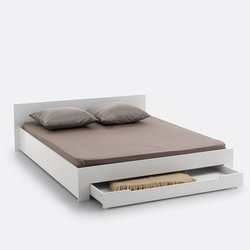
Storage beds are useful when spare bedding, seasonal clothing or shoes would otherwise fill your wardrobe. However, each opening method needs a different amount of space. Side drawers require clear floor area beside the frame, while an ottoman bed needs enough clearance for the mattress platform to lift without meeting a low ceiling or light fitting.
For an open space beneath the bed, measure the usable height before buying storage boxes. A shallow box can keep shoes together and out of the walkway, but its lid and handle must clear the side rail when you pull it out. Check whether central support legs interrupt the space before choosing long containers.
With an ottoman design, check the permitted mattress weight and follow the instructions for its lifting mechanism. A mattress outside the recommended range may affect how the platform opens or stays raised. Keep bedding clear of moving parts and use the handles provided.
Compare wooden frame materials and finishes
Look beyond the wood colour
Oak, ash and pine can give wooden beds quite different appearances. Oak commonly has a prominent grain, ash often has a lighter appearance with visible grain patterns, and pine typically shows more knots. The finish changes the final colour, so inspect the product description and close-up photographs rather than judging the wood from a distant room image.
Check which parts are solid wood and which use veneer or engineered boards. A frame may combine solid wooden legs with veneered panels, for example. That construction affects how you should clean or repair individual surfaces: a veneered panel should not be sanded as though it were solid timber.
If you are considering a king size oak bed frame, compare its finish with your existing furniture. A pale oak finish beside a dark wardrobe creates a clear contrast; a similar mid-brown finish gives a more consistent colour scheme. Place finish samples together if they are available, or compare detailed images in similar lighting.
Use the finish to guide the rest of the room
A natural wood finish makes grain and colour variation more visible, so bedding in plain colours can keep the room from looking busy. A black wood bed frame creates a stronger outline against pale walls and may make dust more noticeable on horizontal rails. If you prefer dark furniture, keep a soft cloth nearby for a quick weekly dust.
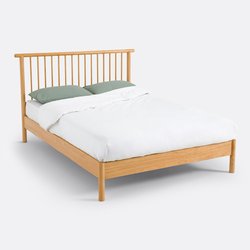
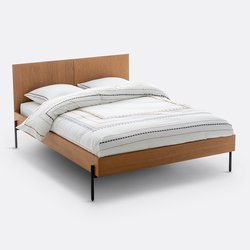
At La Redoute, our Agura Solid Ash Bed by LA REDOUTE INTERIEURS has a contemporary design inspired by Scandinavian style, with simple lines that work across different interiors, from bedrooms with painted bedside tables to rooms with wooden wardrobes. When considering a design like this, check the listed dimensions and finish against the furniture you plan to keep.
If the taped-out king footprint restricts access to your wardrobe, compare it with an oak double bed before committing. A smaller bed may leave enough room for a chest of drawers or an easier route to the window. Base the decision on both sleeping room and the tasks you carry out around the bed each day.
Check the support beneath the mattress
Read the slat and centre-support details
Solid wooden slats support a king mattress through nightly sleep by spreading its load across the frame. Their spacing still matters: some mattresses require closely spaced slats, so match the base specification to your mattress guidance. Check the mattress maker’s requirements before ordering rather than assuming every slatted frame is suitable.
King size frames may include a centre rail and additional legs to support the wider sleeping surface. Review the assembly diagram or product details to understand the structure. Once assembled, support legs should meet the floor as instructed; a leg left suspended above an uneven floor cannot carry its intended share of the load.
Compare any stated weight limit with the combined weight of the mattress and sleepers, following the retailer’s explanation of what the limit includes. Tighten fixings in the recommended sequence during assembly, then check them again at the intervals given in the care instructions.
Choose a headboard for how you sit in bed
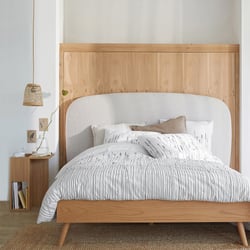
A wide wooden headboard keeps pillows steady during weekend breakfast in bed, provided it rises sufficiently above your mattress. Check its visible height after allowing for mattress depth and any topper. A headboard that looks tall in a product photograph can sit much lower behind a deep mattress.
If you read sitting upright, place supportive pillows between your back and the wood. Look at gaps between headboard rails as well: closely spaced rails or a solid panel can stop smaller cushions slipping backwards. Keep hot drinks on a stable bedside surface rather than balancing them on a wooden rail.
Keep your wooden bed frame in good condition
Follow the care instructions for its finish
Dust the rails, headboard and legs with a soft cloth, then use only the cleaning method recommended for the finish. Wipe spills promptly and avoid leaving damp laundry over the footboard, where moisture can mark the surface. Keep the frame away from direct heat sources where possible, and follow any product guidance about sunlight exposure.
When moving the bed, lift it rather than dragging it, using enough help for its weight and size. Dragging can strain joints and support legs. If the frame needs dismantling, label the fixings and keep the instructions so reassembly is straightforward.
Compare the complete cost before ordering
When browsing beds in a sale, check what the advertised price includes. Slats, storage components, a mattress, delivery and assembly may be listed separately. Compare the full cost of the available options, not just the frame price, and confirm the returns conditions before arranging delivery.
Your final check should bring together four things: mattress fit, bedroom clearance, suitable wooden materials and reliable support. With those details confirmed, you can choose a king size wooden frame that gives you room to sleep, access to your furniture and a care routine you can manage.