Choose bedding that fits
Choosing the right kids bedding set starts with fit. When a duvet cover is too large, it bunches around little legs. When a fitted sheet is too loose, it can ride up during the night and leave your child sleeping on a bare mattress corner by morning. For family life, the best bedding is the kind that fits the size of the bed, feels comfortable against the skin and goes straight into the wash without extra fuss. That is why many parents start with practical questions: is it for a cot, a toddler bed or a single? Do you need soft cotton for warm sleepers, or a cosy finish for colder rooms? Will the print still look good after regular washing?
This guide is here to help you choose with confidence. We will focus on size, comfort and easy care, so you can pick bedding that works on school nights, lazy weekends and last-minute sleepovers. Whether you are updating a nursery, replacing worn sheets in a shared room or looking for cheerful sets children are happy to climb into, a little planning goes a long way.
Start with size and fit guidance
The first step is to match the bedding to the mattress and duvet size you already have at home. This sounds obvious, yet it is often where buying mistakes happen. A child may sleep in a toddler frame, a junior bed, a standard single or a bunk bed with mattress depth limits. Each one needs a properly sized set. If you are buying online, measure the mattress width, length and depth before placing your order. A fitted sheet for a shallow mattress may slip off if your child has a waterproof protector underneath, while a deep fitted sheet on a slim mattress can gather into folds.
For a younger child moving out of a cot, keep an eye on proportions. Bedding that is too generous can feel heavy and awkward for a small sleeper to move under. In a compact room, a neat set also makes daily bed-making easier. If you are preparing a room for siblings, bunk beds often need a closer look at dimensions and fastening details, especially if the top bunk has guard rails that can catch oversized covers.
- For a cot or toddler bed: check both mattress size and duvet size, not just the age label.
- For a single bed: make sure the duvet cover matches the duvet exactly to avoid bunching.
- For bunk beds: look for practical pillowcase and quilt proportions that do not overhang too much.
- For deeper mattresses: confirm the fitted sheet depth if a topper or protector is used.
Refresh bunk beds with matching pillowcases and quilt sets for sleepovers, and the room will look tidier in minutes. That kind of practical fit matters when you are changing bedding quickly before guests arrive or stripping beds on a Sunday evening before the school week begins.
Comfort matters every night
Once the size is right, comfort becomes the next priority. Children notice texture straight away. Some prefer crisp cotton that feels cool at bedtime, while others like a softer finish that feels cosy after bath time. If your child runs warm, breathable cotton bedding is often a sensible place to start because it feels comfortable across the seasons and is easy to wash often. In winter, layering with the right duvet weight can be more useful than choosing heavy bed linen alone.
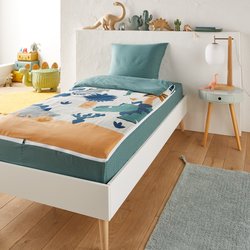
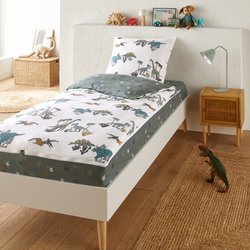
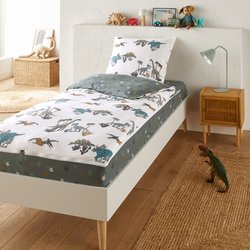
Think about how your child actually sleeps. A restless sleeper may kick off covers, so a lighter duvet in a well-fitted cover can be easier to manage than something bulky. A child with sensitive skin may do better with smooth fabrics and simple seams. If bedtime can be a struggle, a favourite print can help make the routine easier. Tuck toddlers into dinosaur-themed sheets for bedtime comfort, and the bed becomes part of the ritual rather than another obstacle.
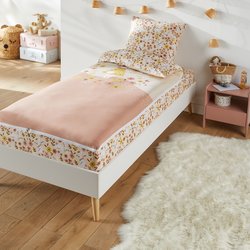
Colour can play a role too. Some families prefer soft white for a calm look that works with any room, while others choose playful blue, pink or mixed patterns that hide small marks between washes. There is no single right answer here; the best choice depends on how the room is used and how much visual energy your child enjoys before sleep.
Easy-care bedding makes family life simpler
For most households, easy care is not a bonus; it is essential. Kids spill drinks, climb into bed with damp hair, bring biscuit crumbs in during story time and occasionally need a full midnight bedding change. Washable kids bedding helps keep cartoon prints bright after messy spills. That means less worry for you when there is an accident, and less chance of a once-loved set looking tired after only a few weeks.
When comparing options, check the wash instructions before you buy. If the bedding needs delicate handling, it may not suit busy family life. Machine-washable cotton is often a practical favourite because it handles regular cleaning well and feels pleasant against the skin. Fast-drying fabrics can also help when you need the bed remade the same day. If your child has one favourite set and refuses all others, being able to wash and dry it quickly becomes very useful indeed.
It is also worth keeping two sets in rotation for each bed. One can be on the mattress while the other is in the wash. This is especially handy in a nursery or toddler room where accidents are more common. A spare fitted sheet and pillowcase can save time at night, even if you are not changing the whole duvet cover.
Choosing prints, colours and themes that work in real life
Children are often drawn to character prints, animals and bold colours, while parents usually want something that still looks good after repeated washing and room changes. The easiest way to balance both is to choose one themed set and one simpler backup. For example, a bright blue jungle print for weekends and a calmer white or soft pink design for weekdays can give you flexibility without overfilling the linen cupboard.
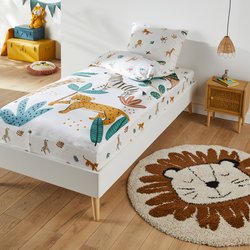
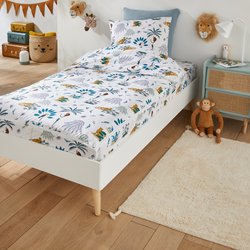
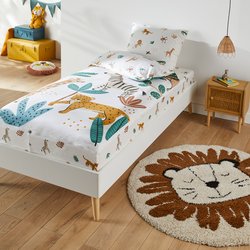
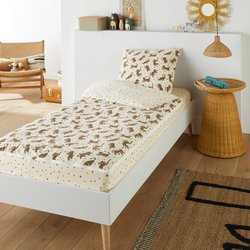
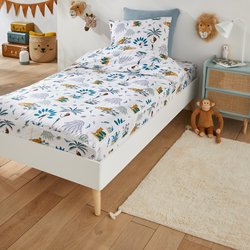
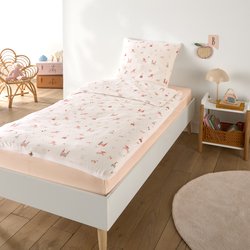
At La Redoute, the Caradou® Junglito Set with Duvet, white, LA REDOUTE INTERIEURS brings a jungle feel to bedtime by gathering all the animals together, making it a cheerful choice for children who like playful rooms with a clear bedtime theme. This kind of design can help younger kids settle into their own bed, especially when you tie the print into a familiar evening routine with stories or a favourite soft toy.
If you are styling a shared bedroom, coordinating rather than matching exactly can be easier. One child might want pink details, another might prefer blue, but the room can still feel pulled together if both sets share a similar pattern style or background shade. For older children, reversible bedding can also be useful: one side can be more playful, the other simpler for when tastes change.
Practical shopping tips before you buy
Before adding a set to your basket, it helps to run through a short checklist. This reduces returns and helps you find bedding that suits everyday family life rather than simply looking appealing in the product photo.
- Measure the bed, duvet and mattress depth.
- Check what is included in the set: duvet cover, pillowcase, fitted sheet or extras.
- Look at the material, especially if you want cotton for regular washing.
- Think about the season and room temperature before choosing a heavier or lighter feel.
- Read reviews for clues about softness, colour after washing and fit.
- Keep one spare set available for accidents or quick changes.
Reviews can be especially useful when you are unsure about feel or sizing. Parents often mention whether the fitted corners stay in place, whether the cotton softens after washing and whether colours such as white, blue or pink stay fresh-looking over time. These are the details that matter in everyday use, not just on the day the bedding arrives.
Useful choices for different family setups
Different homes need different bedding solutions. In a nursery, you may want gentle colours, soft cotton and quick-change practicality for busy evenings. In a toddler room, themes and familiar prints can help make bedtime more inviting. In a guest room used by grandchildren, simple children’s bedding sets that suit a range of ages may be more useful than highly specific character designs.
If you are shopping for a child who loves den-building and overnight stays, you might also want to browse kids sleeping bags for sleepovers or camping in the garden. For everyday bedroom updates, many families compare children’s bed linen sets with more design-led ranges such as kids' bedding sets & duvet covers AM.PM, while others prefer familiar branded looks from kids' bedding sets & duvet covers Silentnight or playful printed styles in kids' bedding sets & duvet covers Catherine Lansfield. Linking your choice back to the room, the bed size and your washing routine will help you narrow down the options more quickly.
What you need to know before buying
How to choose the right kids bedding?
The right kids bedding is bedding that fits the bed properly, feels comfortable through the night and stands up to regular washing. Start by measuring the mattress and checking whether your child sleeps in a cot, toddler bed or single. Then look at what the set includes. Some sets come with a duvet cover and pillowcase only, while others may include fitted sheets. If you already have a duvet at home, match the cover size exactly. If the cover is too large, the duvet can slide to one end, leaving cold spots and a lumpy finish that bothers children who move around in their sleep.
Material matters just as much as size. Cotton is a practical choice for many families because it is breathable, soft and easy to care for. If your child has sensitive skin or tends to get warm, smooth cotton can feel more comfortable than heavier fabrics. Colour and pattern should also work for daily life. White can look fresh and bright, but a printed set may be better if you want to hide small marks between washes. For a child who resists bedtime, a favourite theme can make a real difference: dinosaur sheets, jungle animals or cartoon prints can turn the bed into a familiar, welcoming space.
A few points help when deciding:
- Check mattress depth if you use a protector, especially for fitted sheets.
- Choose easy-wash care instructions for weekly laundry.
- Read reviews to see whether the bedding keeps its softness and colour.
- Keep a spare set ready for spills, illness or toilet-training accidents.
A common pitfall is buying by age label alone. Two children of the same age may sleep in different bed sizes, so labels are less reliable than measurements. Another is focusing only on the print and forgetting what is included in the set. For example, if you are getting a room ready before term starts and assume the set includes a fitted sheet when it does not, you may end up with an incomplete bed on the first night. The easiest approach is to match the size first, then choose the feel and design that suit your child.
What are the best duvet sets for children?
The best duvet sets for children are the ones that make bedtime easier for both kids and parents. In practical terms, that usually means a good fit, a comfortable fabric and easy care. For everyday use, many families look for cotton duvet sets because they are breathable and simple to wash. If the room is used heavily for reading, playing and occasional snacks, a machine-washable set with a pattern that stays bright can be more useful than something delicate. This is why many parents look closely at reviews before buying: they want to know whether the colours hold, whether the fabric softens after washing and whether the duvet stays in place inside the cover.
The “best” set also depends on the child and the room. For a nursery or toddler room, gentle prints and soft colours can help create a calm bedtime routine. For school-age children, themed bedding often works well because it gives them a sense of ownership over their space. A jungle, dinosaur or space print can encourage a child to settle into bed more willingly. For bunk beds and sibling rooms, coordinated sets with matching pillowcases can make the whole room feel organised, especially when guests come to stay.
When comparing duvet sets, look for:
- The correct size for the duvet and bed.
- Comfortable fabric, often cotton for regular use.
- Colours and prints that still look good after repeated washing.
- Styles that suit your child’s age and bedroom setup.
One pitfall to avoid is choosing a set that looks lovely but proves awkward in practice. A very pale set may need more frequent washing in a toddler room, while a rougher fabric may be rejected after one night. For example, if your child has a single bed and loves sleepovers, a duvet set with matching pillowcases and a washable finish will be far more useful than an intricate design that needs special care. The best choice is the one that still works after bedtime stories, accidental spills and a quick wash before school on Monday morning.