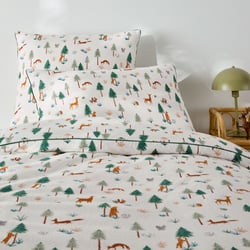
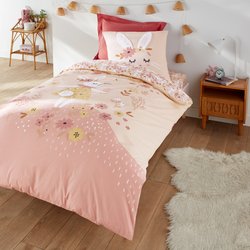
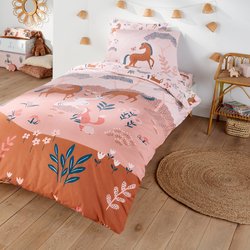
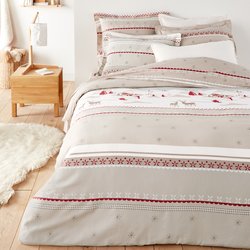
Animal print duvet covers for little beds and big imaginations
Before the leopard spots or zebra stripes win you over, check the numbers on the label. An animal print duvet cover needs to fit the duvet inside it, not just look right beside the bed. A cover that is too roomy can leave empty corners; one that is too small can bunch the filling into an uncomfortable lump. Measure your duvet insert and match its dimensions to the cover before you start choosing creatures.
Once the fit is sorted, you can have fun with the pattern. Your child might want a bed full of jungle cats, a parade of zebras or sea animals swimming across the covers. We suggest working through four practical details first: size, fabric, closure and care. They make the difference between bedding that simply catches your eye and bedding that works through school nights, sleepy mornings and unexpected spills.
Start with size: give every corner somewhere to go
Match the cover to the duvet, not the mattress
A mattress measurement tells you about the bed, but it does not confirm duvet insert compatibility. Your child may have a generously sized duvet on a narrow bed, or a double duvet tucked around a smaller mattress. Read the sewn-in label on your existing insert, then compare those measurements with the product details for the new cover.
As a useful UK reference, a single duvet commonly measures 135 × 200cm, a double 200 × 200cm and a king 225 × 220cm. However, sizes can vary between ranges and international listings. Treat these figures as a starting point rather than a promise. If you are browsing single duvet covers, check the centimetre measurements rather than relying on the size name alone.
- Lay the duvet flat before measuring, smoothing out folded edges without stretching the fabric.
- Check both width and length, especially if the label has faded after repeated washing.
- Compare the duvet measurements with the cover measurements, not the dimensions of its packaging.
- Check pillowcase sizes and quantities separately if you are buying a set.
Do not size up the cover to create extra drape. The duvet and cover should be compatible with each other. If you want more coverage at the sides of the bed, consider the size of both pieces together, then check that the extra fabric will not trail onto the floor or obstruct a bedside drawer.
Check what comes in the packet
A product photograph may include cushions, a fitted sheet and several pillows, but that does not mean every item is included. Some bedding sets contain a duvet cover and one pillowcase; others include two pillowcases, while some covers are sold separately. Read the contents list before ordering, particularly when your child has picked a matching animal pillowcase from the picture.
If you are comparing a girls' double duvet set with separate pieces, check the dimensions and included items side by side. The same approach works for girls' bedding sets: start with fit and contents, then let your child choose between spots, stripes or illustrated animals. A leopard is not reserved for one kind of bedroom, and neither is a playful underwater scene.
Pick a fabric that suits your child's nights
Think about the feel against sleepy skin
Look beyond the print and read the fabric composition. Cotton is a familiar option for bedding that is washed regularly, while a cotton-and-polyester blend may suit a household that values quicker drying and fewer creases. The actual care instructions still matter: two covers with similar fibre content may have different washing or ironing requirements because of their finish, print or decorative details.
For a child who dislikes textured clothing labels or raised seams, check whether the cover has embroidery, tufting or other surface details. A photograph can show where those features sit, but the description should explain the fabric construction. If your child likes running their hands over textured patterns during a bedtime story, those same details may be part of the appeal.
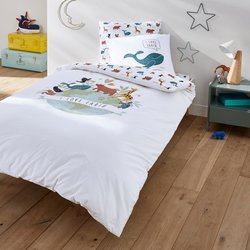
At La Redoute, our Heol Under The Sea duvet cover with tufting from LA REDOUTE INTERIEURS contains cotton and comes in a pale cream shade, with dolphins, seahorses and rays pictured swimming in their natural environment for children to discover. The underwater animals give you something specific to explore together: your child can find the seahorse while you straighten the cover before lights out.
Choose the pattern scale with the room in mind
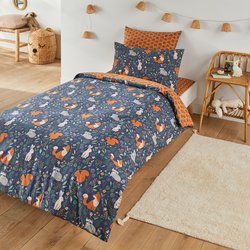
Small leopard spots can sit comfortably alongside a striped storage basket, while broad tiger stripes take up more visual space. If the wallpaper already features a busy design, try a cover with animals spaced across a plain background. You will still get the creature theme without making every surface compete for attention.
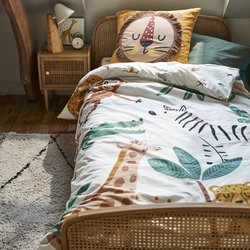
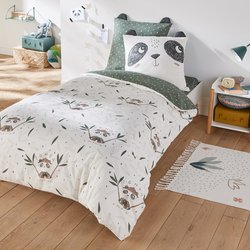
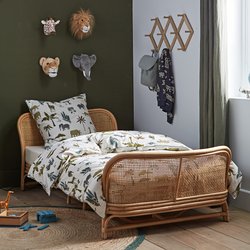
When browsing kids' animal bedding, consider what your child will enjoy seeing at close range. Large illustrated animals can become characters in a bedtime story. A smaller repeating print may appeal to a child who wants an animal theme without a bed covered in faces. Let them compare two or three options rather than a whole page of designs when bedtime is already approaching.
Look closely at the closure before laundry day
Choose a fastening you can manage easily
The opening is a small detail until you are changing the bed in a hurry. Buttons, press studs, zips and tuck-in ends each need a slightly different approach. Check the closure type and opening width in the product description, especially if you find narrow openings awkward when feeding a duvet into its cover.
A wide opening can make it easier to reach both far corners. A zip needs careful handling so that the duvet filling does not get caught in the teeth. Buttons and press studs should be checked regularly for loose parts or damage, particularly on a younger child's bed. Whatever the closure, follow the product's age guidance and keep damaged bedding out of use until it has been repaired safely.
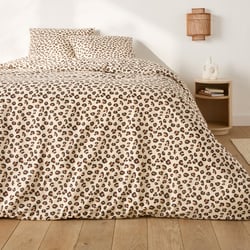
To fit the cover, turn it inside out, reach into the two top corners and take hold of the corresponding duvet corners. Draw the cover down over the insert, then lay it flat and spread the filling into place. Fasten the opening once the lower corners are seated. Before chilly nights, you can tuck the leopard-print duvet around your child's bed without leaving a bundle of loose cover fabric at their feet.
Make washing part of the buying decision
Read the label before the first wash
A tiger-striped cover may look ready for adventure, but its washing instructions still set the rules. Follow the care label for temperature, drying and ironing rather than assuming all cotton bedding can take the same treatment. Wash a new cover before use if the manufacturer recommends it, and check whether it should be washed with similar colours or turned inside out.
If the dog naps on the tiger-striped duvet cover, remove loose hair before putting it in the machine. A lint roller or an appropriate upholstery attachment can help, depending on the fabric. Check for muddy paw marks and treat them using a method suitable for the care label. Avoid applying an unfamiliar stain treatment across the print without first checking its instructions and testing an inconspicuous area where advised.
- Leave enough space in the washing machine for the cover to move; a tightly packed drum makes thorough washing and rinsing harder.
- Use the recommended detergent amount rather than adding extra for a particularly adventurous afternoon.
- Close fastenings before washing when the care instructions advise it, helping to reduce snagging or items slipping inside.
- Dry the cover completely before folding it away or putting it back on the bed.
Keep a spare ready for interrupted nights
A second compatible cover makes unexpected changes simpler. If a drink spills after story time, you can remake the bed while the first cover is in the wash. There is no need for both sets to match: a zebra design can take over when the leopard cover is drying, provided both fit the same duvet.
Store each clean cover with its matching pillowcase so you can find the pieces quickly. If your child uses a separate quilt as well, check its care instructions independently rather than putting everything through the same programme. A decorative quilt and a duvet cover may need different washing temperatures or drying methods.
Build an animal-themed bed without replacing everything
Start with the cover as the main pattern, then use an existing plain fitted sheet in a colour picked from the design. A black-and-white zebra print works with a grey sheet; warm leopard tones can sit beside cream or brown. This gives you a clear way to reuse what is already in the linen cupboard without trying to match every shade exactly.
If your child is moving on from girls' unicorn bedding, keep any plain coordinating pieces that still fit and introduce animals through the duvet cover first. A familiar sheet can remain in place while a new pattern gives them something different to talk about at bedtime. For shared rooms, siblings can choose different animals while keeping the same background colour for a more coordinated arrangement.
Check the final details before your animal bedding arrives
Whether you choose a named brand or an unbranded design, compare the same essentials: measurements, fabric composition, closure, care instructions and pack contents. A recognisable name does not replace those checks, and a product photograph cannot tell you whether your existing insert will fill the corners.
Before you order, review the delivery charge, any international sizing information and the returns conditions. If free postage or a collect option is advertised, check the applicable spending threshold, location and availability rather than assuming it applies to every basket.
With those practical details settled, the final choice can belong to your child: leopard spots for jungle stories, zebra stripes for bold mornings or sea creatures to count before sleep. We recommend keeping the measurements handy while you browse, so the design they love is also one you can fit, wash and put back on the bed with confidence.