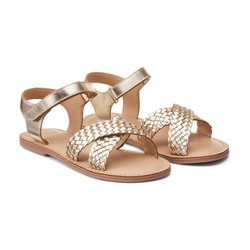
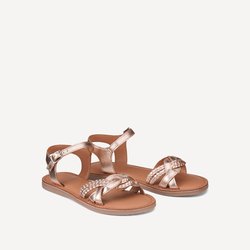
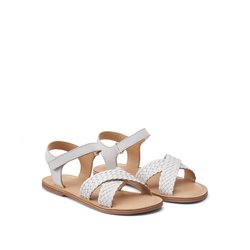
Girls’ sandals for comfortable, active days
A sandal that slips at the heel or squeezes across the toes can quickly interrupt a sunny afternoon. For girls moving between walks, playtime and snack breaks, comfort starts with a secure fit and a stable base. Before choosing a colour or decorative detail, check how the foot sits on the sole, where the straps fasten and whether your child can walk without gripping with her toes.
At La Redoute, we suggest choosing girls’ sandals to suit your plans, whether that means playground walks, beachside family strolls or summer birthday parties. This guide covers fit, support, materials and everyday occasions, with practical checks to help when shopping online or trying a pair at home.
Start with girls’ sandal sizing
Measure both feet before choosing a size
Children’s feet grow at different rates, so last summer’s size is only a starting point. Measure both feet while your child is standing, following the instructions in the relevant size guide. If one foot is slightly larger, use that measurement when comparing sizes. Refer to the guide for the particular brand or style rather than assuming every pair of sandals follows the same measurements.
Check length and width together. A sandal can have enough room in front of the toes yet still feel tight across the widest part of the foot. Equally, a longer size may leave a narrow foot sliding around. Adjustable straps can help refine the fit, but they cannot make an unsuitable sole shape comfortable.
Look at the whole foot on the footbed
With your child standing naturally, check that her heel sits within the back edge and her toes stay inside the front and sides. Allow the growing room recommended by the size guide, but avoid so much extra length that the front catches as she walks. The widest part of her foot should rest comfortably on the widest part of the sole.
- Check that no toe rests against a raised edge or hangs over the front.
- Look for straps pressing into the skin across the toes or instep.
- Ask her to walk, turn and stop so you can see whether her heel slides.
- Watch for toe gripping, shuffling or repeated attempts to adjust the sandals.
- Try both sandals, as checking just one foot can miss a difference in fit.
When trying sandals ordered online, use a clean indoor surface and follow the retailer’s returns conditions. A short walk along the hallway can reveal heel movement that is not obvious when your child is sitting down. Keep the packaging until you have checked the fit on both feet and tested the fastenings.
Choose secure straps for play and walking
Prioritise a fastening that holds the heel
For active everyday use, a secure heel strap helps keep the sandal in place when your child changes direction or steps off a kerb. The back strap should hold the heel without rubbing against the ankle. A slip-on design with straps only at the front may be convenient for brief use, but it offers less hold during longer walks.
Adjustable straps help keep girls’ sandals secure during beachside family strolls, especially when the route includes a promenade and a stop at a café. Check the fit again if sand gets underneath a strap, and remove any grit before continuing. Tightening the fastening over trapped sand is likely to make the walk less comfortable.
Match the closure to her independence
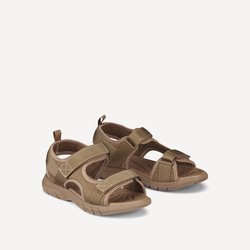
A hook-and-loop fastening can be useful for children learning to put on their own shoes. Make sure the fastening surfaces overlap properly once adjusted; a strap secured only at its tip may come loose. Buckles allow a set fit, though younger children may need help fastening them before leaving the house.
Once the sandals are fastened, ask your child to bend her knees and take several steps. The straps should stay secure without being pulled too tight. If you have to tighten every strap to its limit and her foot still slides, try a different shape rather than relying on extra pressure from the fastenings.
Balance cushioning, flexibility and everyday stability
Check how the sole moves
A comfortable everyday sole should move with the foot rather than feel awkward underfoot. Look for some flexibility around the forefoot, where the foot bends during a step, along with a stable base. Avoid judging comfort by softness alone: a very squashy footbed can feel pleasant when pressed with a thumb but may not suit your child on a longer walk.
Watch your child walk in the sandals, rather than relying only on how they feel by hand. She should be able to take natural steps without dragging the front, lifting her knees unusually high or repeatedly losing contact with the heel strap. If the sandals change the way she normally walks, reassess the size or style.
Consider the ground beneath her feet
For playground walks on sunny afternoons, cushioned girls’ sandals provide underfoot padding to make the route from home more comfortable. For running, climbing equipment or organised sport, check the activity guidance: closed sports shoes may be more appropriate than open sandals. Cushioning does not replace toe protection or a sole suited to the activity.
Look at the outsole texture if your plans include paved paths or smooth indoor floors. No sole can guarantee grip on every surface, particularly when wet. Encourage walking rather than running around pool edges, and do not assume an everyday sandal is suitable for use in water unless the product description says so.
Select materials for warm-weather foot comfort
Read the upper, lining and footbed details
Whether you choose leather, textile or synthetic sandals, check the areas that touch the foot. A leather upper may soften with wear, but it should not need a painful breaking-in period. Textile straps can feel light, while synthetic materials may be easy to wipe clean after a dusty outing, depending on the care instructions. Whatever the material, inspect seams, edges and decorative pieces for anything that could rub.
Pay attention to the lining as well as the outer material. A smooth-looking sandal can still have a raised seam beneath a strap. Run a finger along the inside before your child tries it on, then check her feet after a short period of wear for persistent redness or sore spots.
Keep feet comfortable through warmer days
Open designs expose more of the foot to the air, but straps and footbeds still sit against warm skin. After a long outing, let the sandals air as directed by their care label. If they become damp, avoid placing them against a radiator or using strong heat unless the manufacturer specifically allows it.
On a full day out, take a short seated break to check for grit, dampness or rubbing, especially after visiting a sandy play area. Pack another suitable pair of shoes when your plans combine walking with activities that need different footwear, rather than expecting one sandal to cover every part of the day.
Match girls’ sandals to everyday occasions
Choose practical colours for regular outings
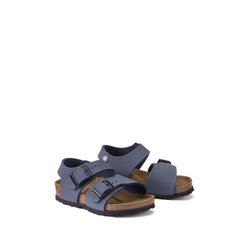
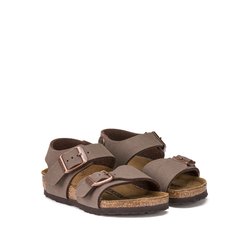
For nursery journeys, family visits and trips to the shops, start with colours that work with clothes already in her wardrobe. Navy or brown sandals go well with denim shorts and printed cotton dresses. Beige works with pale summer outfits, while black is an easy option with leggings or darker skirts. Check the cleaning guidance before choosing white for frequent visits to dusty paths or grassy parks.
A classic shape with simple straps can be easier to coordinate across several outfits than a design with large decorations. If she enjoys brighter colours, pink sandals can add the colour she wants without extra ornaments that might catch during play. Let her help choose once you have narrowed down the options that fit securely.
Keep party outfits comfortable enough for movement
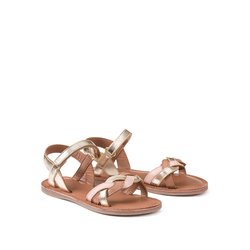
Colourful girls’ sandals pair well with dresses for summer birthday parties and can stay comfortable through garden games and the walk home. Look for decorative details positioned away from pressure points, and check that bows or flowers do not interfere with the fastening.
Use the same fit checks for party sandals as for everyday pairs. A dressier finish is not a reason to accept slipping heels or tight toe straps. For an outdoor celebration, a stable, low sole is generally more practical than a raised heel, especially when children move between paving and grass.
Compare details before ordering online
When comparing sandals online, look beyond the photograph. Check the fastening type, material descriptions, size guide and care information. If you are searching for a particular name, such as Luana, confirm the exact product details rather than assuming similarly named styles have the same shape or construction.
Weigh up the price against the features your child will use. For regular walking, secure adjustment and a comfortable lining deserve more attention than decorations. For occasional party wear, you may prefer a simpler design that also works with everyday dresses, giving her more opportunities to wear the pair.
Before removing labels, repeat the standing and walking checks at home. Check the fit regularly throughout the warmer months, especially if you notice toes nearing the edge or straps needing a different setting. Sandals that fit comfortably at the start of summer may need reassessing before the next family outing.