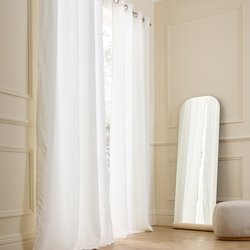
Choose curtains that fit your room and your routine
When you are choosing curtains, the look matters, but the fit matters just as much. A beautiful fabric can fall flat if the width is too skimpy, the drop is too short or the heading does not suit your pole. The easiest way to get it right is to think in three steps: measure carefully, match the fabric to the room, and hang them in a way that suits daily life. That approach helps whether you want to block morning sunlight in the bedroom for later sleep, add privacy to living room windows during evening gatherings, or reduce glare on TV screens while watching movies at home.
At La Redoute, you will find styles in different headings, widths and drops, with practical options for light control, insulation and easy care. That means you can choose a single curtain panel for a narrow window, or a fuller pair for a wider bay, without guessing what might work once it arrives.
Start with window sizing before you look at colour
The first question is not which shade of grey or green you prefer. It is how much space your window needs. If you skip measuring, you may end up with curtains that look stretched open all the time or drag too heavily on the floor. For a neat result, measure both the width of the window and the width of the pole or track you plan to use. If you have not chosen one yet, it helps to browse curtain poles & rails before you decide on the heading.
For width, many shoppers use the width of the window recess, but the better guide is the full width of the pole or rail. Curtains usually need extra fabric to create folds, whether you choose an eyelet top or a pencil pleat heading. If the panel width only just matches the pole width, the fabric can look flat and mean, especially in a sitting room where the curtains stay closed after dusk for privacy.
For drop, think about where you want the fabric to finish:
- Sill length: useful in kitchens, children’s rooms or where there is a radiator beneath the window.
- Below-sill length: a practical choice when you want more coverage without the fabric reaching the floor.
- Floor length: ideal for bedrooms and living rooms when you want a fuller look and better light control.
A concrete example: if you are trying to block morning sunlight in the bedroom for later sleep, a floor-length blackout style that sits close to the wall will usually perform better than a short curtain that leaves light spilling in around the lower edge.
Match the heading to the way you want the curtains to hang
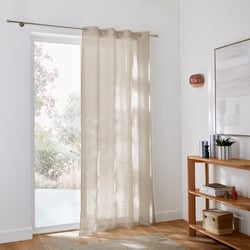
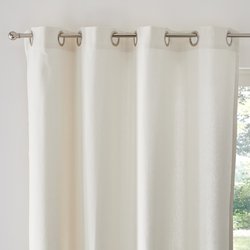
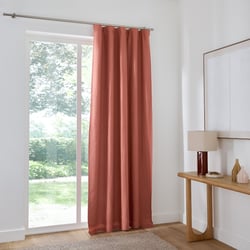
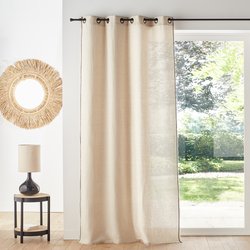
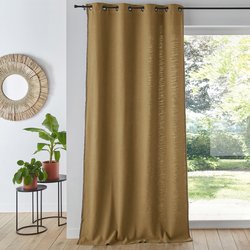
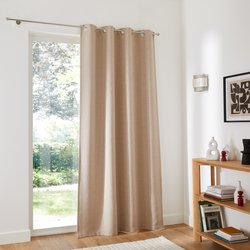
The heading affects both the look and the practicality of your curtains. It is the top finish that attaches to the pole or rail, and it changes how the folds form when the curtains are open or closed. If you want a quick, modern finish, an eyelet heading slides smoothly on a pole and creates broad, even waves. This can work well in a living room where you open and close the curtains every day before and after evening gatherings.
If you prefer more traditional folds, a pencil pleat heading uses gathering tape to create a softer look. This style is flexible because it can often be used on either a track or a pole with rings, depending on the hooks and fittings. A pinch pleat style gives a more structured finish and suits formal rooms, but it is worth checking compatibility before you buy.
Think about your hardware at the same time as your curtains. Some headings are made for poles, others for tracks, and some are more adaptable. If you like a layered window with a blind behind the curtains, you may also want to explore curtains & blinds so'home for coordinated solutions that make measuring simpler.
Choose fabric based on how you use the room
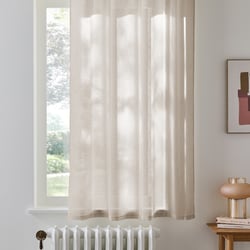
Fabric choice is not only about texture. It changes how much light enters the room, how the curtains drape, and how much maintenance they need. Lighter cotton blends can feel airy in a bright room, while heavier, lined fabrics often give better coverage and a fuller fall.
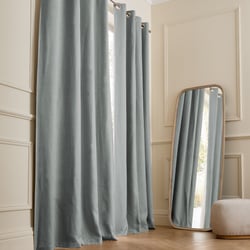
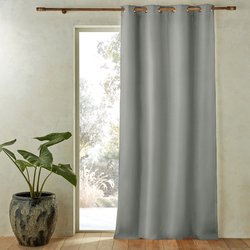
For bedrooms, a blackout or tightly woven lined curtain is often the most practical route. If sunlight reaches the room early, a standard sheer or lightweight panel may still leave the room too bright for a lie-in. In that case, a denser fabric in a darker tone such as charcoal or deep grey can help create a more restful setting with fewer bright patches around the window.
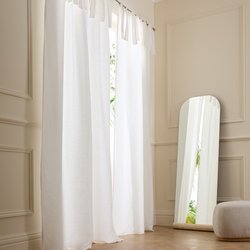
For living rooms, your choice may depend on privacy and screen glare. During evening gatherings, when indoor lights are on and it is dark outside, unlined or very light curtains can leave the room feeling exposed. A medium-weight lined pair gives more privacy while still looking soft in daylight. If your sofa faces a television, reducing glare on TV screens while watching movies at home becomes another practical benefit of choosing fuller curtains with better light control.
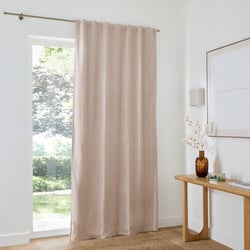
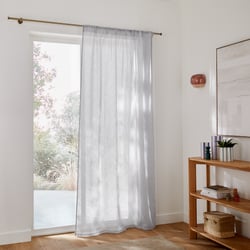
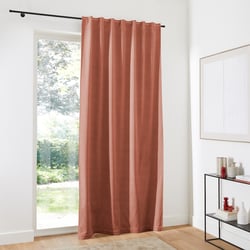
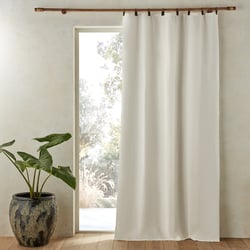
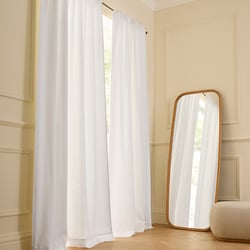
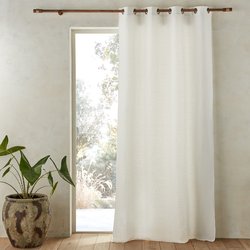
According to our catalogue, the Lincot Hidden Tab Blackout Curtain - LA REDOUTE INTERIEURS combines the softness of cotton and the natural appearance of linen. That kind of fabric mix can be useful if you want the room-darkening effect of blackout curtains without a stiff finish.
Think about compatibility with your space
Every room has its own practical limits. A floor-length curtain may look lovely in a photo, but if it pools around a frequently used balcony door, you may find it gets caught underfoot. In a room with a radiator below the window, a sill or below-sill drop can be easier to live with on a daily basis. The right fit is the one that works with your furniture layout, heating and how often the window is opened.
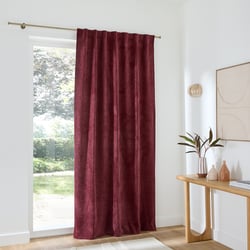
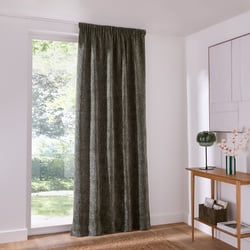
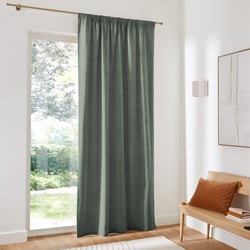
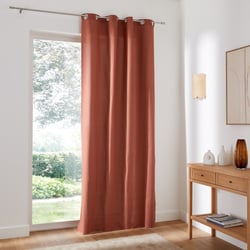
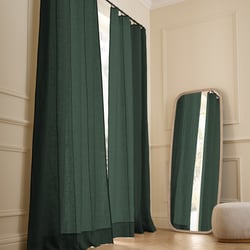
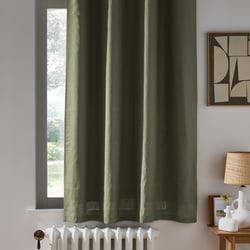
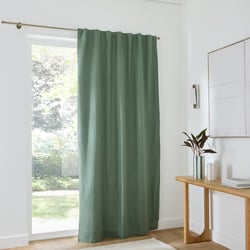
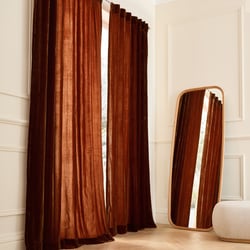
Colour also plays a role in compatibility. Soft neutrals can settle easily into changing interiors, while richer tones can anchor the room. A pair in green can soften a space with pale wood furniture, while grey or charcoal may suit a room with black metal accents or a modern sofa. If you are comparing patterns and plain fabrics, collections such as curtains & blinds catherine lansfield or curtains & blinds cessot decoration can help you narrow the style direction before you choose the exact size.
Children’s bedrooms and family spaces often benefit from easy-care fabrics and a simple hanging system. If you know the curtains will be opened every morning, closed every night and occasionally brushed by busy hands, a fabric that is machine washable or easy to maintain can save time later.
How fullness changes the final look
Two curtains can have the same drop and still look completely different depending on fullness. Fullness means how much extra fabric there is across the width when the curtains are closed. More fullness creates richer folds; less fullness gives a flatter finish. This is especially noticeable with a pencil or pleat heading, where the folds are part of the overall style.
Here is the practical consequence: if you are dressing a living room window that faces the street, and you want privacy in the evening, curtains with enough width to close properly will cover the glass more effectively and look more balanced. If they are too narrow, gaps can appear at the centre or edges, and the room may still feel exposed once the lights are on.
When checking product details, look at whether the size given is for one panel or a pair, and whether the width is suitable for your pole or track. A low price can be appealing, but it is worth checking dimensions first so you do not need to reorder a wider size.
Easy care matters more than you think
Care instructions can shape your choice just as much as colour or heading. In a main bedroom or sitting room, curtains collect dust over time, and fabrics near windows can be exposed to daylight, condensation and daily handling. If you want a style that is simple to refresh, check whether the material is machine washable or needs specialist cleaning.
Easy-care designs are especially useful in homes where curtains are opened and closed often. For example, if you shut them every afternoon to reduce glare on TV screens while watching movies at home, the leading edges and top heading are likely to be handled regularly. A fabric that keeps its shape after washing or steaming can make upkeep simpler.
When you shop, it also helps to note whether matching home pieces are available in the same collection. If you are coordinating several rooms, ranges such as curtains & blinds pineapple elephant may help you build a consistent look while still selecting different drops and headings to suit each window.
Check the practical details before you order
Before you add curtains to your basket, run through a quick checklist. It can save you from choosing a style that looks right in the photo but does not suit your room once hung.
- Measure the full pole or rail width, not just the glass.
- Decide where the drop should finish: sill, below sill or floor.
- Check the heading type: eyelet, pencil pleat, pleat or hidden tab.
- Think about the room’s needs: blackout for sleep, lined for privacy, lighter fabric for a softer daytime feel.
- Review care instructions if you want easy maintenance.
- Confirm stock is available in the size and colour you want.
- Look at the total price, including any delivery details.
It is also worth checking whether there is a free delivery offer or whether standard delivery charges apply, particularly if you are ordering several pairs for different rooms. If your window size is fairly common, a regular ready-made size may suit you well. If not, measuring with care becomes even more useful, because the right ready-made drop can still give a tailored result when the pole is positioned well above the frame.
What you need to know before buying
How do I know what curtains to buy?
The best way to know what curtains to buy is to begin with the room’s job, then work back to size, heading and fabric. Ask yourself what the curtains need to do every day. In a bedroom, you may want to block morning sunlight for later sleep, so a blackout or lined design with a floor-length drop is often the better choice. In a living room, you may be more focused on privacy during evening gatherings, which means enough width to close properly and a fabric dense enough to stop the room feeling exposed when the lights are on.
After that, measure carefully. Use the width of the pole or rail, not only the window itself, because curtains need space to stack and fold. Then choose the drop according to the room: sill length for practical areas, floor length for a fuller finish. Next, check the heading. Eyelet curtains suit poles and glide easily; pencil pleat styles are more flexible and can suit a track or pole depending on fittings.
A simple buying checklist can help:
- Choose the function first: blackout, privacy, glare reduction or decorative softness.
- Measure width and drop accurately.
- Match the heading to your existing hardware.
- Pick a fabric that suits how often the curtains will be used and cleaned.
A common mistake is choosing by colour first and discovering later that the size or heading is wrong. For example, a lovely green pair may not work if the panels are too narrow to cover a wide living room window at night. Buy with the room’s daily use in mind, and the final look is far more likely to feel right.
What is the rule of thumb when buying curtains?
A useful rule of thumb when buying curtains is to allow enough width for fullness and enough drop for the finish you want. In practical terms, curtains should usually be wider than the pole or track measurement so they can form proper folds when closed. If you buy panels that only match the exact width of the opening, they can look flat and may leave small gaps that let in light or reduce privacy.
For drop, decide first whether you want sill length, below-sill or floor length. Then measure from the correct starting point: from the top of the pole for eyelet curtains, or from the hook position on a track or taped heading. This matters because even a few centimetres can change whether the curtain floats neatly above the floor or sits awkwardly too high. In a bedroom, a slightly longer drop often helps with light control. In a kitchen or study, a shorter drop may be more practical if furniture sits beneath the window.
Keep these points in mind:
- Buy for the pole or rail width, not just the glass area.
- Check whether the product is sold as one curtain or a pair.
- Match the heading to your fittings before ordering.
- Use lined or blackout options where privacy and light control matter most.
One pitfall to avoid is hanging the pole too close to the top of the window frame. If you place it a little higher and slightly wider than the frame, the curtains can cover the window more effectively and let in more daylight when open. That is especially helpful in a living room where you want the window to feel generous by day, yet still need good coverage when it turns dark outside.