Find the right fit and finish
A grey suit earns its place in your working wardrobe when the jacket fits comfortably, sits neatly over your usual layers and works with the shoes you actually wear. Start with the blazer rather than the full outfit: its shoulder line, length and fastening will determine how the matching trousers look. For client meetings, you might prefer a defined waist and a clean, close-fitting shoulder. For an office commute involving trains, stairs and a laptop bag, a little more room through the body can make the day easier. At La Redoute, we suggest comparing cut, fit, fabric and care before deciding which women's grey suit jacket belongs in your wardrobe.
Compare jacket cuts before choosing your size
Single-breasted styles for straightforward layering
A single-breasted blazer has one row of buttons and usually less overlapping fabric at the front than a double-breasted design. That makes it a practical starting point if you plan to wear your jacket open over a white shirt, then fasten it before a presentation. A one-button style draws attention towards the fastening point, while a two-button version can give a slightly higher closing line. On most two-button jackets, leave the bottom button undone so the lower front can move as you sit or walk.
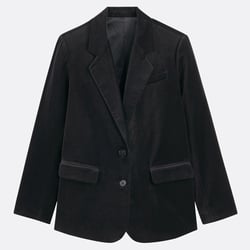
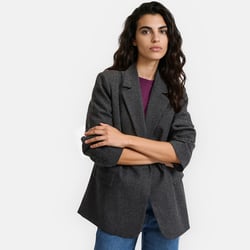
At La Redoute, our Regular Fit Single-Breasted Blazer from LA REDOUTE COLLECTIONS draws on men's fashion for its boyish styling, with a feminine finish. When considering this kind of cut, compare its measurements with a jacket you already enjoy wearing rather than assuming that a regular fit will sit close to your waist.
Double-breasted and relaxed alternatives
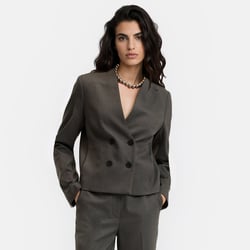
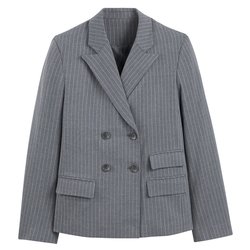
A double-breasted jacket creates a broader, more covered front, which can work well when you want a structured outline for formal meetings. Check it both fastened and open: some cuts hang neatly either way, while others look more balanced when closed. If you prefer extra room for knitwear, start by browsing women's oversized jackets, then check the shoulder and sleeve measurements. A relaxed cut should give you room to move without hiding your hands or pulling backwards at the neck.
Check blazer fit and silhouette in motion
Start at the shoulders and collar
For a conventionally tailored fit, the shoulder seam should sit near the point where your shoulder meets your upper arm. A deliberately dropped shoulder belongs to a different silhouette, so assess it against the product description rather than treating it as a sizing fault. Look for a collar that rests close to the back of your neck without standing away from your shirt. Small folds can appear as you move, but persistent ridges across the upper back may mean you need more room or a different cut.
Try the jacket with the layer you expect to wear most often. A fitting over a thin vest will tell you little about comfort over a long-sleeved cotton shirt. Reach forwards, sit down and bend your elbows before deciding on the size. These simple movements reveal tight upper sleeves, restricted shoulders and a fastening that feels comfortable only while standing still.
Assess the front, sleeves and hem
Fasten the jacket and look for strong diagonal pulling around the button. This can indicate that the body is too narrow, although the position of the fastening also affects how the front sits. Sleeves should allow you to use a keyboard without the cuffs crowding your hands. If you like a shirt cuff to show, leave a small visible strip rather than buying a jacket with unusually short sleeves. Check the back hem too: it should not catch on the seat of your trousers when you stand up after a meeting.
Balance jacket length with your trousers
A shorter jacket leaves more of the trouser leg visible, which can be useful with high-waisted, wide-leg trousers. A longer blazer gives more coverage over the hips and works well with straight or gently tapered legs. Neither length is automatically the best choice for all women. Compare the complete outline in a full-length mirror, wearing your intended shoes, and check whether you can reach the pockets comfortably.
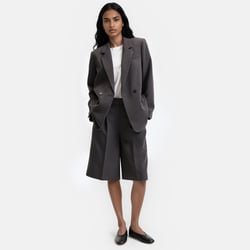
If you are exploring women's oversized suits, pay attention to volume across both pieces. A roomy jacket with wide trousers creates a deliberately loose silhouette; a closer-fitting top underneath keeps the layers from bunching at the waist. For a more defined result, try a regular-fit blazer with straight trousers and a tucked-in shirt.
- With wide-leg trousers, check that the jacket hem does not bunch against the fullest part of the hip.
- With tapered trousers, test a longer blazer for seated comfort and easy movement.
- With cropped trousers, try the full outfit with your usual socks and shoes before deciding on the hem length.
- When buying separates, compare the fabric composition and colour descriptions rather than relying on the word grey alone.
Choose fabric for your working day
Wool and wool blends
Wool can offer useful crease recovery, although performance varies with the weave, fabric weight and blend. A lighter wool cloth may suit an office with steady indoor heating, while a heavier version can feel more comfortable during cooler commutes. Check the lining as well as the outer fabric: a fully lined jacket adds another layer, which matters if you regularly move between a warm train carriage and a heated meeting room. Use the composition and care label together when comparing fabrics. A jacket that suits your diary also needs to suit your cleaning routine.
Stretch blends and textured finishes
A fabric containing elastane may make reaching and sitting more comfortable, but stretch cannot compensate for a jacket that is too small. Look at the weave, too. A smooth finish creates a sharper visual match with formal trousers, while a subtly textured grey can work with separate navy trousers on less formal office days. Before shopping, consider how often you will carry the jacket over your arm or pack it in a travel bag. A squeeze test, where permitted in store, can give a limited indication of how readily the fabric creases; it does not replace the manufacturer's care advice.
Match the grey shade to your existing wardrobe
Charcoal grey offers a darker base for pale shirts and can be a practical choice for frequent business wear. Mid-grey makes it easy to see details such as lapels, pockets and seams, while light grey creates a stronger contrast with dark shoes and bags. Check colour in daylight where possible, particularly when matching a jacket to trousers bought separately. Two similar greys can look coordinated under one light and noticeably different under another.
If you already shop for a women's black blazer, compare a charcoal option with the tops you wear beneath that darker jacket. A white cotton shirt, fine navy knit and pale blue blouse can each give you a different working outfit. The useful comparison is not simply black against grey: it is whether the new jacket works with at least two or three combinations you already own.
Build outfits around specific diary plans
Client meetings and presentations
Wear a tailored grey suit to client meetings and presentations with a shirt that stays comfortable when you raise your arms or use a presentation remote. Check the jacket lapels after attaching any visitor badge, and keep bulky items out of the outer pockets so the front hangs evenly. If you are comparing formal jackets for women, look closely at pocket placement and fastening height: these details affect how the blazer sits when you are standing in front of a room.
Office commutes and networking events
Pair the grey blazer and trousers for polished office commutes with loafers or other supportive shoes suited to your route. Carry a laptop in a separate bag rather than loading the jacket pockets, and check whether a shoulder strap causes the collar to shift. For weekday networking events, style your grey suit with heels if you find them comfortable for standing. Set the trouser hem for the shoes you will wear most often. A length adjusted for high heels may drag on the pavement when worn with flats.
If your search usually begins with women's black smart jackets, a grey blazer gives you another option for the same after-work plans. Keep the change practical: replace your office shirt with a simple top, leave the jacket open and use a smaller bag once you no longer need your laptop.
Inspect the finish before keeping your suit
When your order arrives, try it on before removing labels, following the retailer's returns conditions. Check that the lapels lie evenly, the buttons feel secure and the lining does not pull the outer fabric out of shape. Some tailoring includes temporary stitches holding vents or pockets closed. Identify these carefully and follow the product guidance before removing anything; never cut a seam simply because it appears to restrict an opening.
For ladies comparing different suits, a short fitting checklist is more useful than judging each one from a single front-facing photograph. Look at the jacket from the side and back, then wear it seated for several minutes. Prioritise shoulder fit and comfortable movement over an easily adjusted sleeve length. Alteration possibilities vary, so ask a qualified alterations service about costs and limitations before committing to a jacket that needs changes.
Care for formal tailoring between wears
Follow the care label rather than assuming every grey suit needs the same treatment. Some jackets require professional cleaning, while others have different instructions; the matching trousers may also need checking separately. After wearing, empty the pockets and hang the jacket on a broad, supportive hanger. Let it air in a ventilated space before returning it to a crowded wardrobe, and allow damp fabric to dry away from direct heat.
For small marks, consult the label before applying water or a cleaning product, as local treatment can leave a visible ring on some fabrics. Press only at a suitable temperature and use a pressing cloth where recommended to reduce the risk of shiny patches. Clean matching suit pieces together when the care instructions allow so repeated cleaning is less likely to leave one piece looking different from the other. With a cut that supports your movements and a care routine you can follow, your grey jacket can serve client appointments, daily travel and evening work events without needing a different approach for every outing.