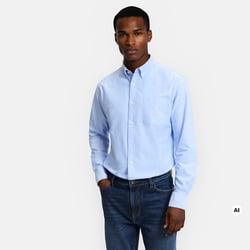
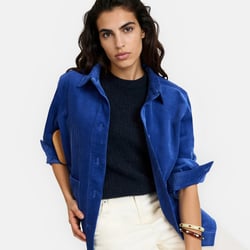
A dependable layer in denim
A denim shirt earns its place in your weekly wardrobe by working both as a shirt and as a light outer layer. Wear it open over a tee for weekend errands, button it beneath a sweater on chilly mornings, or pair it with dark jeans for a casual dinner. The difference between those outfits often comes down to three details: the weight of the material, the cut through the body and the finish of the fabric. At La Redoute, we suggest starting with how you plan to wear yours, then using those details to narrow down the options.
A lightweight shirt can tuck neatly into trousers, while a heavier version usually sits more comfortably over another top. Neither is automatically better: each behaves differently when you move, roll the sleeves or add a jacket. Understanding that behaviour makes choosing a size and planning outfits much more straightforward.
Start with denim weight and feel
Lightweight denim for tucking and close layering
Lightweight denim bends easily and creates less bulk around your waist. That makes it useful when you want to tuck a shirt into high-waisted trousers or wear it beneath knitwear. Look at the fabric around the button placket and cuffs: if it folds softly rather than standing away from the body, it is more likely to settle comfortably under another layer.
Choose a lighter weight for wearing beneath a sweater. The collar can sit above the neckline while the sleeves remain comfortable inside the knit. On chilly mornings, button the denim shirt, pull on a fine sweater and leave just the collar visible. If the shirt hem extends below the sweater, keep the exposed length even so that the layers look intentional rather than caught up at one side.
Midweight and heavier denim for wearing open
Midweight denim offers more structure, so the collar, pockets and front edges tend to hold their shape. It is a good starting point for a shirt you will wear open over a tee. Heavier denim can feel closer to a light jacket, particularly when the design includes roomy sleeves and a straight hem. Allow enough space underneath for your base layer without pulling across the upper back.
Where fabric weight is listed, ounces per square yard or grams per square metre can help you compare shirts. However, weight alone does not describe softness. Washing and finishing can make a substantial fabric feel supple, while a lighter material may still feel crisp. Read the composition and product description together rather than relying on a photograph to judge thickness.
Compare denim with poplin and flannel
Cotton denim typically has a twill weave, which gives the surface its characteristic diagonal texture. Cotton poplin usually feels smoother and crisper, making it useful when you want a tidy tuck beneath tailored trousers. Flannel often has a brushed surface that feels softer against the skin and can provide comfortable warmth. For an open layer over a tee, denim offers a more defined outline than many soft flannel shirts; for a compact layer beneath a fitted cardigan, a fine poplin shirt may create less bulk.
Match the shirt cut to the way you move
Regular, relaxed and oversized fits
A regular fit generally follows the body without sitting tightly against it. It works well buttoned up, especially when the shoulder seams sit near the edge of your shoulders. A relaxed fit gives you more room through the chest and waist, which helps when reaching for a bag or sitting at a desk. An oversized cut usually adds deliberate volume, sometimes with dropped shoulders and wider sleeves.
If you browse our women's oversized tops selection, compare the listed measurements and photographs rather than assuming that sizing up a regular shirt will create the same shape. A larger regular size may add unwanted sleeve length without providing the balanced width of an intentionally oversized design. Check shoulder position, chest room and sleeve length together so that one comfortable area does not disguise a poor fit elsewhere.
- Button the shirt and reach both arms forward: the upper back should not pull sharply.
- Sit down and check the front placket: the buttons should lie flat rather than gape.
- Bend your elbows: the sleeves should allow movement without the cuffs dragging excessively.
- Try your intended base layer underneath: a tee needs less room than a sweatshirt.
- Check the collar with the top button open and closed if you plan to wear it both ways.
Shirt length changes how an outfit sits
A curved hem is useful for tucking because the longer front and back sections help keep the shirt inside your waistband. A straight hem often looks neater left loose, especially when it ends around the hip. A longer shirt provides more coverage over leggings or narrow trousers, but substantial denim can bunch when pushed into a waistband.
Test the length while sitting as well as standing. A hem that looks balanced in the mirror may ride up when you sit, while a long back section can become trapped beneath you. If you prefer a partial tuck, lighter denim usually folds more easily. For a loose, boxy style, try leaving the hem untucked and wearing trousers with a clearly defined waistband underneath.
Compare colour, wash and finishing details
Light blue, mid-blue and darker washes
A light blue wash creates a clear contrast with black trousers and darker outerwear. Mid-blue denim is easy to combine with grey, cream or navy layers because the colour remains visible without dominating the outfit. Darker washes can look more uniform, making them useful for casual dinners when you want a buttoned shirt with a cleaner outline.
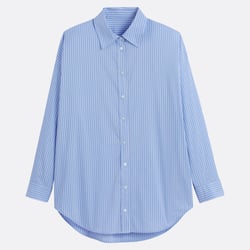
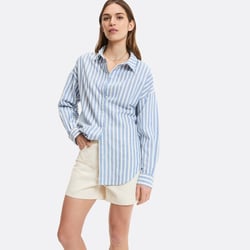
Wash effects also change how visible creases and seams appear. Faded areas draw attention to pockets and stitching, while an even finish keeps the focus on the cut. If your usual weekday choice is a blue and white striped top, a mid-blue denim shirt offers a different surface texture while staying within a familiar colour palette. Wear it with the same navy trousers and loafers to see how the heavier fabric changes the silhouette.
Collars, pockets and decorative finishes
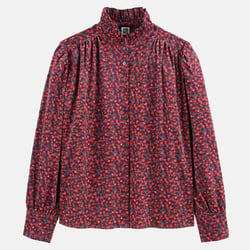
Chest pockets add visual weight across the upper body, particularly when they have flaps or contrasting stitching. A plain front slides more smoothly beneath a close-fitting sweater. Collar shape matters too: a small pointed collar is easy to position under knitwear, while a taller or ruffled collar needs space around the neckline.
At La Redoute, our Denim Ruffled Victorian Collar Shirt from LA REDOUTE COLLECTIONS combines denim with a Victorian collar and ruffles, bringing decorative detail to a comfortable shirt style. Let that collar remain visible above a round-neck cardigan rather than pressing it beneath a tight neckline. If you also wear a white broderie blouse, you can use a similar approach to proportion: keep the surrounding layers simple so the detailed neckline has room to sit properly.
When exploring collar tops for women outfits, consider the outer layer as well as the shirt itself. A blazer with narrow lapels may sit more easily over a compact collar, whereas an open cardigan leaves space for ruffles. Check the neckline in a mirror with both layers on before deciding how many buttons to fasten.
Build everyday outfits around the weight and cut
An open shirt for weekend errands
Wear a relaxed, midweight denim shirt open over a cotton tee, with straight-leg trousers and trainers. The extra room through the body lets you reach, carry shopping and move between indoors and outdoors without repeatedly adjusting the front. Roll each cuff once or twice if the sleeves get in the way, keeping the folds broad enough to avoid a bulky band around your forearm.
Keep the base layer lighter than the outer shirt if you want the sleeves and shoulders to move freely. A thick tee beneath a narrow-cut denim shirt can make the upper arms feel restricted, even when the shirt hangs open.
A buttoned layer for chilly mornings
Choose lightweight denim beneath a sweater and smooth the shirt sleeves before pulling the knit over them. This reduces twisted fabric around the elbows. A regular or gently relaxed fit usually creates less bunching than an oversized cut. Keep pocket flaps flat and tuck the hem if loose fabric gathers beneath the sweater.
The same layering check applies when you bring out a long-sleeve Christmas top for a seasonal gathering: compare sleeve thickness before adding denim over it. If both garments have substantial sleeves, wear a roomier denim shirt open rather than forcing them into a close fit.
Denim with dark jeans for casual dinners
Pair a lighter denim shirt with dark jeans to create a visible distinction between the two pieces. Button the shirt and add ankle boots or loafers for dinner with friends. A classic belt can define the waist if you tuck the shirt in, while an untucked straight hem works well when it finishes above the widest part of the hip.
If you prefer similar shades of blue, use texture and shape to separate them: try a softly washed shirt with evenly coloured jeans. Avoid relying on tiny colour differences that disappear in indoor lighting. A white tee visible at the neckline can provide another clear break between the denim pieces.
Check the details before your first wear
Use the size guide alongside the fit description, and compare measurements with a shirt you already find comfortable. Note its chest width, shoulder width and back length, measuring it laid flat. Before arranging delivery, check the product page for fabric composition and care instructions so you know whether the shirt suits your washing routine.
Follow the care label rather than a general rule for denim. Wash requirements can vary with colour, finish and decorative details. Wash with similar colours where instructed, reshape the collar and button placket after washing, and dry as directed. With the right weight, enough room to move and a length that suits your layers, your denim shirt can move comfortably between errands, chilly commutes and relaxed evening plans.