Women's tunics for everyday coverage
Find a tunic that gives you the coverage you want without making everyday dressing complicated. Longer than many tops, a tunic can sit over the hips, reach the upper thigh or fall closer to the knee. Those differences matter when you are bending to pick up shopping bags, sitting on the train or wearing slim trousers. At La Redoute, we suggest starting with how you want your clothes to fit and move, then comparing length, fabric and care. This approach helps you choose women's tunics that work with the pieces already in your wardrobe.
For women who prefer relaxed tops with tunic-length coverage, the aim is not simply to choose the longest option. A shorter style with a generous hem can feel easier over jeans than a narrow, longer shirt. Equally, a long tunic with side splits can give you more freedom to walk than a straight-cut design of the same length. Look at the shape as well as the measurements.
Start with fit: compare relaxed and closer-cut shapes
Allow room where you need it
A tunic should give you enough room to sit, reach and move your arms without pulling across the back or hips. Start with the shoulder position, then check the bust and hem. On a regular shoulder, the seam usually sits near the edge of your shoulder; on a dropped-shoulder design, it sits lower by intention. Neither tells you everything about the fit, so check the product description and size guide rather than judging by the shoulder seam alone.
Check the fit while sitting as well as standing. A style that hangs freely in front of a mirror may pull across your lap once you sit down. With a button-through shirt tunic, watch for gaps between the buttons across the bust. With a pull-on design, check that you can lift your arms without the whole garment riding up excessively. If you often carry a shoulder bag, try the same movement with the strap in place.
Balance ease with the clothes underneath
A loose tunic gives you space through the body, while a straighter cut sits closer without necessarily being fitted. If you wear leggings, a flowing shape can provide comfortable coverage around the seat and thighs. Pair a flowy tunic with leggings for comfortable grocery runs, then add trainers and a cross-body bag so your hands stay free for bags and baskets. Check that the fabric does not cling to the leggings when you walk.
For brunch, wear a printed tunic over slim jeans, keeping the lower half relatively neat so the print and relaxed shape remain easy to wear. If you prefer wide-leg trousers, a less voluminous tunic or a shorter hem can reduce excess fabric around the hips. These are starting points rather than fixed rules: your comfort and preferred outline should guide the choice.
Choose a neckline and sleeve for your routine
A round neck gives coverage across the chest and works under an open cardigan. A split neck leaves more space at the throat, while a buttoned collar lets you adjust the opening. If you lean forward frequently at work, check the neckline in that position before deciding whether you need a vest underneath.
Sleeve shape affects layering as much as appearance. A wide sleeve may bunch inside a narrow coat, whereas a slimmer sleeve usually slides underneath more easily. Three-quarter sleeves leave your wrists clear when washing your hands or preparing lunch. For a long-sleeved tunic, make sure the cuffs stay comfortably in place when you bend your elbows.
Compare tunic length and hemlines
Hip-length, upper-thigh and longer options
Use garment measurements rather than the model image alone. Your height, torso length and shoulder shape all influence where a hem lands. Measure a top you already enjoy wearing from the same point used in the product measurements, then compare it with the listed length. This gives you a more useful reference than assuming every tunic will offer the same coverage.
- Hip-length tunics can work well with jeans or tailored trousers when you want a longer top without much fabric over the thighs. Check the back length if you want coverage when bending.
- Upper-thigh tunics offer more coverage over slim jeans and leggings. Sit down to see whether the hem still reaches the area you want covered.
- Longer tunics can provide extra coverage, but need enough width or side openings for a comfortable stride. Do not assume that a long tunic is suitable to wear as a dress.
For shorter women, a tunic that reaches the upper thigh on a model may sit much lower. For taller women, the same piece may finish around the hips. Where available, check both front and back measurements, especially when the hem is deliberately uneven.
Straight, curved and stepped hems
A straight hem creates a clear horizontal line and is easy to compare against the waistband and pockets of your trousers. A curved hem usually rises at the sides, so check those shorter points if side coverage matters to you. A stepped hem is longer at the back, which can be useful over leggings, although it may leave less coverage at the front.
Side splits help a longer tunic move around your legs rather than catching across them. However, a high split may reveal the waistband or upper section of your leggings as you walk. View the garment from the front, side and back when trying it on, and take a few normal-length steps. This shows how the hem behaves beyond a still mirror pose.
Make room for everyday layers
Layer a long tunic with a cardigan for cool morning commutes, choosing a cardigan with enough space through the arms. A fine cardigan may sit more smoothly over a relatively narrow sleeve than over gathered or flared sleeves. If your tunic has a long back hem, check how it looks beneath a shorter jacket so the difference in lengths feels deliberate rather than awkward.
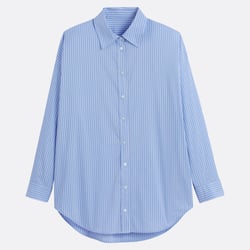
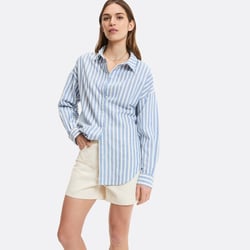
A plain black tunic can simplify an outfit with patterned trousers, while a blue shirt-style design works with grey or dark denim. For a floral tunic, try an unpatterned cardigan that picks up one colour in the print. This gives you a practical way to coordinate layers without needing every piece to match exactly.
Choose fabric for drape, coverage and comfort
Compare fluid and more structured materials
Fabric changes how much ease you need. A fluid material falls around the body, while a crisper weave tends to hold its shape away from it. Soft knitted tops may stretch during movement, but can also follow the outline of pockets or waistbands beneath them. Woven tunic shirts usually need sufficient room built into the cut, particularly across the shoulders and hips.
At La Redoute, our white ANNE WEYBURN Lyocell/Linen Three-Quarter Sleeve Tunic has a loose fit that creates a chic, crisp look. The combination of a relaxed cut and wrist-clearing sleeves makes it an option to consider when you want coverage through the body without full-length sleeves. Check the individual product information for its measurements and care instructions before choosing your size.
A blouse-style tunic can suit days when you want something softer than a conventional shirt with trousers. When comparing blouses, look beyond the label and examine the fabric composition, fastening and cut. A lightweight blouse may need an underlayer, while a denser fabric may provide more coverage on its own.
Check opacity and surface texture
Test lighter colours in daylight with your intended underlayers. White and pale fabrics can appear more transparent against a window than under bedroom lighting. Wear the underwear or vest you expect to use, then check the front and back. A smooth underlayer can also help a fluid tunic skim over a textured waistband rather than catching on it.
When you shop for printed styles, consider the scale and placement of the pattern. A small floral design gives a different visual effect from a large, widely spaced print, especially where the fabric folds at the bust or waist. If you are browsing a ladies' tunic collection online, use close-up images to inspect texture, and read the composition rather than assuming a fabric's feel from its photograph.
Care for the fit and finish you chose
Follow the label before the first wash
Care requirements deserve a place in your decision, particularly if your tunic will be in regular rotation for work, errands and casual weekends. Read the care label for the washing temperature, drying method and ironing guidance. Similar-looking garments can need different treatment because their fibres, trims or construction differ. Do not assume that every cotton blend, knitted tunic or printed shirt can go through the same cycle.
Fasten buttons or other closures as directed, separate colours where required and avoid overfilling the washing machine. Giving clothes enough space reduces tight compression during washing. Remove the tunic promptly afterwards and follow the recommended drying method, gently arranging the hem and sleeves if the instructions allow. This helps you spot twists or folds before they dry into place.
Keep your everyday options ready
If ironing is permitted, use the temperature stated on the label and take care around prints, buttons and decorative details. Store woven styles on suitable hangers if their weight and construction allow; fold knitted styles when hanging would stretch them. Before putting a tunic away, check the cuffs and neckline for marks so they can be treated according to the care instructions.
The most useful tunic is one whose fit, length and care needs suit your week. Compare it with your usual trousers, try it beneath your everyday outerwear and check its coverage in motion. With those practical checks, you can choose a relaxed silhouette that feels comfortable on the commute, at brunch or during the weekly grocery run.