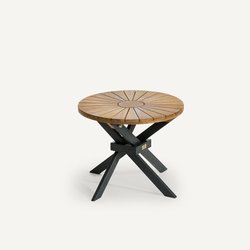
A black coffee table that works with your room
A black coffee table gives your seating area a clear centre, but its success depends on what surrounds it. Beside a pale sofa, a dark tabletop creates contrast; against a black couch, it needs differences in texture, shape or finish to remain distinct. Start with the room rather than the table alone: look at your floor, the width of your seating and the route you take from the doorway to the sofa. These details help you find a piece that leaves enough space for everyday movement while keeping your mug within reach.
At La Redoute, we suggest considering size, shape and surface together. A broad black top can suit a spacious seating arrangement, while a slim frame or glass surface may be more comfortable in a smaller room. The aim is to balance the dark finish with the furniture you already use, not to make every piece match.
Give the dark finish enough breathing room
Consider the floor and surrounding furniture
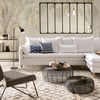
Black reads differently against different backgrounds. On a cream rug, even a compact table becomes a strong focal point. On dark floorboards, the same piece can appear less defined, so a rug in oatmeal, muted blue or warm grey can help separate its outline from the floor. If your room already contains a large dark sofa and black storage units, choose a table with open sides rather than another solid block.
Repeat black in one or two smaller details, such as a lamp base or picture frame, to connect the table with the rest of the room. You do not need black furniture everywhere. A light oak cabinet, woven rattan chair or pale upholstered armchair can provide enough contrast to stop the seating area feeling visually crowded.
Use shape to support your layout
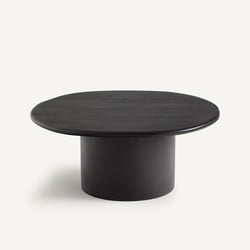
A rectangular table often works well in front of a long sofa because it provides a useful surface across several seats. A round design removes projecting corners from a narrow route through the room. An oval table offers similar benefits while giving you more length for a tray, books and drinks. With a corner sofa, check the space between both seating sections before choosing a square design: it should remain reachable without filling the entire central gap.
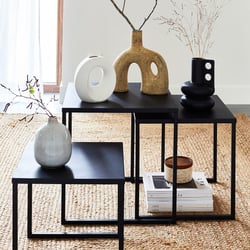
If you regularly move furniture for exercise, games or visiting friends, consider the weight as well as the footprint. Two smaller nesting tables can be easier to reposition than one broad table, although you will still need somewhere to place both when they are separated.
Let proportions guide your measurements
Before browsing finishes, mark out the proposed table footprint on the floor with masking tape. Sit down, stand up and walk around it carrying a laundry basket or tray. This simple check reveals whether a size that looks suitable on paper will interrupt the way you use your home.
- Start with a table around half to two-thirds of your sofa’s usable length. Treat this as a starting point rather than a fixed rule, especially with modular seating.
- Leave roughly 40-45 cm between the sofa and table for comfortable reach and legroom, then adjust for your seating depth and personal needs.
- Allow around 75-90 cm where the space beside the table forms a main walking route, if your room permits.
- Look for a tabletop close to seat-cushion height, or slightly lower, so placing a cup down does not require an awkward stretch.
- Check the space beneath the table if you want to slide baskets underneath or reach the floor with a vacuum cleaner.
Dimensions listed online may include projecting legs rather than just the top. Read the measurements carefully, particularly when fitting a new table between an armchair and sofa. A compact top with widely splayed legs can occupy more floor space than you expect.
Choose a finish that suits your sofa and daily routine
Matt black, metal and glass
A matt black finish can work comfortably beside textured upholstery because it does not add another strongly reflective surface. However, fingerprints, dust and pale crumbs can still be visible, so check the care instructions rather than assuming any dark finish hides marks. A soft cloth and prompt attention to spills are sensible habits, with cleaning products chosen according to the manufacturer’s guidance.
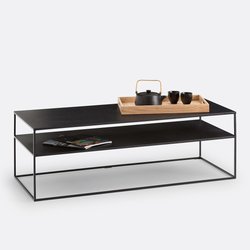
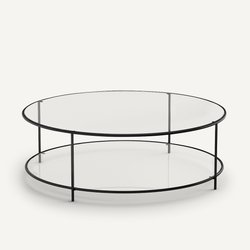
A black metal frame with a glass top allows the rug or floor to remain visible through the table. This can be useful when a solid black surface would dominate a compact seating area. Glass does show fingerprints, so consider whether you are happy to wipe it regularly. If children use the room, check edge shapes, stability and the product’s glass specification before buying.
At La Redoute, our Jett Industrial Metal Coffee Table from SO'HOME combines industrial design with practical function, making it an option to consider when you want a metal piece beside your sofa. When browsing SO'HOME coffee tables, compare each model’s dimensions and construction rather than assuming that all industrial designs have the same footprint or weight.
Black wood and contrasting natural shades
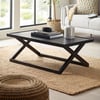
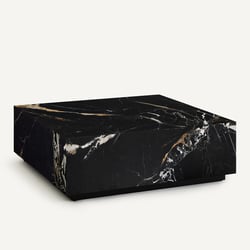
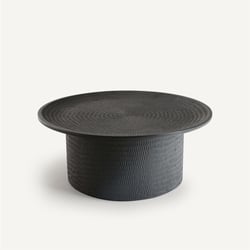
A black wood surface may retain visible grain, depending on its finish, giving you a different effect from smooth painted metal. This can help distinguish a dark table from a black fabric sofa without introducing another colour. Check close-up product photographs to see whether the finish is opaque, textured or grain-revealing.
If you are still comparing black with lighter alternatives, a pine coffee table can introduce a pale timber tone beside dark upholstery. A mango coffee table may offer warmer colour variation, depending on the individual product. For any solid wood coffee table, check the specified finish and care requirements, particularly if you regularly serve hot drinks or leave water glasses on the surface.
Make the tabletop useful from morning to evening
Set a mug and morning newspaper on the black coffee table, leaving enough clear space to unfold a page without knocking your drink. A coaster protects the surface where the product’s care guidance recommends one, while a shallow tray can keep your remote control and reading glasses together. If you often eat on the sofa, check that the table height and distance allow a comfortable position; a standard low coffee table may not suit working or dining for long periods.
Display a ceramic vase against the black tabletop beside your sofa to create a clear contrast in colour or texture. Keep the vase low enough that it does not interrupt conversation or your view of the television. On a small round table, one vase and a coaster may be enough; on a longer rectangular top, you can place a tray at one end and leave the other free for drinks.
Keep at least one easy-to-reach area clear. A carefully arranged surface is less useful if you have to move three decorative objects every time you sit down. A lower shelf can hold magazines, but measure the shelf opening before buying storage baskets to fit it.
Check the details before you order
Compare the price alongside dimensions, materials, assembly requirements and care instructions. A lower-priced table that is too deep for your room will not solve your layout needs. If you are browsing Otto Studio for AM.PM coffee tables, apply the same checks to each design: top size, overall footprint, height and the space beneath the frame.
Check which finishes are available on the product page, as photographs of a range may include colours other than black. Review delivery arrangements, packaging dimensions and access through your hallway, especially for a large assembled table. Where click and collect is offered, check collection details before choosing it. Confirm any free delivery offer and its conditions at checkout rather than assuming it applies to every item or brand.
For a covered terrace or balcony, only consider a table specifically described as suitable for outdoor use. An indoor black finish does not establish weather resistance, even if the table has metal legs.
Practical answers for sofa pairing and sizing
What colour coffee table looks good with a black couch?
A black coffee table can look good with a black couch when you introduce a clear difference in material or outline. For example, a slim black metal frame with a glass top looks distinct beside a deep upholstered sofa, while a grain-textured black wood top brings surface variation beside smooth leather. If you prefer stronger contrast, pale wood, warm brown timber or an off-white finish can separate the table from the couch more visibly.
Use the floor and rug as your deciding background. A black couch and black table on a dark rug may merge visually, particularly in low evening light. A lighter rug can define the table’s edges without requiring you to replace either piece.
- With black leather, consider a matt or textured table surface to vary the reflections.
- With black woven upholstery, consider glass or a smoother finish for contrast.
- With a light floor, repeat a little black elsewhere through a lamp or shelving detail.
Avoid choosing several slightly different glossy black finishes without comparing them first: their undertones and reflections may appear mismatched when placed together. As a practical example, pair a black fabric couch with an oval black table, a pale rug and a cream ceramic vase. The table remains connected to the seating, while its outline and the objects on top stay easy to see.
How big of a coffee table should I get?
As a starting point, choose a coffee table around half to two-thirds of your sofa’s usable length, with a height close to the seat cushions or slightly lower. Then adjust the depth to preserve comfortable legroom and walking space. For a sofa measuring 210 cm across its usable seating span, a table around 105-140 cm long is worth testing in your layout, rather than treating those measurements as an automatic purchase decision.
Check reach and movement before committing to size. A table can be proportionate to the sofa but still too wide for a narrow room. Mark out its full footprint, including the legs, and test it from every seat you use regularly.
- Leave roughly 40-45 cm between the sofa and table as an initial guide.
- Keep more space on the side used as a through-route.
- Measure chaise sections separately so the table does not block access to the corner seat.
Avoid buying a larger table solely to fill an empty patch of rug. For example, in a narrow living room with a 200 cm sofa, a 110 cm-long oval table may provide enough room for two mugs and a newspaper while making movement easier than a deeper rectangular design. If your seating is spread out, smaller side tables can put drinks within reach without making the central coffee table oversized.