An acacia coffee table that fits your seating
Start with your sofa, not an empty corner of the room. An acacia coffee table needs to sit close enough for you to put down a mug comfortably, while leaving enough space to stand up and walk past. Before you compare wood tones or storage options, measure your seating and mark the proposed tabletop on the floor with masking tape. This simple check shows whether you can reach your morning coffee, open nearby cupboards and move between the sofa and the doorway without stepping sideways.
Once the size works, look at the grain, construction and finish. Acacia can bring pronounced colour variation to a living room, so the individual surface matters as much as the overall shape. We recommend choosing with three everyday needs in mind: comfortable proportions, a wood appearance you enjoy living with and a care routine that suits your household.
Match the dimensions to your sofa and walking routes
Find a comfortable length and height
As a starting point, look for a coffee table roughly half to two-thirds the length of your sofa. For a sofa measuring 210 cm across, that suggests a table around 105-140 cm long. Treat this as a guide rather than a fixed rule: a compact sitting area may need the shorter option, while a long sofa with armchairs alongside it may benefit from more tabletop space.
Height affects comfort just as much as length. A tabletop close to your sofa’s seat height, or slightly lower, is usually easy to reach. Measure the seat cushion where you actually sit, rather than using the height of the sofa arms. A very low table can mean bending further each time you pick up a cup, while a tall model may interrupt the view between people sitting opposite one another.
Leave space for everyday movement
A gap of around 40-45 cm between the sofa and the table is a useful starting point. It generally leaves room for your legs while keeping drinks within reach. Try the distance with your own seating, especially if you have a deep sofa, a reclining chair or a footstool. Main walking routes usually need more clearance; aim for around 75-90 cm where the layout allows.
- Mark the full table footprint, including legs that extend beyond the top.
- Sit down and stand up several times to check knee room.
- Walk from the doorway to every seat while carrying a tray.
- Allow extra clearance for drawers, cupboard doors or a lift-up lid.
- Check that a nearby dining chair can still pull out without blocking the route.
In an open-plan room, this last point is especially useful. A table may fit neatly beside the sofa but still obstruct the path to the dining area. Measure the routes you use, not just the empty floor space.
Use shape to manage awkward layouts
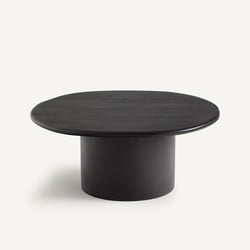
A rectangular design often works well with a long sofa because it puts usable surface within reach of several seats. A round table can make movement easier in a compact seating arrangement by removing projecting corners, although you still need to allow enough clearance around its widest point. An oval top offers length beside the sofa with curved ends along walking routes.
With a corner sofa, place your taped outline where both sections can reach it. If one large table blocks access to the inner seat, two smaller tables may be more practical. Check their combined footprint when separated, rather than judging them only in their nested position.
Look closely at solid acacia wood and its grain
Expect variation across the tabletop
Acacia wood can show distinct grain patterns and shifts between lighter and darker areas. Depending on the timber and finish, you may see golden, medium-brown or deeper brown tones across the same top. Several joined boards can create visible changes in colour. Before ordering, inspect close-up photographs and read the product details for guidance on natural variation.
Use product photographs as a guide, not a promise of an identical grain pattern. If you prefer a more even appearance, look for a finish that softens contrast and check whether the description mentions colour variation. If you enjoy visible grain, leave part of the surface uncovered rather than filling the whole tabletop with decorative objects.
A solid acacia wood top and an acacia-veneered top have different constructions. Neither description alone tells you how every part of the table is made. Read the materials list to see whether the legs, shelf, drawer fronts and underside use the same wood or other materials. When comparing a solid wood coffee table, check which components are solid rather than relying on the product name.
Coordinate wood tones without matching everything
You do not need identical timber throughout the room. Beside an oak floor, an acacia table can work by repeating a similar warm tone in a picture frame or shelving unit. Leave enough contrast between the floor and tabletop for their outlines to remain visible. A rug can help separate two similar wood colours, provided its size still allows the table legs to sit securely.
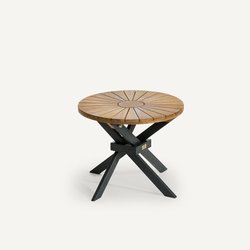
Black legs can connect an acacia top with a dark floor lamp or metal shelving. In a smaller room, compare the thickness and position of the legs as carefully as their colour: a broad base occupies more visual space and can limit where you place your feet. If you are also considering a pine coffee table or a mango coffee table, compare the pictured finish and construction of each individual model rather than assuming that the wood name determines its shade.
Choose storage around what you keep beside the sofa
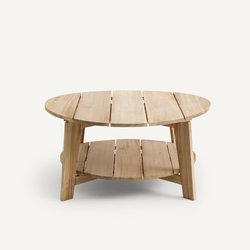
Make a short inventory before deciding between an open top, a shelf and drawers. If your living room regularly collects remote controls, charging leads and reading glasses, enclosed storage gives those small items a set place. An open lower shelf makes magazines easy to reach, but it also leaves their edges visible from nearby seats.
At La Redoute, we offer the Marea Sand Wash Wood storage coffee table by ÉDITÉ in acacia, bringing Scandinavian-inspired style and storage to your living space. Check its dimensions, finish information and storage layout against your seating plan so that the design works for your daily routine as well as your room.
Check the opening space as well as the storage capacity. A deep drawer is less useful if the sofa prevents it from sliding out fully. Look at internal measurements where available, especially if you want to store a particular magazine, games box or tray.
When browsing Otto Studio for AM.PM coffee tables or SO'HOME coffee tables, use the same practical checklist: footprint, height, access and usable surface. A photograph may show only a vase and a book, while your household may need room for two mugs, a remote and an evening snack.
Make the acacia surface useful throughout the day
Rest your morning coffee on its acacia surface beside the sofa, using a coaster beneath the cup to protect the finish. Keep the coaster near your usual seat rather than tucked away in a drawer. That small arrangement makes it easier to protect the tabletop when you are checking messages or getting ready for work.
You can also display magazines and a small vase on the warm wood tabletop without losing all your usable space. Keep the arrangement to one side and leave a clear area for drinks. Put a waterproof dish beneath the vase, and dry its base after changing the water so moisture does not sit unnoticed against the wood.
Keep remotes within reach on the sturdy acacia coffee table, using a shallow tray if they tend to disappear beneath magazines. Confirm that the table is assembled securely and follow its stated load limit. A coffee table should not be used as a seat or step unless the manufacturer specifically allows it.
Everyday tabletop care for acacia
Clean gently and dry promptly
Follow the care instructions for the specific finish. Lacquered, oiled and other treated surfaces can need different products, so a general wood cleaner is not automatically suitable. For routine dusting, use a soft, dry cloth. If the instructions permit damp cleaning, use a well-wrung cloth and dry the surface afterwards.
Blot spills promptly rather than leaving them until the end of the evening. Coffee, water and food residue can affect some finishes if they remain in contact for too long. Avoid abrasive pads and strong cleaning products unless the manufacturer explicitly recommends them. Do not apply oil or wax simply because the table is made from acacia; the existing coating determines whether those treatments are appropriate.
Prevent marks with a few simple habits
- Use coasters under drinks and suitable heat-resistant mats beneath hot dishes.
- Lift vases, bowls and trays instead of dragging them across the grain.
- Check that protective pads are clean, as trapped grit can scratch the finish.
- Keep the table away from direct contact with radiators and other heat sources.
- Follow any positioning guidance about prolonged direct sunlight.
For a busy household, keep a soft cloth close to the living area so you can deal with spills immediately. After a Friday evening with drinks and snacks, clear away glasses before going to bed rather than leaving damp rings until Monday. This is a more practical care habit than relying on an occasional intensive clean.
Check the price, delivery and final details
Compare the full specification before deciding whether a sale price offers what you need. Dimensions, materials, assembly requirements and storage access all affect how useful the table will be. A lower price does not help if the top is too small for your usual coffee tray or the base blocks your feet.
Check delivery access before you order. Measure narrow doorways, stair turns and lift openings, then compare them with the packaged dimensions where available. Read whether delivery is to the building entrance or your room, and whether assembly is included. If free delivery is advertised, check the applicable conditions rather than assuming it covers every address or service.
If you visit a store to compare finishes, take your sofa measurements and a photograph of the room in daylight. For an online order, keep those measurements beside you while reading the listing. Once the size, grain and care requirements fit your routine, you can choose an acacia coffee table with a clear role: somewhere comfortable to set down a drink, keep daily essentials close and enjoy the wood surface between uses.