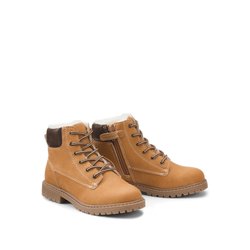
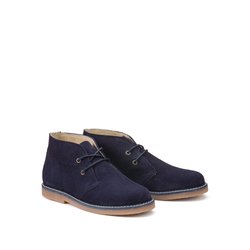
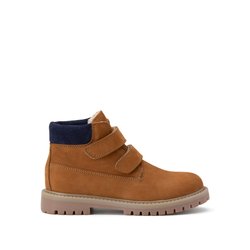
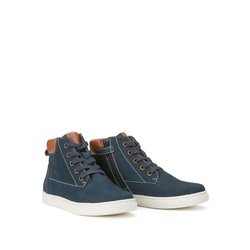
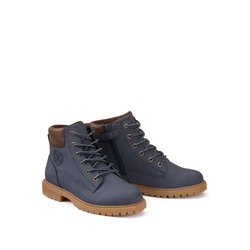
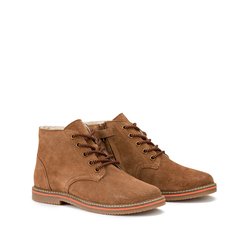
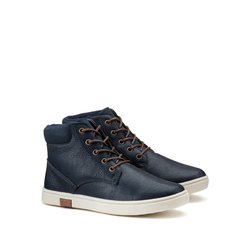
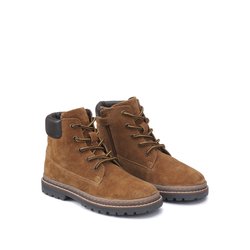
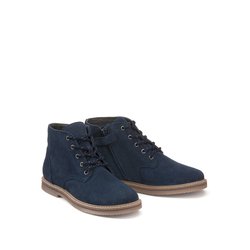
Boys ankle boots that fit well from the first wear
When you are buying boys ankle boots, the first thing to get right is fit. A good-looking pair matters, but if the boot pinches at the toes, rubs at the heel or feels stiff around the ankle, your child will notice it long before you do. For active boys, the right boots need to support everyday movement, cope with repeated wear and still feel comfortable by the time the school day ends.
This is why many parents start with a simple question: will these boots fit well enough for real life? That means thinking about how they will be worn, not just how they look in a product photo. A pair worn to school with jeans during chilly autumn mornings needs warmth, grip and enough room for thicker socks. A pair used for playground trips, keeping boys' ankles warm and protected, needs a secure fastening and materials that can handle scuffs, puddles and plenty of running about.
At La Redoute, we know that everyday footwear for kids has to work hard. Our selection includes styles designed for school runs, weekend outings and after-school play, with practical options in leather, coated finishes and easy-fastening designs that help children get ready with less fuss.
Why fit matters more than anything else
Ankle boots sit differently from low shoes, so fit needs a closer look. Because the boot rises above the foot, it should feel secure without squeezing. If the shaft is too tight, it can dig in when your child bends, climbs or crouches. If it is too loose, the foot may slide, which can lead to rubbing and tired feet after a full day.
For school mornings, this makes a clear difference. A regular fit that leaves enough room at the front allows toes to move naturally, while a firm heel section helps keep the foot in place when walking between home, the classroom and the playground. If your child wears thicker socks in autumn or winter, check that the boot still closes comfortably without feeling restrictive.
Many parents also look for a unisex style, especially when they want a practical design that can be passed on between siblings. In that case, neutral shades such as black or navy are often useful, as they work well with school clothes, jeans and smart-casual outfits for family plans.
What a good fit looks like in practice
A well-fitting ankle boot should feel comfortable from the start. It should not need “breaking in” to become wearable for a school day. Here are the signs to look for:
- There is enough space in front for toes to wiggle, but not so much that the foot slides forward.
- The heel stays in place when your child walks across the room.
- The ankle area feels supportive rather than stiff or sharp.
- The fastening is easy to adjust over socks or tights.
- The sole bends where the foot bends, which helps with comfort during active play.
If your child says the boots feel awkward straight away, take that seriously. A kid who drags his feet in the shop or asks to take the boots off after a few minutes is giving you useful information. Comfort problems rarely disappear once the boots are worn for longer.
Materials that stand up to daily wear
Children’s footwear needs to cope with much more than a short walk. From gates and pavements to lunch breaks and weekend errands, boys ankle boots are often worn for hours at a time. That is why the upper material matters so much.
Leather remains a popular choice because it is hard-wearing and can soften with wear while still giving support. For school use, smooth leather styles in black are often practical because they are easy to wipe clean after a muddy walk or a wet morning drop-off. If you want something with a slightly dressier finish for family outings, a patent effect can look smart with trousers or dark jeans, though it is worth checking that the surface is easy to maintain after scuffs.
For wetter weather, some parents prefer a waterproof finish or water-resistant coating. This can be especially useful when boots are used for playground trips, keeping boys' ankles warm and protected. If your child likes to kick through leaves, step in shallow puddles or spend break time outdoors whatever the weather, a resistant outer and grippy sole can make everyday wear much easier.
Colour can also affect practicality. A dark colour such as navy hides marks well, while black often works neatly with school uniform. Lighter shades may look fresh at first, but they usually show dirt faster after repeated use.
Choosing boots for school, weekends and everything in between
The most useful ankle boots are the ones your child reaches for again and again. That usually means a pair that works across different moments of the week. Worn to school with jeans during chilly autumn mornings, they should feel warm and easy to walk in. Paired with uniforms for casual family outings and weekend errands, they should still look neat enough for lunch out, visiting relatives or going into town.
One practical approach is to think about where the boots will spend most of their time:
- School wear: look for sturdy soles, secure fastening and an easy-clean finish.
- Playground use: choose a resistant upper and a shape that protects the ankle during active play.
- Weekend wear: pick a versatile design that works with jeans, joggers or smarter trousers.
For older children, a junior style with a slightly more grown-up shape can be useful if they want something that feels less childish but still offers the support they need. For younger kids, softer openings, pull tabs and simpler fastenings often make daily dressing quicker.
Fastening, sole and shape: the details that change comfort
Small design details often decide whether a pair becomes a favourite or gets left by the door. Side zips can help children put boots on quickly before school. Laces may give a more adjustable fit for narrower or wider feet. Touch fastenings are handy for younger children who want more independence.
The sole is just as important. A thick, slightly textured sole can help with grip on damp pavements and playground surfaces. If the sole is too flat or too rigid, your child may feel every hard step by the end of the day. Look for a sole that is solid enough for repeated wear but not so heavy that it makes walking feel clumsy.
Shape matters too. A rounded toe often gives more room than a narrow pointed one, which can be useful for everyday comfort. If your child is wearing the boots for long periods, that extra space can make a real difference by lunchtime.
Finding the right style without losing sight of practicality
Style still matters, especially if your child is old enough to have clear opinions. The easiest way to avoid unworn purchases is to balance your priorities with theirs. If they want something sporty, you might also browse boys' shoes for comparison before deciding whether ankle boots or trainers suit their routine better. If they like a more rugged look, you may want to view styles similar to boys' shoes, boots & trainers sorel for cold-weather inspiration.
Some families prefer a classic look that works with smarter outfits as well as school clothes. In that case, you might compare boys' shoes, boots & trainers dr. martens for sturdy shapes, or boys' shoes, boots & trainers shoo pom if you are shopping for younger children and want softer everyday styles. For a casual wardrobe with denim and relaxed layers, boys' shoes, boots & trainers pepe jeans can also give you ideas. And if warmth is your first concern for very cold days, boys' shoes, boots & trainers moon boot may be worth exploring alongside more traditional ankle boots.
The key is to keep the end use in mind. A stylish pair is only helpful if your child can wear it happily on a normal weekday.
What to check before you buy
Before choosing a pair, it helps to run through a short checklist. This can save you from buying boots that look good online but do not suit daily use.
- Measure both feet and allow room for socks.
- Check the boot height so it supports the ankle without rubbing.
- Look at the lining for warmth and comfort during colder months.
- Choose durable materials that suit school and play.
- Compare the price with how often the boots will be worn.
A slightly higher price can make sense if the pair will be worn five days a week through autumn and winter. On the other hand, if the boots are mainly for occasional outings, a lighter style may be enough. Thinking in terms of cost per wear often helps parents make a more confident choice.
Care tips to help boys ankle boots last longer
Even the most resistant pair needs a bit of care, especially during wet and muddy months. The good news is that simple habits can keep boots looking better for longer.
After a damp school run, wipe off dirt before it dries. If the boots are leather, use a suitable cleaner or a soft cloth rather than soaking them. Let them dry naturally away from direct heat, as a radiator can make some materials stiff. For waterproof or coated styles, check whether the finish needs refreshing after repeated wear.
If your child wears the same pair most days, it can help to air them out in the evening. This is especially useful in colder weather when thicker socks are in use. A quick check of the sole every week also helps you spot wear early, particularly if your child is very active and tends to scuff the toe when running or riding a scooter.
How to choose the right ankle boots?
Start with fit, then work outward to comfort, material and everyday use. The right ankle boots should feel secure around the foot and ankle without squeezing, and they should allow enough room for socks and natural movement. A simple way to judge this is to think about your child’s usual routine. If the boots will be worn to school with jeans during chilly autumn mornings, they need warmth, grip and a shape that stays comfortable from the walk to school through to the journey home. If they will also be used for playground trips, keeping boys' ankles warm and protected, the material and fastening need to cope with more active wear.
When choosing, focus on these points:
- Check length and width, especially if your child is between sizes.
- Look for a supportive heel and a flexible forefoot.
- Choose a fastening your child can manage easily.
- Pick a material suited to the weather, such as leather or a waterproof finish.
- Think about outfits: black or navy often work well for school and weekends.
A common mistake is buying too much growing room. While a little extra space is useful, an oversized pair can slip at the heel and make walking less stable. Another pitfall is choosing a stiff boot because it looks robust, only to find it rubs after twenty minutes. If possible, have your child try the boots on with the socks they are most likely to wear. Ask them to walk, bend and stand on tiptoes. If the boot stays in place, feels comfortable and suits their daily routine, you are far more likely to end up with a pair that gets worn regularly rather than left in the cupboard.