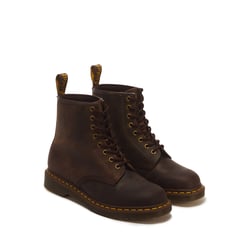
Start with fit, then choose the style
If you want men's boots that you will actually wear often, start with one simple rule: choose boots that fit well from day one. Style matters, of course, but a smart-looking boot that rubs your heel, squeezes your toes or feels loose across the instep will soon stay in the hallway instead of going out with you. A good purchase decision comes from matching the right fit to the way you live, whether that means daily city commutes, weekend errands or cold winter mornings outside.
When you shop for boots, it helps to think in three steps: size, fit shape and intended use. Size is the number on the box, but fit shape is how the boot holds your heel, supports your arch and leaves room around your toes. Intended use is what you will actually do in them. Wearing leather men's boots during rainy city commutes daily puts different demands on a pair than using insulated men's boots for snowy driveway shovelling mornings. The first needs reliable grip, weather resistance and comfort over pavements; the second needs warmth, traction and enough room for thicker socks.
You will also notice that one boot style does not suit every routine. A sleek black Chelsea boot works well for office days and evenings out, while a rugged brown lace-up boot is often more practical with jeans for weekend errands. If you are browsing several brands, you may compare options across men's shoes, boots & trainers champion, men's shoes, boots & trainers vans or men's shoes, boots & trainers puma before narrowing down the shape and finish that suit you best.
How to judge fit before you commit
The best boot fit should feel secure without feeling tight. Your heel should stay in place with only slight movement as you walk. Your toes should not hit the front when going downhill or stepping off a kerb. Across the widest part of your foot, the boot should feel close but not restrictive. If you try a mid or ankle boot and the collar presses sharply into your ankle bone, that is a sign the shape may not suit you, even if the length seems right.
A practical way to test fit is to wear the socks you plan to use most often. For example, if you need waterproof leather boots for a rainy commute, try them with your usual weekday socks, not thick hiking socks. If you are buying a winter boot for outdoor chores, test them with the heavier socks you would wear while clearing snow. The wrong sock test can lead to the wrong size.
- Check that your heel does not lift too much when climbing stairs.
- Make sure your toes can wiggle slightly, especially in cold-weather boots.
- Walk on a hard floor to feel if the sole is stable or too stiff for your routine.
- Notice any rubbing points around the ankle, heel seam or little toe.
If you like a clean profile, a Chelsea boot can be a sharp option, but because it has no laces, the fit around the instep matters even more. If the elastic side panels feel strained straight away, the boot may be too narrow. A lace-up boot gives you more adjustment, which is useful if one foot is slightly larger than the other or if you need to fine-tune the fit over thicker socks.
Choose by use, not only by appearance
Boot shopping becomes easier when you picture where you will wear them. A dark leather boot for weekday use should cope with wet pavements, station steps and long stretches of walking between meetings. In that case, look for a sole with grip, a shape that does not pinch after several hours and a finish that is easy to wipe clean after rain. Wearing leather men's boots during rainy city commutes daily often means that smooth leather in black or dark brown is easier to maintain than pale suede.
For relaxed days, pairing rugged men's boots with jeans for weekend errands is a reliable choice. A tan or brown boot with a sturdier sole works well for supermarket trips, DIY stops and walks across mixed surfaces such as pavement, gravel and wet grass. Here, comfort and grip matter more than a slim formal profile. A desert boot can also work for casual wear, especially in dry weather, but it may not be the first pick for heavy rain because many suede versions mark more easily.
If winter weather is part of your routine, using insulated men's boots for snowy driveway shovelling mornings calls for a different product altogether. You will want warmth, a sole that grips on slush and enough volume inside the boot to avoid crushing thick socks. In this case, a close-fitting fashion boot may leave your feet cold, while a roomier waterproof option will feel more practical and safer on icy ground.
Materials and finishes: what changes in daily wear
Leather remains a popular choice because it adapts well to regular wear and can suit both smart and casual outfits. A leather boot in black or brown often feels more versatile for work and daily travel. Smooth leather is generally easier to brush clean after a wet commute, while suede gives a softer look that works well with casual outfits, especially in tan, sand or desert tones. That said, suede usually asks for more care if you wear it in poor weather.
Waterproof protection is worth checking if you walk in the rain often. If your route includes puddles, slick pavements and standing at bus stops, a waterproof finish or weather-ready construction can make a real difference by keeping your feet drier through the day. This is not just about comfort: damp boots can lead to rubbing, cold feet and a boot that takes too long to dry before the next morning.
Colour affects practicality too. Black is often the easiest for weekday wear and works with tailored trousers or dark denim. Brown and dark tan can look warmer and more relaxed with jeans, knitwear and utility jackets. If you are comparing colours, think about your wardrobe rather than chasing a trend. A new pair should work with what you already wear most weeks.
Reading the product page with a sharper eye
When you view a product page, avoid looking only at the photos. Read the details with your own routine in mind. Check the upper material, lining, sole thickness, fastening and shaft height. A mid boot can give a little more ankle coverage in wet weather, while a lower ankle boot may feel lighter for day-to-day city use. If the page includes reviews, look for comments about narrow toes, heel slip, stiffness and break-in time rather than general praise alone.
Reviews are most useful when they mention a real wearing situation. For instance, a review saying “comfortable after a full commute and no rubbing on station stairs” tells you more than “nice boots”. Likewise, “needed half a size up with thick winter socks” is practical information if you plan to wear them on cold mornings.
Price matters as well, but value comes from wear, not only from the initial cost. A slightly higher price can make sense if the fit is better for your foot shape and the boot suits your weekly routine. A lower price is not a bargain if the boot sits unworn because it feels awkward after twenty minutes. When comparing options, you might browse men's shoes, boots & trainers blundstone for pull-on practicality, or look through men's shoes, boots & trainers castaner if you want a more relaxed look for milder days.
A useful example from our selection
At La Redoute, the Euro Sprint Mid Lace Leather Ankle Boots, camel/black, TIMBERLAND are designed for outdoor use, and our selection highlights that this Euro Sprint ankle boot combines robustness, comfort and optimum grip. That matters if your week includes wet pavements, uneven paths or long periods on your feet. In practical terms, a mid lace design can help you adjust the fit more precisely around the instep and ankle than a pull-on boot, which is helpful if you want a secure feel during active use.
Common fit mistakes that lead to disappointing boots
Many returns happen for predictable reasons. One is buying a boot that looks right but does not suit your foot shape. Another is assuming all leather will stretch enough to solve a poor fit. Some leather may soften with wear, but it should not need to stretch dramatically to become bearable. If your toes are cramped in the shop, that problem rarely disappears in a satisfying way.
Another mistake is ignoring how the boot will be used. A slim suede Chelsea boot can look excellent, but if you need something for daily rain and lots of walking, a sturdier waterproof lace-up may serve you better. Likewise, a lightweight desert boot may feel comfortable indoors and in dry weather, but not give enough support or grip for rougher outdoor use.
- Do not buy a tight boot expecting a full size of stretch.
- Do not size up too much to fix width problems; that often causes heel slip.
- Do not judge fit while seated only; always walk and turn in them.
- Do not ignore ankle rubbing if you plan to wear the boots for long days.
What you need to know before buying
What kind of boots should I get for men?
The right kind of boots depends on where you will wear them most often, not just on the look you like in a photo. If your week is mainly office travel, commuting and city walking, a leather ankle boot or Chelsea boot is often a sensible choice. It works with smart trousers and jeans, and a black or dark brown finish is easy to style. If your weekends involve errands, family outings and casual dressing, a rugged lace-up boot in brown or tan usually gives better grip and a more relaxed feel with denim. If winter weather is a real factor and you spend time outside, an insulated waterproof boot is more suitable than a slim fashion style.
A useful way to decide is to sort your needs into three groups:
- Daily city wear: leather, good grip, easy-clean finish, comfortable for long walks.
- Casual weekend use: sturdy sole, room for thicker socks, works well with jeans.
- Cold or snowy conditions: insulated lining, waterproof build, secure traction.
For example, wearing leather men's boots during rainy city commutes daily calls for a boot that can handle wet pavements and still look presentable at work. In that case, smooth leather and a practical sole make more sense than pale suede. On the other hand, pairing rugged men's boots with jeans for weekend errands is where a chunkier boot in brown, dark tan or black can feel more natural and less formal.
Avoid choosing only by trend or by one outfit in your wardrobe. A new boot should fit your actual week. If you want one pair to cover the most ground, a leather lace-up ankle boot is often the most adaptable product because it gives adjustment through the laces, practical support and broad styling options. If you prefer an easy pull-on shape, a Chelsea boot can work very well, but only if the instep and ankle fit are right from the start.
Is it better to size up or down for boots?
In most cases, it is better to choose your usual size with the right fit for the socks and use you have in mind, rather than automatically sizing up or down. Going down a size can leave your toes cramped, especially in colder weather when feet may swell slightly through the day. Going up too far can cause heel slip, rubbing and instability, particularly on stairs or wet surfaces. Boots should feel secure at the heel, comfortable across the forefoot and long enough to stop your toes touching the front.
There are, however, practical exceptions. If you plan to use insulated men's boots for snowy driveway shovelling mornings, you may need a little extra room for thicker socks. That does not always mean a full size up; sometimes it means choosing a boot with a naturally roomier shape. If you are buying a slim Chelsea or narrow dressier boot, sizing up to fix width can create a loose heel, which often leads to blisters after a commute.
Use this quick approach when deciding:
- Try boots with the socks you will really wear.
- Stand, walk, turn and go up and down if possible.
- Check for toe space without foot movement sliding forward.
- Notice whether the heel lifts slightly or excessively.
A concrete example: if you order a mid leather boot for weekday commuting and it feels snug over the instep with normal socks, but the heel is secure and the length is right, the next size up may become too loose overall. In that case, a different boot shape is often the better answer. By contrast, if your toes press the front even before walking properly, the boot is too short and sizing up may be necessary. The aim is not a bigger or smaller number on the label; it is a fit that supports the way you actually move through the day.