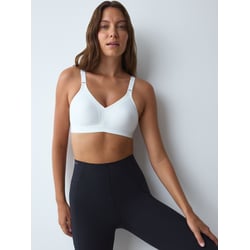
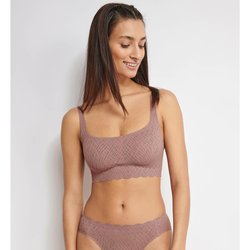
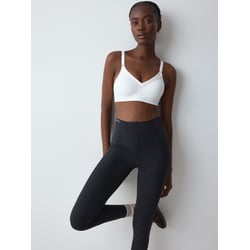
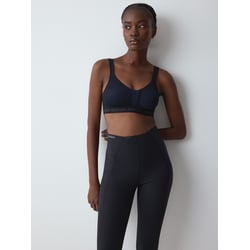
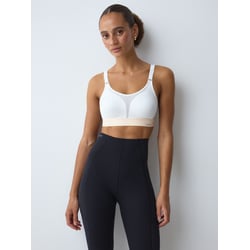
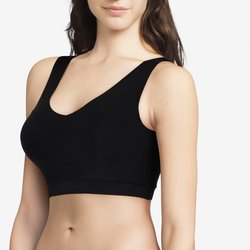
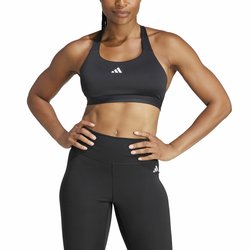
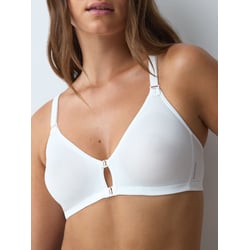
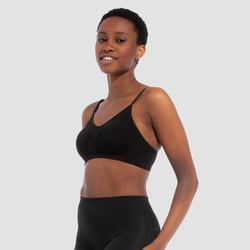
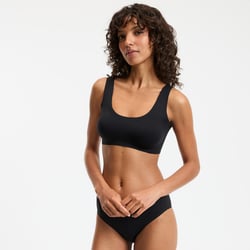
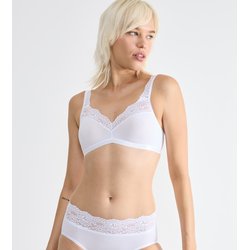
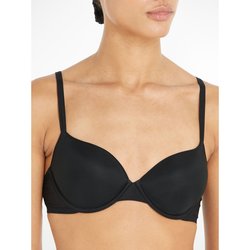
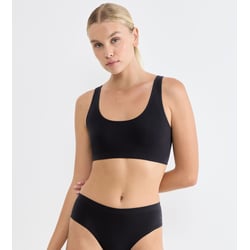
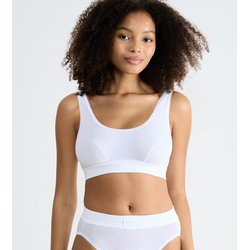
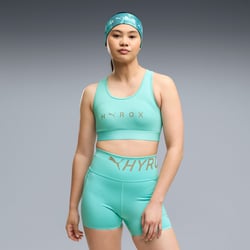
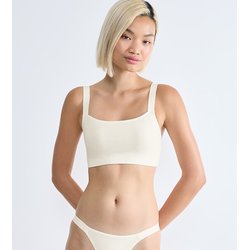
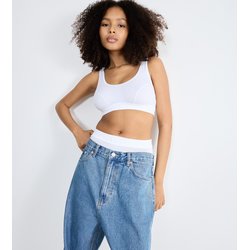
Find a soft bra that fits your everyday routine
A soft bra should fit comfortably from the moment you fasten it, whether you are getting dressed for work, heading out for errands or settling into a quiet evening. Without a rigid wire beneath the cups, it relies on its band, straps, fabric and construction to provide support. That makes choosing the right shape and size especially useful: a comfortable fit helps keep the bra in place without repeated adjustments throughout the day.
At La Redoute, we suggest starting with how you plan to wear your bra, then checking the fit details that matter for your routine. A smooth style can sit discreetly beneath a loose tee, while a fuller-coverage design may feel more secure during a busy commute. Use this guide to find wire-free comfort, gentle everyday support and a soft fabric feel that suits your clothes and your plans.
Start with the fit, not just the label
Soft bras come in several sizing formats. Some use a band and cup size, while others use clothing-style sizes such as small, medium and large. Neither system removes the need to check the product size guide. A bralette labelled medium may fit differently from another style because its cup depth, stretch and coverage can vary.
Measure before choosing your size
Use a flexible tape measure to check around your ribcage beneath your bust, keeping the tape level and comfortably snug. Then measure around the fullest part of your bust without pulling the tape tight. Follow the measuring instructions in the size guide for the specific bra, as sizing methods can differ between brands. If your measurements fall between sizes, look at the guidance for that style rather than automatically choosing the larger option.
Your band should sit level around your body, including when you lift your arms or reach forward. If it rides up at the back, it may be too loose, or the straps may be shortened too much. If it digs in or makes sitting uncomfortable, check both the size and the firmness of the elastic. A wider band can spread pressure across a larger area, but it still needs to fit without squeezing.
Check the cups and straps together
Your bust should sit within the cup without spilling over the neckline or beneath the band. Equally, excessive wrinkling can suggest that the cup is too roomy, although a little fabric movement is normal in an unpadded design. On a non-wired bra, the centre front does not necessarily sit against your chest in the same way as a wired style, so judge the overall containment and comfort instead.
- Lean forward gently when putting the bra on, then settle your bust into each cup.
- Adjust the straps so they stay on your shoulders without leaving deep indentations.
- Sit down, stretch upwards and reach across your body to check that the band stays in place.
- Try your usual top over the bra to assess coverage, seams and the outline beneath clothing.
Spend a few minutes moving around rather than judging the fit only while standing still. For example, a neckline that looks secure in the mirror may gape when you bend to tie your shoes. That practical check can help you choose a shape that works beyond the fitting room.
Find everyday support without rigid structure
A soft bra does not need a wire to provide support, but its construction makes a difference. Look at the depth of the underband, the shape of the cups and the coverage at the sides. Depending on the design, features such as double-layered fabric, shaped seams or internal side panels can help contain the bust and reduce shifting during ordinary movement.
Match the construction to your support needs
A lightweight pull-on bralette may suit you for relaxed mornings or working from home, particularly if you prefer minimal fastening details. If you want a more held-in feel for walking to the station or spending the day out, consider a style with a firmer band, adjustable straps and fuller cups. A back fastening also lets you adjust the band fit as the elastic gradually relaxes with wear.
Choose support through the band and cups, not tighter straps alone. Shortening the straps excessively can pull the back upwards and increase pressure on your shoulders. If you have a fuller bust, check whether the available sizes account for both your ribcage measurement and cup volume. A single clothing size may not provide enough room in the cups while keeping the band snug.
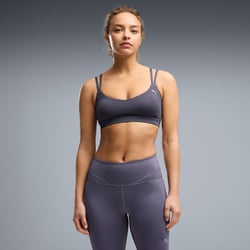
Everyday soft bras are not automatically suitable for exercise. If your plans include running, jumping or a high-impact class, choose a sports bra designed for that activity. For a walk to the shops or a desk-based afternoon, assess whether your soft bra stays secure without restricting your normal movements.
Make desk-to-dinner dressing more comfortable
For comfortable desk-to-dinner wear, a wireless soft bra with adjustable straps and a smooth cup surface is a practical starting point. Try it beneath the blouse, knit or dress you intend to wear, then sit at a table to check the band position. This matters particularly with a longer underband, which may roll or press when you sit if the fit or shape does not suit you.
If your evening outfit has a wider neckline, check the strap placement before leaving home. A supportive bra is less useful for that outfit if you spend dinner pulling the neckline back over visible straps. Choose a compatible cut rather than loosening the straps until they slip.
Choose fabric for the way you want to feel
The fabric sits against your skin for hours, so consider both its surface and its stretch. Cotton-rich fabrics can have a familiar, soft feel, while smooth microfibre can slide easily beneath close-fitting tops. Added stretch helps the cups and band respond to movement, although the amount of stretch alone does not tell you how supportive a bra will be. Fabric weight, recovery and construction also play a part.
Balance softness, coverage and detail
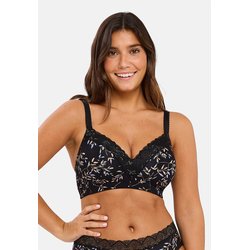
If seams or textured trims tend to bother you, look closely at the inside of the bra, including the underband, labels and strap joins. A smooth lining can be useful when decorative lace sits on the outside. Check that any lace along the neckline lies comfortably against your skin rather than curling or rubbing beneath a top.
Unpadded cups usually offer a lighter feel, but they may provide less nipple coverage under thin clothing. Lightly padded or lined cups can offer more coverage without needing a wire. Removable pads give you options, although they may need repositioning after washing. Before choosing, consider whether you prefer the simplest care routine or the flexibility to change the cup lining.
Choose colours around the clothes you wear
For a bra beneath a pale tee, choose a colour close to your skin tone and check it in daylight under the actual fabric. White underwear can remain visible beneath a white top because of the contrast with your skin. Under darker knitwear, deeper colours may be an easy choice, while a bright bralette can work beneath an intentionally open overshirt if you want it to be visible.
When browsing the colours available, start with the tops you reach for most often. One smooth neutral bra for lighter clothing and another shade for darker outfits may serve your week better than several styles that only work beneath one dress.
Put your soft bra to work in everyday outfits
Under a loose tee for errands
Wearing a soft bra under a loose tee for errands calls for a fit that stays put when you carry shopping, reach for a shelf or bend to pick up a bag. A smooth, lightly lined style can help limit visible cup texture, while sufficient side coverage keeps the bust contained as you move. Check the armholes of your tee too: a higher-sided bra may show beneath a deeply cut sleeve.
Test the whole outfit with a few everyday movements before heading out. If the band shifts when you lift your shopping bag, reassess the fit rather than relying on your loose top to hide it.
In a weekend travel bag
Packing a lightweight soft bra for weekend travel and layering can save space, especially if you choose an unpadded style that folds easily. Pick a design that works beneath both your travel top and your spare outfit. For a train journey followed by a walk around town, adjustable straps and a comfortable band give you more flexibility than choosing solely by how small the bra packs.
If the cups have moulding or removable pads, lay them gently inside your bag without crushing them beneath shoes or toiletries. Keep a spare bra in a separate pouch so it is easy to find when you change after travelling.
Care for softness and a dependable fit
Follow the care label for each bra, even if your other bras can go in the washing machine. Lace, elastic and cup linings may need different treatment. If machine washing is permitted, fasten hooks and place the bra in a laundry bag to reduce snagging. Use the recommended temperature and avoid washing delicate bras alongside items with exposed zips or heavy fastenings.
For hand washing, use a suitable mild detergent and gently move the bra through the water rather than scrubbing or twisting it. Rinse thoroughly, then press out excess water with a towel. Reshape the cups and dry as directed on the label; avoid direct heat unless the instructions specifically allow it.
Between wears, notice whether the band still recovers its shape and whether you are adjusting the straps more often. A band that no longer stays level, stretched cup edges or persistent slipping can signal that the fit needs checking again. Recheck your measurements if your body changes, too. The most useful soft bra is the one that fits you now, supports your usual activities and stays comfortable from your first morning layer to your last plans of the day.