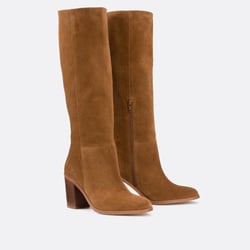
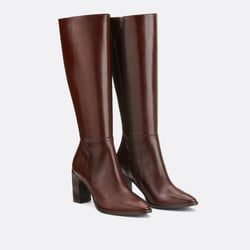
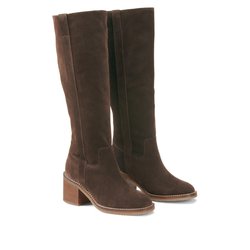
Choose the Right Boot Fit
When you are shopping for women's knee high and calf boots, the first thing to get right is fit. A beautiful pair can look brilliant online, but if the shaft feels too snug on your calf, the foot slips at the heel, or the height cuts awkwardly at the knee, you will notice it every time you wear them. The best pair should feel supportive when you leave the house in the morning, comfortable as the day goes on, and easy to style with the clothes you already own.
This is why it helps to focus on three practical points before you buy: the fit around the foot, the shaft height on the leg, and how the boots will feel in everyday use. Whether you want a sleek black leather knee boot for work, a brown suede calf style for weekends, or a wide fit option that gives you a bit more room, a few simple checks can help you make a better choice.
At La Redoute, our selection brings together different shaft shapes, heel heights, colours and materials, so you can compare what works for your wardrobe instead of settling for a style that only looks good in a product photo.
Start with the fit around the foot
The foot fit is where comfort begins. If the boot feels tight across the toes, too loose at the instep, or unstable at the heel, the problem will not disappear after an hour of wear. When you try on knee high or calf boots, pay attention to how your foot sits inside the boot from the first step.
A good fit should give you enough room to wiggle your toes without sliding forward. This matters even more if you are choosing a heel, because a higher heel naturally pushes your foot towards the front. If the toe box is too narrow, you may feel pressure quickly during a commute, especially if you are walking from the station to the office in colder weather.
For example, if you plan to pair with dresses for chilly autumn office commutes, a streamlined knee high boot with a stable mid heel can feel smarter than a very flat sole that offers less structure. In that setting, smooth leather in black or brown often works well because it sits neatly under a midi hem and is easy to coordinate with coats, knitwear and tailored layers.
It is also worth thinking about socks or tights. A boot that fits well with thin tights may feel snug with thicker winter socks. If you know you will wear your boots on colder days, test them with the same sort of hosiery you would wear in real life, not just barefoot on the carpet at home.
- Check toe room: your toes should not press against the front.
- Check heel hold: a little movement can be normal, but your heel should not lift excessively.
- Check instep comfort: there should be support without pinching.
- Check sole feel: if the sole feels hard straight away, you may notice it more during long days out.
Why shaft height changes the way boots wear
The difference between a calf boot and a knee high boot is not only about style. Shaft height affects movement, warmth, layering and how the boot works with your clothes. A calf boot usually finishes around the lower to mid-calf area, while a knee high style reaches just below the knee. That extra height can make a big difference when you sit, walk and bend your leg throughout the day.
If you want a boot for daily wear, think about the hem lengths you wear most often. Knee high boots work particularly well with midi dresses and skirts because they fill the gap between hem and shoe, which can feel practical on colder mornings. If you are getting dressed for the office and want something polished for a chilly journey in, this height often feels secure and warm without needing extra layers on your legs.
Calf boots, on the other hand, can be easier to slip on with casual outfits. Many women like to wear calf boots over jeans during weekend shopping trips because they are straightforward, comfortable and less restrictive around the knee when you are walking between shops, carrying bags and stopping for coffee. A slouch calf boot can also bring a softer look to knit dresses or straight-leg denim.
When choosing shaft height, check where the top edge lands on your leg. If a knee high boot sits too high, it may dig in when you sit down. If it sits too low, it may not give the balanced look you wanted with dresses. This is especially noticeable with fitted shafts in structured leather.
Getting the calf width right
One of the most common concerns with women's footwear in this category is calf width. A boot can fit the foot well and still feel wrong if the shaft is too narrow or too wide. The right calf fit should feel close enough to stay in place, but not so tight that it pinches, gapes or leaves deep marks after a short wear.
If you have a fuller calf, look for styles described as wide fit or with a more flexible shaft. Soft suede can feel easier to wear than rigid finishes because it tends to adapt better to the shape of the leg. Some designs also include elasticated panels or side zips that make a noticeable difference when getting dressed in a hurry.
On the other hand, if you have a slimmer calf, an overly wide shaft may drop or crease too much at the ankle. That can affect both comfort and appearance. A bootmaker-inspired riding shape with a cleaner line may hold better on the leg than a very soft slouch style.
Measure your calf at the widest point while standing, ideally wearing the kind of tights or jeans you expect to wear with the boots. Then compare that measurement with the product details when available. This gives you a more useful guide than guessing from the photo alone.
Materials, structure and everyday comfort
Material changes how a boot feels from the first wear. Leather often gives a supportive, structured shape and can suit smarter outfits well. It is a practical choice if you want black knee high boots for rainy evening dinner outings, because a smooth finish is usually easier to wipe clean after wet pavements and splashes.
Suede has a softer appearance and can feel more relaxed, especially in brown or other earthy colour options. It works nicely for daytime looks, but it may need a bit more planning if the weather is unsettled. If you know your routine includes school runs, train platforms or city walking in mixed weather, that is worth considering before you choose.
The sole and lining matter too. A thin sole may look refined, but if you spend most of the day on your feet, a more cushioned construction is often the better option. Likewise, a very high heel can look striking, but if you mainly need a boot for commuting, shopping or dinners where you walk between venues, a block heel or lower heel may be easier to wear for longer.
Everyday comfort often comes from small details: a zip that opens wide enough to get the boot on easily, a lining that does not rub at the ankle, and a shaft that bends naturally when you walk upstairs or sit at a desk.
Choosing colours that work with your wardrobe
Black remains a popular choice because it is easy to style and often feels sharper for work or evening wear. A black boot can sit neatly with grey tailoring, navy coats, printed dresses and dark denim. If you want one pair that covers office days, dinners and weekend plans, it is often a sensible place to start.
Brown brings warmth and can soften an outfit, especially with cream knitwear, blue denim and autumnal tones. If your wardrobe already includes camel coats, rust dresses or beige jumpers, brown boots may get more wear than you expect. Looking at the full range of colours before buying helps you avoid choosing by habit rather than by what suits your clothes best.
You may also want to think about finish. A polished leather boot can feel smarter, while a matte suede style can appear more relaxed. Neither is better in general; it depends on how and where you will wear them.
How to shop with wearability in mind
It is easy to be guided by price or by a familiar brand, but wearability should come first. A lower price can still be good value if the fit is right and the boots suit your routine. A well-known brand can be reassuring, but even then, sizing can vary from one style to another.
If you are comparing labels, you may also want to browse related collections such as boots & trainers damart, women's shoes, boots & trainers mjus and women's shoes, boots & trainers dr. martens. Looking across several shapes can help you spot whether you prefer a sleeker knee boot, a chunkier calf boot or a more relaxed slouch design.
It also helps to think about what else is already in your shoe cupboard. If you already wear women's trainers most weekends, perhaps your new boots need to cover smarter occasions. If you already have dressy heels, perhaps a flat or low-heel boot will fill the gap better. And once you have chosen your pair, keeping them looking good is easier with the right women's shoe care & accessories.
For a broader view of seasonal options, you can also explore women's shoes to compare silhouettes and decide where knee high and calf boots fit into your wardrobe.
What you need to know before buying
Should I size up when buying knee-high boots?
Usually, you should not size up automatically when buying knee-high boots. The better approach is to check where the fit feels tight. If the issue is in the foot, such as cramped toes or pressure across the front, going up half a size may help. But if the problem is actually in the calf or at the top of the shaft, sizing up in the foot may only leave you with boots that feel too long or slip at the heel while still not sitting properly on the leg.
A knee high boot needs to fit in two places at once: your foot and your calf. That is why buying a larger size “just in case” can be disappointing. You might solve one issue and create another. For instance, if you size up for extra calf room, your foot may move forward when walking, which becomes uncomfortable on a commute or during an evening out. This is especially noticeable with a heel, where extra space can make the boot feel less stable.
A more practical way to decide is to check these points:
- If you plan to wear thick socks in winter, try the boots with similar socks before deciding.
- If your toes feel pressed at the front, a half size up may be worth trying.
- If the zip is hard to close at the calf, look for a wide fit shaft or stretch panel rather than a bigger foot size.
- If your heel lifts a lot when walking, the size may already be too big.
One common pitfall is assuming leather will stretch enough to fix a poor fit. Leather may soften with wear, but it will not usually turn a clearly too-small boot into a comfortable everyday pair. Another mistake is forgetting how you will actually wear them. If you want knee high boots to pair with dresses for chilly autumn office commutes, try them with tights and walk around indoors for a few minutes. If you want them for rainy evening dinner outings, test whether you can sit comfortably without the top edge digging into the back of your knee.
As a practical example, imagine you are between sizes and choosing a black leather knee boot. In the smaller size, the foot feels neat but your toes touch the front slightly when walking downhill. In the larger size, your heel slips and the shaft creases heavily at the ankle. In that case, the answer may not be to size up fully, but to look for another style with a rounder toe shape, a different last, or a wide fit option. The goal is not simply a bigger boot; it is a boot that supports your foot properly and sits well on your leg.