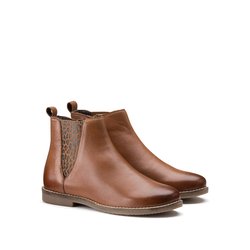
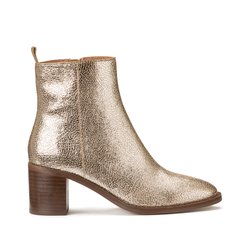
Comfortable room for wider feet
If your toes feel squeezed before you have even left the house, your boots may be too narrow rather than too short. Wide ankle boots give broader feet more space across the forefoot, while keeping the ankle coverage that works with trousers, jeans and cooler-weather outfits. The aim is a secure fit around the heel, enough depth over the instep and room for your toes to sit naturally. That combination matters when your day includes a station walk, several hours at a desk and a food shop on the way home.
At La Redoute, we recommend starting with your foot measurements and the individual product details when comparing women's footwear. A wide fitting can vary between styles, so the label alone cannot tell you how a particular boot will feel. Use the guidance below to assess width, comfort, materials and everyday wear before deciding which pair belongs by your front door.
Start with width, not a larger shoe size
A regular fitting may feel tight across the widest part of your foot even when the length is correct. Going up a size can add unnecessary space beyond your toes without giving enough extra width where you need it. The result may be a slipping heel, a crease in the wrong place or toes that grip to keep the boot steady. Look for extra forefoot room without sacrificing heel security.
Measure both feet before comparing sizes
Measure your feet while standing, ideally later in the day when they may be slightly fuller after walking. Wear the type of socks you intend to use with your boots. Record the length and the width at the broadest point, then compare both feet with the available size guide. If one foot is larger, assess the fit against that foot rather than choosing a size that squeezes it.
- Check the length from the back of your heel to your longest toe.
- Measure across the broadest part of your forefoot without pulling the tape tight.
- Notice whether you need extra depth over a high instep as well as additional width.
- Consult the product's fitting notes, including any guidance about socks or insoles.
Wide-fit ankle boots are not all shaped alike. One design may offer a rounded toe and generous forefoot, while another has a narrower outline with additional depth. A foot that feels comfortable in one can still feel restricted in the other, even when both carry the same size label.
Separate foot width from ankle opening
A wider foot does not automatically mean you need a wider opening around your ankle. Check these areas separately. The upper should close without pressing sharply into your skin, but it should not leave your foot sliding forwards with every step. Laces offer adjustment over the instep, while a zip can make dressing easier once the fit is established. Elastic panels allow some movement, although their presence does not guarantee a wide fitting.
Check comfort with a proper indoor fitting
Try new boots indoors on a clean surface, following the retailer's returns conditions. Wear both boots and fasten them fully, then walk, turn and sit down. If your usual routine includes stairs, test a few steps where it is safe to do so. Your toes should be able to move without rubbing the front or sides. A rounded or softly squared toe can offer useful space, but the internal shape matters more than the appearance alone.
Pay attention to the sides of your forefoot, the top of your instep and the back of your heel. Pressure that is noticeable after a few minutes may become uncomfortable during a longer walk. Do not rely on wearing a painfully tight pair until it gives way. Some materials soften with use, but that does not reliably correct an unsuitable width or inadequate toe depth.
Leave room for the socks you actually wear
For rainy commutes with thick wool socks, try your wide ankle boots with those socks before wearing them outside. A pair that feels roomy with thin tights may become restrictive once a heavier sock fills the available space. Check that you can still move your toes and that the upper does not press across your instep when you bend your foot.
Thick socks need space, not compression. If adding them makes your boots tight, compare a roomier style rather than assuming the material will stretch enough. For wet journeys, also check whether the product is described as water-resistant or waterproof; ankle coverage and a leather upper do not establish either property on their own.
Choose materials for your routine
The right material depends on where you walk and how much care you want to build into your week. Smooth leather can be practical for office days because surface marks can often be wiped away with a suitable cloth and care product. Suede has a softer, textured appearance, but mud and rain require more attention. Synthetic uppers vary considerably, so read the care instructions rather than treating every finish in the same way.
Leather, linings and seams
Leather may soften around the foot over time, but the initial fitting should still feel comfortable. Check for internal seams near sensitive areas, especially if you often experience rubbing at the little toe or heel. A lining that feels smooth under your fingers can still have a raised join, so test the boot while walking rather than judging it by touch alone.
If you wear removable insoles or prescribed orthotics, check whether the existing footbed can be taken out. An added insole reduces the space available inside the boot. This can affect toe depth and instep clearance even in a wide style. Try the footwear with the insert you use daily, and seek fitting advice if it changes the position of your heel.
Suede for drier days
For dry weekend outings, flat suede boots can work with straight-leg jeans and a knitted jumper without adding heel height. Use a brush intended for suede and follow the manufacturer's guidance on protective treatments. Test any treatment on a discreet area first. After a damp outing, allow the boots to dry naturally away from direct heat before brushing away dry surface dirt.
Balance heel height with walking time
A flat boot can suit long stretches on foot, but flat does not automatically mean supportive or cushioned. Look at the sole thickness, flexibility and footbed as well as the heel. A very thin sole may feel less comfortable on uneven paving, while an excessively stiff design can make your normal walking movement feel awkward. Test how easily you can roll through a step without your heel lifting inside the boot.
A low block heel provides a broader contact area than a slim heel of the same height, though comfort still depends on fit and construction. If you prefer heeled footwear for work, compare low and mid heel options while wearing your office socks or tights. The more walking your day involves, the more useful an indoor walking test becomes.
When comparing block heel Chelsea boots, inspect both the elastic panels and the sole. The panels should allow entry without making the boot loose once it is on, and the tread should suit your usual route. No sole can guarantee grip on every wet or slippery surface, so take extra care on station tiles, leaves and polished floors.
Make wide ankle boots work through the week
Office trousers and all-day walking
Pair wide ankle boots with office trousers when your working day involves walking between buildings, standing during meetings or travelling by public transport. A trouser hem that sits just over the boot opening gives coverage without collecting under the heel. Try sitting down as well as standing when checking the length, particularly with cropped trousers that expose more of the ankle.
Black offers a straightforward option with charcoal or navy tailoring, while brown boots work well with cream trousers and dark denim. If you are comparing gold low heel shoes for an indoor event, keep your travel needs separate from your occasion outfit: a closed ankle boot may be more practical for the journey, provided its material and sole suit the conditions.
Weekend errands with extra room
Choose wide ankle boots for weekend errands when your feet need extra room during repeated walks between shops, the car park and home. A zip fastening can save time when you are putting them on at the door, while adjustable laces may help accommodate changes in sock thickness. Check that the ankle edge does not catch your skin as you crouch to pick up bags or help a child with their shoes.
For evening plans after those errands, gold ankle boots can add colour to a simple dark outfit. Apply the same fitting checks to a metallic style as you would to an everyday pair: the finish does not tell you anything about its internal width, cushioning or suitability for walking.
Compare price with useful product details
Before you shop, make a short list of the features your routine requires: fitting width, fastening, material, heel height and room for your usual socks. Compare the price against those details rather than choosing on appearance alone. During a sale, check the available size carefully and review the returns conditions before ordering, particularly if you are testing an unfamiliar fitting.
Search terms such as women's sock shoes may lead you towards flexible, close-fitting alternatives, but stretch alone is not a substitute for the right shape. For everyday ankle coverage, assess how securely each style holds the heel and how much space remains across the forefoot.
Keep the pair that feels comfortable with your real socks and your normal stride. Once you have found that fit, follow the care instructions, let damp boots dry naturally and check the soles for wear. Those practical habits help you judge when your footwear is ready for another commute and when it needs attention before the next outing.