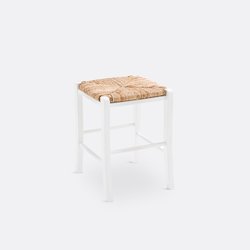
A simple seat for getting ready
A white wooden stool gives you somewhere to sit while brushing your hair, fastening jewellery or putting on your shoes, without taking up as much room as a full-sized chair. Beside a dressing table, its pale finish can sit comfortably against white drawers, a timber top or a painted bedroom wall. The practical benefit is straightforward: choose the right size and you can tuck the seat away when you have finished, leaving a clearer route between your bed and wardrobe.
Finding the right white wooden bedroom stool starts with three checks: the material, the dimensions and the space beneath your dressing table. We recommend working through them in that order, then considering details such as a cushion, floor protection and cleaning. That way, your new seat supports your daily routine rather than becoming another piece of furniture to move around.
Start with the wood and the finish
Check what each part is made from
The word “wooden” can describe several different constructions. A stool might have solid wood legs and a painted engineered-wood seat, or solid timber throughout. Read the product specification for the seat, legs and connecting rails separately. This is particularly useful when the underside is visible in photographs but the painted surface hides the material beneath.
For dressing table seating, look closely at how the legs are connected. Side rails or crossbars can help brace the frame, although stability also depends on the design, assembly and condition of the stool. Follow the assembly instructions, use every supplied fixing and check that the seat rests evenly on the floor before sitting down. A stool should sit without rocking on a level surface; do not try to compensate for loose joints with a cushion or a folded towel.
Choose a white finish that works with your furniture
White finishes vary from cool, crisp shades to softer, warmer tones. If your dressing table is already white, compare the product photographs and finish descriptions before choosing a seat. A slight difference is often easier to accommodate when another element separates the two surfaces, such as a patterned seat pad or a wooden dressing-table top.
A painted seat also needs a practical care routine. Remove spilled make-up promptly with a soft cloth, following the manufacturer's care instructions. Avoid leaving damp cotton pads, nail varnish remover or perfume bottles directly on the surface: leaks can mark or damage some finishes. Keep those products on a tray on the dressing table instead, so the stool remains ready to use.
Measure your dressing table before choosing the stool
Match seat height to the working surface
The right seat height lets you sit with your feet supported and your shoulders relaxed while reaching your mirror and everyday products. As a starting point, many standard-height dressing tables work with seating around 43-48 cm high, but your own proportions and the table's construction matter more than a general range. Measure your existing comfortable chair if you have one, then compare that measurement with the stool you are considering.
Measure to the lowest obstruction beneath the table, not just to the top of its surface. A deep drawer or front rail can reduce legroom considerably. Allow space for your thighs and for changing position while seated. If you plan to add a cushion, include its thickness in your calculations; even a few extra centimetres can make a previously comfortable gap feel cramped.
Check width, depth and the full footprint
A compact getting-ready seat needs to fit between the table legs, but the seat width alone does not tell the whole story. Splayed legs may extend beyond the edges of the seat. Check the widest overall measurement, including any lower rails, and compare it with the clear opening beneath your dressing table.
- Measure the opening between the table legs at both floor level and seat level.
- Check the available depth so the stool can slide beneath the table without meeting a wall or crossbar.
- Allow room to pull the stool out and sit down without hitting the bed behind you.
- Check drawer access with the stool tucked away, particularly if you store hair tools in a central drawer.
- Mark the footprint on the floor with removable tape to judge how much space it will occupy.
In a narrow bedroom, this last check can be especially helpful. A seat that looks small in a product photograph may still obstruct a wardrobe door when pulled out. Test the arrangement at the point when you actually use it: with drawers open, your mirror in position and enough room to move your elbows.
Choose a seat shape for your getting-ready routine
Balance a small footprint with sitting comfort
A round stool can be convenient beside a dressing table because there are no seat corners to navigate as you sit down from the side. A rectangular seat may provide more usable width and can align neatly with a straight-edged table. Compare the actual seat measurements rather than assuming that one shape will always take up less room.
Think about how long you normally sit. For a few minutes spent fastening earrings or applying moisturiser, a plain wooden seat may be sufficient. For longer hair-styling sessions, a securely fitted cushion can provide padding. Choose one that does not slide as you turn towards a drawer, and check whether its cover can be removed for cleaning.
A backless stool is not a substitute for supportive seating during long sessions. If you regularly spend extended periods at your dressing table, or need help maintaining a comfortable seated position, a chair with a suitable backrest may serve you better. Measure its back and arms as well as its seat before deciding whether it will tuck underneath.
Keep footstools and dressing stools distinct
Product names can describe different intended uses, so check whether a design is suitable for sitting at your table rather than resting your feet. At La Redoute, our Humphrey Faux Sheepskin & Ash Wood Footstool by ÉDITÉ features mid-century modern styling, a sleek black solid oak frame and contrasting fluffy sheepskin upholstery. Its description provides a useful contrast with a plain white wooden dressing stool: the frame colour, upholstery and stated use all need checking alongside the dimensions.
A low upholstered footstool may suit the space beside an armchair but leave you too low to use a dressing-table mirror comfortably. Equally, a hard wooden seat selected for dressing-table height may not provide the softness you want for resting your feet. Start with the activity, then compare the specifications.
Give a small bedroom stool another useful role
A seat for tying shoelaces near the entrance
You can use the white wooden stool beside the entryway while tying shoelaces, provided its height and stability suit you. Position it against a clear section of wall, away from the swing of the front door, and leave enough room to lean forward without knocking into a shoe rack. On tiled or wooden flooring, suitable protective pads can help prevent scratches; check them regularly for trapped grit.
If you move the stool between your bedroom and entrance, lift it rather than dragging it. Keep the seat free of bags when someone needs to sit down, and avoid placing it where it narrows an already tight route through your home.
A place for folded towels beside the bath
You can also set folded towels on the white wooden stool beside the bathtub, keeping them within reach without balancing them on the bath edge. Only use it in the bathroom if the manufacturer's guidance permits those conditions. Painted wood is not automatically suitable for repeated splashes or prolonged dampness.
Place the stool outside the splash zone, wipe away any water promptly and keep its feet off persistently wet flooring. Do not use it as a seat for entering or leaving the bath; a dressing stool is not bathing support equipment. If your bathroom remains humid for long periods, choose a towel-storage solution specifically intended for that environment instead.
Compare the right type of stool before ordering
Search results can mix bedroom stools with kitchen seating, so check the category and dimensions carefully. Seats designed for breakfast bars are generally taller than dressing-table seating. A bar stool that looks appealing beside a kitchen island may leave no usable legroom beneath a bedroom table. Filter by seat height first, then compare the material, footprint and finish.
A folding design can be useful where the same floor space serves several purposes, but check the locking mechanism and the manufacturer's instructions before each use. Do not assume that a folding seat is also a step stool. Never stand on a dressing stool unless it is explicitly designed and rated for that purpose.
Whether you choose a familiar brand or an unbranded option, look for clear dimensions, a stated maximum user weight, care information and assembly details. If you are comparing an international listing, confirm that the measurements use the units you expect and check the relevant delivery arrangements. A low advertised price may not be the best overall option once postage and return costs are included. If an offer mentions free delivery, check any minimum spend and postcode restrictions before ordering.
Make the final fit check
Before settling on your white wooden stool, picture your usual morning from start to finish. You should be able to pull it out, sit comfortably, reach your products and open the drawers you use most. Once you stand up, the seat should tuck away without catching its legs against the table or leaving an awkward obstacle beside the bed.
We suggest keeping a short note of your required seat height, maximum width and available depth while browsing. Those three measurements help you compare designs quickly and avoid choosing by appearance alone. With the fit checked and the care instructions understood, your stool can provide a straightforward place to get ready each day.