Kids desks that make room for comfortable study
A comfortable study spot starts with a desk that fits your child, rather than a desk your child has to stretch to use. After school, children need somewhere to open an exercise book, spread out a worksheet and keep a drink safely away from their writing. The right setup gives them enough room for those everyday tasks without blocking the bedroom door or taking over the family living space.
When you compare kids desks, focus on four practical details: height, footprint, storage and durability. A generous desktop is useful only if your child can reach across it comfortably, while extra drawers help only if there is still room for their knees. At La Redoute, we recommend starting with your child’s seated position and the space available at home, then choosing the features that suit their routine.
Start with a desk height that suits your child
Check their sitting position before choosing
Age can offer a starting point, but children of the same age can differ considerably in height. Check the fit with your child sitting down: their shoulders should feel relaxed, their forearms should rest comfortably on the desktop and their feet should have firm support. If they need to lift their shoulders to write, the surface may be too high. If they fold forwards to reach their work, review both the desk and chair height.
Measure the chair you intend to use, including its seat height and any armrests. Allow enough clearance beneath the desk for your child’s thighs and knees, remembering that a drawer or support bar can reduce the usable space. A chair that looks suitable beside a desk may not slide underneath it, leaving the seat sticking out into a narrow walkway.
Consider adjustable options for growing children
An adjustable desk can be useful when you want the same setup to support your child over several years. Check the lowest and highest settings rather than assuming every adjustable model will suit a younger child. Look at how the adjustment works, too: a mechanism intended for an adult to operate should not become part of unsupervised play.
Adjustable kids desks can help young artists draw without hunching over, provided the surface and seat are set to suit their height. For a child who spends an afternoon colouring detailed pictures, bring the paper within easy reach and check that their elbows are supported comfortably. If a model includes a tilting top, follow its instructions and check how pencils and paper are kept from sliding off.
Match the footprint to the room
Measure more than the desktop
A compact desk can fit neatly into an alcove, but the furniture dimensions are only part of the calculation. Allow space to pull the chair out and open every drawer. Mark the proposed footprint on the floor with removable tape, then place the chair in front of it. Ask your child to sit down, stand up and walk past while bedroom doors and nearby cupboards are open.
Check the depth as carefully as the width. A shallow writing desk may suit spelling practice and reading, while a deeper surface gives more room for an open textbook behind an exercise book. Children who spread their homework out after school each afternoon need enough usable space to keep instructions visible while they write. Measure their usual books laid out together to get a realistic guide.
Make a small homework corner work harder
In a shared room, a slim desk against a wall can leave the middle of the floor available for play. A corner position may make good use of an awkward layout, but check that your child will not have to squeeze between the bed and chair. Keep radiator controls, sockets and window handles accessible rather than placing furniture directly in front of them.
If your child currently works at the kitchen table, note what they carry over each day. A reading book, pencil case and one exercise book may need only a modest surface. Art projects involving large sheets, glue and several pots of crayons need more room. Choose for the work your child actually does, not just the empty space you want to fill.
Choose storage around the daily routine
Keep frequently used supplies within reach
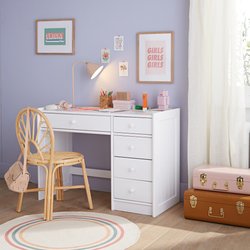
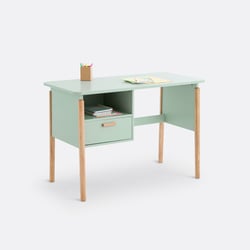
Built-in drawers keep pencils and crayons organised, giving children a clear place to return supplies after homework. Shallow drawers can work well for rulers, rubbers and colouring pencils because small items are less likely to disappear beneath piles of paper. Deeper compartments are more useful for notebooks or larger art materials, provided your child can open them comfortably.
Match each storage space to a specific job. Before choosing a desk, sort the items your child uses during a normal school week. This helps you avoid paying for a large drawer unit when a pencil drawer and a nearby shelf would cover their needs.
- Keep everyday writing supplies in the easiest drawer to reach.
- Give current homework a tray or folder so loose sheets stay together.
- Store bulky craft materials away from the main writing area.
- Leave a clear space underneath for legs rather than filling it with boxes.
- Place a school bag beside the desk without obstructing the walking route.
Balance storage with legroom
A desk with drawers on both sides may offer plenty of storage, but the central opening still needs to accommodate your child and their chair. Check the width between the drawer units, especially if the seat has arms. Open shelves avoid the need for drawer clearance, although their contents remain visible and can collect dust. Choose the arrangement you and your child will find easiest to keep tidy during a busy week.
Look for durability where everyday use leaves its mark
Compare surfaces, edges and moving parts
Schoolwork brings pencil marks, repeated rubbing out and the occasional splash from a water bottle. Compare the stated materials and care instructions before deciding which desk suits your household. A wooden desk may have a painted, stained or clear finish, and each finish can require different care. Do not assume that every surface tolerates the same cleaning products or wet art activities.
Use a protective mat for glue, paint and heavy colouring, and wipe up spills promptly according to the product guidance. Check that the desk stands steadily when assembled, and follow any wall-fixing instructions supplied. Drawer stops, accessible handles and edges positioned away from tight walking routes are details worth considering when younger children use the room.
Choose a style that works with the furniture you have
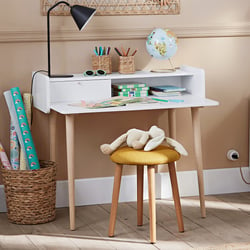
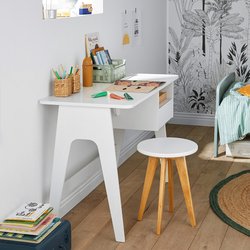
A white desk can sit alongside white shelving or a pale bed frame, helping a study corner look coordinated without replacing the whole room set. If you prefer a wooden finish, compare product photographs and material descriptions with your existing furniture; different woods and finishes can vary noticeably in colour.
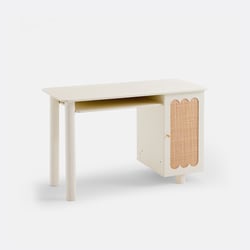
At La Redoute, our Gaby Solid Pine Desk by LA REDOUTE INTERIEURS is a contemporary, functional design that works well across different interiors, whether you are planning a bedroom study corner or a homework spot in a shared living area. As with any desk, check its dimensions against your room and your child’s seated position before choosing.
Plan the chair, lighting and working surface together
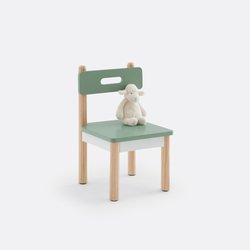
The desk and chair need to work as a pair, even when you buy them separately. A supportive sitting position matters more than matching colours. If your child’s feet do not reach the floor, a suitable stable footrest can provide support. Review the setup as they grow, particularly if they start sitting sideways or perching on the edge of the seat to reach their work.
Position a task lamp so your child can see their page without leaning towards it. Where practical, place it on the opposite side from their writing hand to reduce shadows. Keep cables away from feet and chair wheels, and follow the lamp’s safety guidance. If a laptop is part of the homework routine, allow space for it without pushing the exercise book off the front edge.
Compare the full cost before you choose
When comparing price, look beyond the desk alone. Add the cost of a suitable chair, any protective mat and the storage you still need. A lower-priced desk with no drawers may suit a room that already has accessible shelves. A model with built-in storage may save you buying a separate unit, but only if its compartments fit your child’s supplies.
Before you order, check the dimensions, materials, assembly requirements and delivery information available on the product page. Confirm whether the desk arrives assembled or needs putting together, and measure the route through doorways and up stairs where relevant. Leave time to assemble it according to the instructions rather than rushing to have it ready for homework that evening.
The most useful kids desks fit both the child and the room. Start with a comfortable writing height, leave room to move, give everyday supplies a clear home and choose a surface you can care for easily. Those checks help you create a study spot where your child can open their books, settle into their chair and get on with the afternoon’s work.