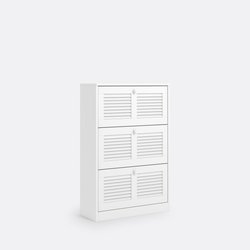
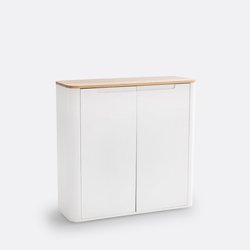
Keep shoes hidden and tidy
If shoes gather by the front door, the whole entrance can feel crowded before you have even taken your coat off. A white shoe storage cabinet offers a simple way to keep pairs out of sight while still close at hand. In a compact flat, a narrow terrace hallway or a busy family home, this type of unit helps you reclaim floor space without making the room feel heavy.
The practical appeal is immediate. A closed cabinet keeps trainers, school shoes and ankle boots behind a door that hides visual clutter. That matters in an entryway where every centimetre counts. Instead of stepping around a pile of footwear, you can line pairs up neatly inside compartments and leave the floor clear for bags, buggies or a quick sweep after a wet day.
A white finish also works hard in small spaces. It reflects light, looks clean and blends easily with painted walls, pale flooring and modern interiors. If you already have a wooden shoe rack in a utility room, a white cabinet in the hallway can give the entrance a tidier look. It can also sit comfortably beside a console table, mirror or coat hooks without drawing too much attention.
Why a white cabinet works so well in the entryway
The entryway is often one of the smallest and busiest areas in the home. You pass through it several times a day, often carrying shopping, school bags or laundry. Open shoe storage can be useful, but it quickly starts to look full. A cabinet with a slim profile solves that by using vertical space more efficiently than a low basket or a scattered arrangement of shoe shelves.
For example, if you have children coming home from school in wet trainers, the cabinet gives those pairs a dedicated place straight away. It hides muddy trainers neatly after school by the entryway, so the floor stays easier to clean and guests do not see the day’s mess as soon as they arrive. In another household, it can store family shoes upright beside the front door, keeping everyday pairs ready for the morning rush.
White cabinets are especially useful when you want storage that feels light rather than bulky. A darker piece can work well too, and some homes suit a black shoe rack for contrast, but white is often the easier choice when the hallway is narrow or short on daylight. A matt or gloss finish can brighten the space, making the area feel less boxed in.
How this type of storage saves space
Space-saving design is the main reason many people choose a shoe cabinet over a regular rack. Instead of leaving pairs side by side on open shelves, many cabinets use tilt-out fronts or divided inner sections so each shoe sits at a slight angle. That means more pairs can fit into a shallower unit, which is ideal if your front door opens into a tight corridor.
Here are a few practical ways a white shoe storage cabinet can help you save space:
- Shallow depth helps you maintain a clear walkway in a narrow hallway.
- Closed storage means shoes are hidden, so the room looks tidier even on busy weekdays.
- Vertical compartments can hold several pairs without spreading them across the floor.
- A top surface can double as a place for keys, post or a small tray.
- Some cabinets include an extra cupboard section for shoe care, insoles or umbrellas.
If you are choosing between open and closed storage, think about your daily routine. An open wooden shoe storage option may suit a boot room or utility area where quick drying matters most. In the main entrance, though, a shoe cabinet with doors usually keeps the space looking calmer and more organised.
What to look for before you buy
Before comparing styles, start with the area where the cabinet will go. Measure the width of the wall, the depth you can allow without blocking movement, and the height available below switches, radiators or artwork. A cabinet can look slim online but still feel awkward if the door cannot open comfortably in your space.
Capacity matters just as much as dimensions. Think about how many pairs you want to keep in the entryway rather than your total collection. Everyday footwear usually belongs there: school shoes, trainers, work shoes and one or two seasonal pairs. Bulkier items such as walking boots may need separate storage, especially if you want to keep the cabinet neat and easy to use.
It also helps to check:
- Whether the cabinet is available in more than one width or height
- Whether the internal dividers suit flat shoes, heels and larger men’s sizes
- Whether there is one cupboard, several compartments or a mixed layout
- Whether the finish is matt white or white gloss
- How easy the surface is to wipe clean after a rainy day in the hallway
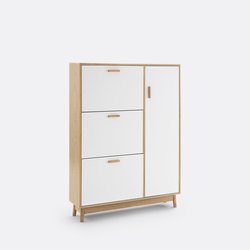
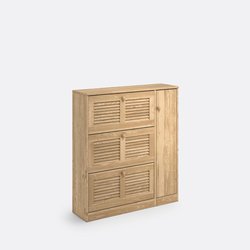
At La Redoute, our selection includes the Sheldon Shoe Cabinet with 3 Compartments & 1 Cupboard, white/wood, SO'HOME, a practical option for anyone who wants multiple sections for everyday footwear and a separate cupboard for extra hallway essentials. In everyday use, that means school trainers can go in one compartment, adult shoes in another, and winter accessories in the cupboard rather than cluttering the top of the unit.
Matching a white cabinet with modern interiors
One reason this furniture works so well is its flexibility. A white cabinet can sit in a clean-lined contemporary home, a Scandinavian-inspired hallway or a more traditional entrance with painted woodwork. The colour blends with many finishes, from pale oak benches to black metal hooks and soft grey walls.
If you already have other white cabinets nearby, the shoe unit can help create a more coordinated look. If your furniture is mostly timber, a white-and-wood design ties both styles together neatly. That is useful when the hallway opens directly into the living room, where visible storage needs to look considered rather than purely functional.
For a polished result, keep the styling practical. A mirror above the cabinet helps when you are heading out. A tray on top can hold keys and sunglasses. If the unit sits beside the front door, leave enough space to open it fully without bumping into a coat stand or basket. These small decisions make day-to-day use smoother.
Everyday storage limits to think about
Even the best cabinet has its limits, so it helps to plan realistically. Very tall boots may not fit in standard tilt compartments. Thick-soled trainers can take up more room than slim flats. If everyone in the family keeps every pair in the hallway, the unit can become overfilled and awkward to close.
A good approach is to divide footwear by use. Keep daily pairs in the cabinet and move occasional or specialist shoes elsewhere. This stops the storage from becoming overcrowded and makes mornings quicker, because the pairs you actually wear are easiest to reach. In winter, you may also want a section that keeps winter boots organised inside the white hallway cabinet, while sandals and lighter shoes are moved to bedroom storage.
Think too about cleaning and air flow. If shoes often come home damp, let them dry briefly on a mat before placing them inside. That simple habit helps the cabinet stay fresher and prevents marks from building up on the inner sections. A closed unit looks neat, but using it well matters more than simply filling it.
Price, delivery and smart buying choices
When shopping for a new shoe cabinet, the right price depends on how much storage you need and how hard the unit will work in your home. A compact cabinet for one or two people may suit a lower regular budget, while a larger family home may need a wider model with extra compartments or cupboard space. It is worth checking dimensions carefully so you do not pay for a cabinet that holds less than expected.
If you compare options, look beyond the surface finish alone. A white gloss cabinet may look bright and modern, but the internal layout is what determines whether it really helps you save space. Count how many pairs it can hold in practice, not just in theory. For instance, four pairs of children’s shoes fit very differently from four pairs of adult boots.
Delivery is another practical point. Flat-pack furniture can be easier to bring through narrow doors and upstairs in smaller homes. If there is a free delivery offer or a reduced price during a home event, that can make a larger unit more appealing. Still, the best value usually comes from choosing a cabinet that suits your hallway properly the first time rather than replacing an unsuitable one later.
You may also come across styles from contemporary ranges or mixed-material designs that combine white fronts with wood-effect tops. These can work well if you want storage that feels decorative as well as useful. The key is to choose a cabinet that earns its place every day, not one that simply looks good in a photo.
What you need to know before buying
What are the best shoe storage cabinets?
The best shoe storage cabinets are the ones that fit your hallway properly, hold the kinds of shoes you actually wear and keep the entrance easy to move through. In practical terms, a good cabinet is not just about style. It should have enough capacity for daily use, a depth that suits a small space and a layout that stops shoes from becoming a jumble after a week.
For many homes, the strongest choice is a slim white cabinet with separate compartments and a closed front. That design works especially well when you want to keep shoes hidden and maintain a cleaner-looking entryway. If your household includes children, compartments help separate school shoes from adult pairs, which saves time each morning. If you live in a flat with a narrow corridor, a shallow unit often works better than a wide open rack.
When judging the best option, focus on these points:
- Measure your wall and walkway so the cabinet does not obstruct the front door.
- Check whether the internal sections suit trainers, flats and ankle boots.
- Choose a finish that works with your home, such as white for a lighter look.
- Look for a top surface or cupboard section if you need extra hallway storage.
A common mistake is buying on appearance alone. A cabinet may look sleek, but if it only fits slim shoes and your family mostly wears chunky trainers, it will be frustrating from day one. Another pitfall is overestimating capacity. If a model says it stores many pairs, check whether that figure assumes smaller sizes.
A concrete example: in a family home with four people, a cabinet with several compartments and one extra cupboard often works better than a simple two-shelf rack. It keeps weekday shoes organised, hides muddy pairs after school and leaves the floor clear near the door. That is what makes a cabinet one of the best choices for busy, space-conscious living.
What is the best shoe organiser for storing a lot of shoes?
If you need to store a lot of shoes, the best organiser is usually one that combines high capacity with a small footprint. In most hallways, that means a tall or wide shoe cabinet rather than an open floor-level rack. Closed storage makes the area look tidier, and upright compartment systems often fit more pairs into less visible space.
The right choice depends on where the shoes will live. For the main entrance, a white cabinet with multiple sections is often the most practical answer because it keeps the space neat while still handling a family’s everyday footwear. If you need overflow storage elsewhere, an open rack or extra shelf can support the main cabinet. But if your goal is to store a lot of shoes by the front door without making the hallway look crowded, a closed cabinet is generally the better organiser.
To choose well, keep these factors in mind:
- Prioritise vertical storage if floor space is limited.
- Check whether bulky shoes reduce the advertised capacity.
- Use the cabinet for everyday pairs and move occasional shoes elsewhere.
- Choose compartments that let pairs stand neatly rather than pile up.
Avoid one common problem: trying to fit every shoe you own into one entryway unit. Even large cabinets have storage limits, especially with winter boots or high-top trainers. A more effective system is to keep the season’s most-used pairs in the hallway and rotate the rest into bedroom or wardrobe storage. That way, the cabinet remains easy to open and simple to maintain.
For example, a household with two adults and two children might use the top compartments for school and work shoes, the middle section for trainers and the cupboard for care products or spare laces. During colder months, one compartment can be reserved for boots while lighter shoes are moved out. This approach stores a lot without creating clutter, which is exactly what a well-chosen organiser should do.