Hallway storage that makes narrow entryways work harder
A narrow entrance has several jobs to do before you have even taken your coat off. Shoes need somewhere to land, keys need a reliable home, and bags should stay within reach without blocking the front door. The right hallway storage starts with the dimensions you have, rather than the amount of furniture you hope to fit. A shallow cabinet can keep a tight passage clear, while a bench with internal storage can combine a seat and a place for everyday essentials.
At La Redoute, we recommend comparing three practical details: footprint, capacity and access. Footprint tells you how much floor space a piece occupies. Capacity tells you what it can hold. Access tells you whether you can actually reach those belongings when doors are open, coats are hanging and someone else is coming through the entrance.
Measure the hallway as a working route
Check the narrowest point first
Measure the width and length of your hallway, then note doorways, radiators, sockets and skirting boards. Take measurements at the point where the furniture will stand, not just across the widest part of the room. A projecting radiator or deep door frame can reduce the usable width enough to change your choice.
Next, mark the proposed footprint on the floor with removable tape. Walk past it carrying your usual shopping bags, then repeat the route with a pushchair or other bulky item if you use one. Keep the main walking route clear, allowing for your household’s mobility and access needs rather than relying on how spacious a product photograph looks.
- Measure the furniture’s full depth, including handles and any projecting top.
- Check the space needed for cabinet doors, drawers or tipping compartments to open.
- Allow for coats hanging beyond the edge of hooks or a rack.
- Confirm that the front door and nearby internal doors can open without hitting the unit.
- Check that sockets, switches and radiator controls will remain accessible.
If a cabinet leaves enough room to walk past but cannot open fully, its capacity will be difficult to use. A slightly smaller unit with clear access can be more useful than a larger one that requires you to move a bag every time you need your shoes.
Compare storage by footprint, capacity and access
Shallow cabinets for narrow passages
A shallow shoe cabinet suits an entrance where floor depth is limited. Tipping compartments can hold footwear behind a closed front without taking up the depth of a conventional cupboard. However, internal layouts vary. Check whether your larger trainers, ankle boots or children’s wellingtons will fit, and look for internal measurements where available.
Capacity figures also need context. A cabinet described as holding several pairs may accommodate fewer if you store larger sizes or bulky footwear. Count the shoes your household wears during a normal week, then choose a layout that makes those pairs easy to retrieve. Keep occasional footwear elsewhere if storing everything in the entrance would obstruct the route through.
Open racks for quick daily access
An open shoe rack lets you spot a missing trainer before leaving the house. It can also make it easier to leave space around damp footwear while it dries, provided the room has suitable ventilation. The trade-off is visibility: every pair remains on display, so a rack works best when you set a limit on how many shoes stay there.
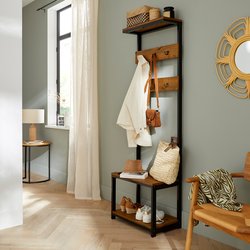
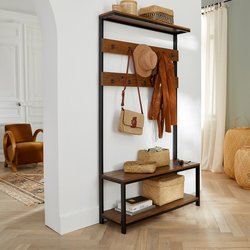
Compare shelf spacing as well as the overall footprint. Closely spaced shelves may suit flat shoes, while boots need more height. A low rack beneath coat hooks uses one stretch of wall for two tasks, but leave enough distance between the hanging hems and the shoes below.
Benches for seating and concealed capacity
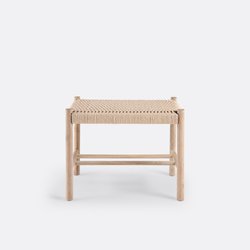
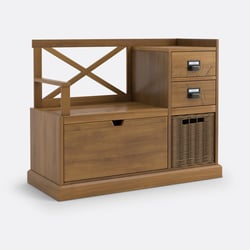
A storage bench earns its floor space when you regularly sit down to fasten shoes or help children get ready. Its broader footprint can provide useful capacity, although the opening method matters. A lift-up lid needs clearance above, while drawers need free space in front. Avoid placing a lid-opening bench where hanging coats would have to be lifted out of the way each time.
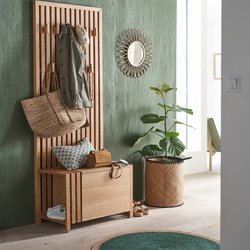
At La Redoute, our Theonie Hallway Bench in natural, from LA REDOUTE INTERIEURS, gives you a storage box right in your entranceway. You can use that enclosed space for items such as spare shopping bags or seasonal accessories, checking the product dimensions against what you plan to store before ordering.
Choose a layout that follows your hallway dimensions
Long, narrow hallways: keep storage on one side
In a corridor-style entrance, placing furniture along one wall usually leaves a more straightforward walking route than alternating pieces on both sides. Choose one shallow cabinet or a compact rack, then use the wall above for everyday outerwear. This keeps storage concentrated rather than creating several obstacles along the passage.
Measure hooks with coats hanging from them, not just as bare fittings. A padded winter coat occupies considerably more space than an empty hook. Position hanging storage away from the tightest turning point, and check that sleeves will not catch on door handles as you pass.
Short entrances: combine jobs within one footprint
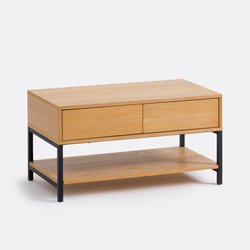
Where the front door opens directly into a small entrance area, one piece that performs two jobs can reduce clutter. A bench with storage provides seating without requiring a separate chair. A cabinet with drawers can hold footwear below and keys above, removing the need for an additional console table.
Hang coats above hallway storage while keeping keys in its drawers, provided the wall fixings are suitable and the hanging garments do not obstruct access. Give each regular user a drawer section or small tray so that keys, travel cards and headphones do not become mixed together.
Wider entrances: separate wet and dry belongings
A wider hallway gives you room to divide storage by use. Keep damp shoes and umbrellas near the entrance, with clean accessories further along. Store shoes and umbrellas neatly inside the hallway storage cabinet only if its internal layout can accommodate both; use a removable waterproof container for umbrellas and let them dry before closing them away.
This separation has a practical benefit on rainy mornings: you can retrieve a dry scarf without reaching past a wet umbrella. If the cabinet cannot accommodate long umbrellas upright, a separate holder may use less space than sacrificing an entire cupboard compartment.
Give everyday belongings a reachable home
The most useful storage arrangement reflects the order in which you leave and arrive. Keep regularly worn shoes low down, outerwear at a comfortable hanging height, and small essentials close to the exit. Reserve less accessible shelves for items you only need occasionally, rather than your daily bag.
Place baskets in hallway storage for scarves, gloves and dog leads. Separate them by person or activity: one basket for children’s winter accessories, another for walking the dog. Measure the shelf opening before choosing baskets, including enough clearance to pull each one out without scraping your fingers against the shelf above.
For shared households, limit each person’s everyday allocation. One hanging space and a designated shoe compartment can make missing items easier to spot. Add a weekly reset to return spare coats, sports footwear and bags to bedroom storage, keeping the entrance available for the next day’s routine.
Select materials and details for daily handling
Wood furniture can connect the entrance visually with adjoining living areas, especially where the hallway opens straight into a sitting room. If you already have an oak table nearby, compare finish photographs and descriptions rather than assuming every oak-labelled finish will match. Natural wood, veneer and wood-effect surfaces can differ in appearance and care requirements.
Look closely at the surfaces most likely to meet wet shoes, keys and shopping bags. Follow the care instructions for the particular material, and use a suitable tray beneath items that could leave moisture behind. A removable liner in a shoe compartment can make routine cleaning easier where the manufacturer’s guidance allows it.
Handles and edges also affect daily use. A projecting handle can catch a bag in a tight passage, while a recessed opening may reduce that risk. Follow the supplied assembly instructions and use the recommended wall restraints where specified, with fixings appropriate for your wall type.
Check the product details before you order
Compare price alongside usable capacity, not simply overall size. A lower-priced unit that cannot hold your usual shoes may leave you needing a second piece of furniture. Likewise, a larger cabinet offers little benefit if opening its doors blocks the entrance. Use your measurements and a short inventory of belongings to compare options on the same basis.
On each product page, check dimensions, internal layout, assembly requirements and care guidance. Customer ratings can add practical context, but read the comments behind the stars: a review mentioning large shoe sizes or restricted drawer access may be more relevant to your household than the rating alone.
Before placing your order, check current stock and the available delivery arrangements. Confirm any delivery charge and whether a free delivery offer applies to your order rather than assuming it does. Measure communal entrances, stairways and door openings too, especially if the furniture arrives assembled or in a large package.
A well-planned hallway gives each daily essential a place without making you squeeze past it. Start with the narrowest measurement, choose capacity you can comfortably access, and leave enough room for doors, coats and people to move. You will have somewhere to sit, shoes you can find and a clearer route out of the house each morning.