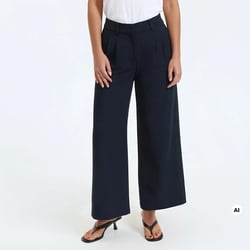
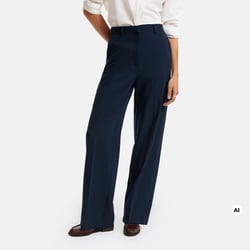
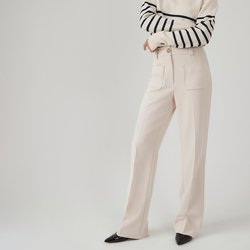
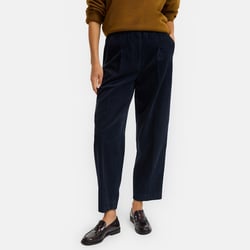
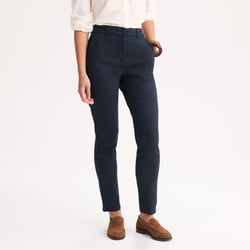
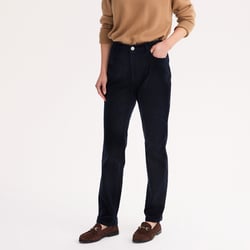
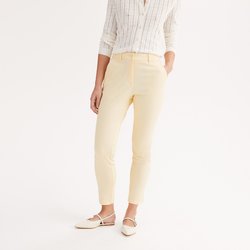
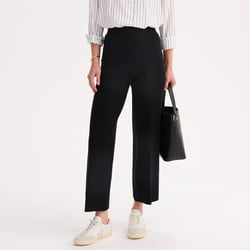
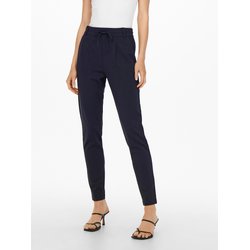
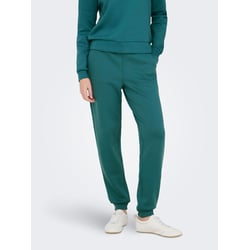
Balance relaxed volume with polish
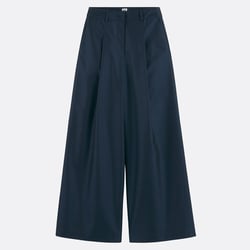
Navy blue trousers give you plenty of styling options, but a wide leg brings its own practical considerations. You want enough room to move comfortably without losing the shape of your outfit beneath excess fabric. The starting point is a waistband that sits securely, followed by fabric that falls smoothly from the hips and a hem that works with your everyday shoes. At La Redoute, we suggest considering those three details together: trousers that look balanced with work shoes should also feel comfortable when you sit at your desk or walk to the station.
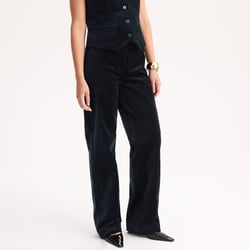
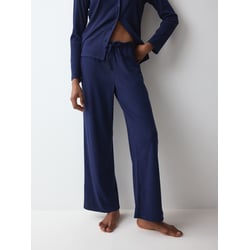
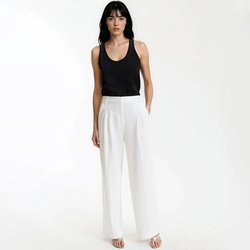
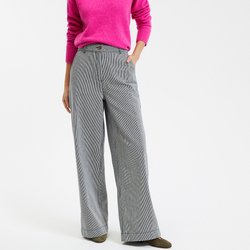
Women's navy wide-leg trousers work particularly well when you balance their relaxed volume with a more defined upper half. A white blouse tucked in for work, a neat cotton T-shirt for weekend errands or a knit sweater on chilly mornings gives the fuller leg a clear starting point. You do not need a tightly fitted top; you simply need to make the waistband or upper hip area visible enough to keep the proportions intentional.
Start with the fit at your waist and hips
Use measurements rather than relying on your usual size
Begin with your waist and hip measurements, then compare them with the size guide for the specific trousers. Different cuts can place the waistband at different points, so a size that feels comfortable in low-rise joggers may sit differently in high-waisted, tailored trousers. Measure your waist without pulling the tape tight and take your hip measurement around the fullest part. If your measurements fall between sizes, consider the fabric composition and the fit guidance rather than automatically sizing down.
The waistband should stay in place without digging in when you sit. Try sitting, bending and taking a few normal steps during your fitting check. Horizontal pulling across the front, pockets that gape or a zip area that strains can indicate that you need more room. A wide cut should provide space through the thigh, but that extra width cannot compensate for a waistband or seat that is too tight.
- Check that side seams fall down the sides of your legs rather than twisting towards the front.
- Look at the back as well as the front: the fabric should not pull tightly across the seat.
- Put your hands into the pockets to check that their openings are comfortable and accessible.
- Sit for a few minutes to assess pressure at the waist, especially with a structured waistband.
Let the upper fit control the volume below
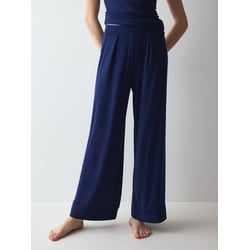
A wide-leg cut usually opens out from the hip or upper thigh, unlike straight trousers, which maintain a more consistent width towards the hem. A barrel shape adds curved volume through the leg before narrowing at the ankle. These differences matter when you are deciding how much fabric you want around your knees and calves. For a flowing outline, look for a wide cut with enough room through the hip to let the material hang freely.
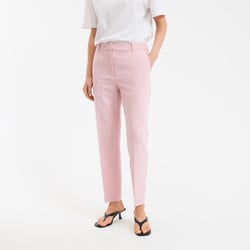
If you normally wear leggings, the extra movement of a wider cut may initially feel unfamiliar. Judge the fit by the waistband, seat and seams rather than expecting the fabric to follow your legs. When comparing navy styles with pink high waisted trousers, assess where each waistband sits before comparing the overall shape; a higher rise changes how much of the leg is visible beneath your top.
Front pleats need space to lie flat at the top. If you like pleat front trousers, check that the folds do not pull open while you are standing naturally. A tucked blouse should fit beneath the waistband without making it feel restrictive. Try the trousers with the thickness of top you actually plan to wear, rather than with a very thin layer that gives an unrealistic impression of the fit.
Understand how fabric affects a relaxed silhouette and drape
Match the fabric to the movement you want
Fabric determines whether navy wide leg trousers hang close to the body or hold a broader outline. A fluid woven fabric can fall in softer folds as you walk, while a firmer cotton fabric may keep more space around the leg. Neither effect is automatically better. For office days involving long periods at a desk, consider how the material creases at the lap. For busy weekends, assess whether it feels comfortable when you climb stairs, bend down or carry shopping.
Look at both fabric composition and fabric weight. Composition tells you which fibres are present, but it does not explain everything about the finished feel. A lightweight cotton weave behaves differently from a heavier cotton twill. Stretch may help the waistband and seat move with you, although it does not remove the need for sufficient room. Check the product description for lining, fastening and fabric details before deciding which products suit your routine.
If you are comparing JDY wide leg trousers with other options, use the same practical checklist for each: rise, measurements, composition, length and care instructions. A photograph can help you assess the outline, but those details are more useful for judging how the trousers will work during a full day of sitting, walking and travelling.
Keep your top from interrupting the fall of the fabric
Pair navy blue women's trousers with a white blouse for work, tucking it in fully if the fabric is light enough. If the blouse is longer or fuller, check that it does not bunch beneath the waistband. A short jacket that finishes around the upper hip can leave the wider leg visible, while a longer jacket works best when it hangs smoothly rather than catching at the pockets.
On chilly mornings, style navy blue women's trousers with a knit sweater. A shorter sweater can sit just above the waistband, while a small front tuck can help manage a longer one. Avoid forcing a thick knit into a close-fitting waistband: the extra bulk can push the front fastening forwards and interrupt the drape. Navy's rich blue shade also works with grey, cream and pale blue, giving you alternatives when your white blouse is in the wash.
Set the length for everyday wear
Check the hem with the shoes you will use most
Length has a noticeable effect on a wide leg because the hem covers a larger area around your shoe. Try full-length trousers on with your intended footwear before deciding on alterations. For everyday walking, the back hem should clear the ground rather than drag beneath your heel. At the front, a slight fold over the shoe can work, but several folds of fabric may make walking awkward and leave the hem vulnerable to pavement dirt.
Wear navy blue women's trousers with trainers for weekend errands, checking the length with that particular pair. A chunky sole lifts the hem more than a thin-soled trainer, even when both shoes feel equally casual. Walk across the room, turn and take a step backwards to check that your heel does not catch the fabric. If you use the same trousers for work and weekends, shoes with similar sole heights make the length easier to manage.
Consider petite proportions and cropped options
For a petite frame, shortening a standard pair may solve the hem length without correcting a rise or knee position that sits too low. Where petite sizing is available, compare its measurements before choosing an alteration. A waistband in the right position helps the wide shape begin where intended, while pockets and pleats should sit comfortably rather than dropping too far down the hips.
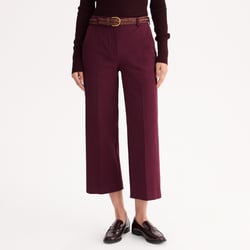
Cropped trousers offer another option when you want the hem well clear of the ground. Check where they finish on your own leg, since a style shown above the ankle on a taller model may reach lower on you. When comparing them with women's flared trousers, remember that a flare widens towards the hem, whereas a wide-leg style carries more width higher up. This affects how much of your shoe remains visible and how the fabric moves around your ankles.
Keep everyday essentials light in the pockets. A phone, keys and other stuff can weigh down one side, especially in fluid fabric. Put heavier items in your bag if you notice a pocket sagging or a side seam pulling forwards. This small adjustment helps the trousers hang evenly without changing the size or cut.
Care for the fabric and keep the shape consistent
Follow the label rather than the colour alone
Navy trousers do not all need the same care. A washable cotton pair and a lined, tailored pair may have very different instructions, even when their colour and outline look similar. Read the care label before the first wash or clean. Check the permitted temperature, drying method and ironing instructions, and follow any direction to use professional cleaning. Empty pockets and fasten zips before washing where the label allows it, so loose items do not knock against the fabric.
For washable styles, wash with compatible dark colours and use the recommended detergent quantity. Avoid leaving damp trousers crumpled in the machine, as folds can become harder to smooth out later. Reshape gently and dry as directed. Do not assume a tumble dryer is suitable simply because the fabric contains cotton; shrinkage can change both the inseam and the room through the hips.
Press carefully and store without bunching
If ironing is permitted, use the temperature specified on the label and test an inconspicuous area first. A pressing cloth can help reduce direct contact between the iron and the outer fabric. Take particular care around pocket edges and seams, where heavy pressure may leave visible marks. Follow existing creases only if the trousers are designed with them; adding a sharp crease to a softer style changes its intended finish.
Hang your trousers with the waistband supported or fold them neatly along their existing lines, allowing enough wardrobe space to avoid crushing the legs. Before your next wear, check the hem for loose stitching and brush away surface dust if the fabric permits. With a comfortable waist, an uninterrupted fall and a length suited to your shoes, your navy trousers can move easily between a white blouse for work and a sweater for the journey home.