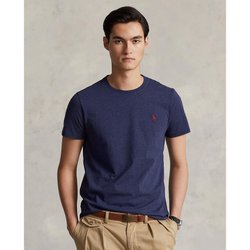
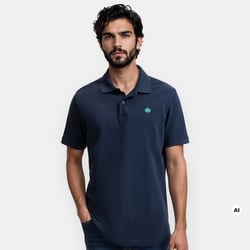
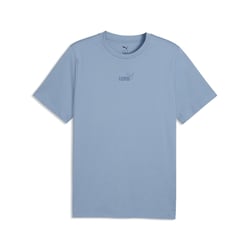
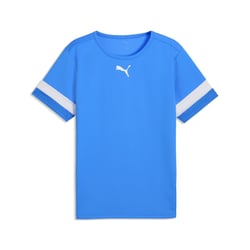
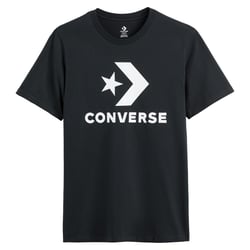
Choose an easy-wearing navy staple
A navy blue men's shirt earns its place in your weekly rotation when it works with the clothes you already reach for: jeans, chinos and a light jacket. For everyday casual wear, a short-sleeved T-shirt keeps the choice straightforward. There are no buttons to adjust, the sleeves sit neatly under an overshirt, and the dark blue colour gives you an alternative to black when you are getting dressed before the school run or your morning commute.
The most useful choice starts with how the T-shirt sits on your body, not just how it looks folded on a shelf. Check the fit, fabric and neckline together: a soft cotton jersey can still feel restrictive if the chest is too narrow, while a roomy cut may look untidy if the neck opening is too wide. At La Redoute, we recommend using your measurements and the product details together when choosing a size online.
Start with a fit that works through your day
Check the shoulders, chest and hem
For a conventional set-in sleeve, the shoulder seam should sit close to the point where your shoulder meets your upper arm. If it falls noticeably lower, check whether the design is deliberately relaxed. A dropped shoulder can suit loose jeans and trainers, but it may bunch under a fitted jacket. If the seam sits too far towards your neck, the upper body can pull when you reach for a bag or hold the steering wheel.
Across the chest, aim for enough room to move without obvious horizontal pulling. Try sitting down, folding your arms and reaching forwards. The fabric should move without gripping your chest or lifting sharply at the hem. A regular fit is often a practical starting point for men who want one tee for a desk-based working day and an evening walk. A slim fit sits closer to the torso, so check the measurements rather than assuming your usual size will feel the same.
Length matters when you bend to tie your shoes or lift shopping into the car. For an untucked style, look for a hem that covers your waistband without extending so far that it gathers around your hips. A long body can work well on a taller frame, but extra length is not a substitute for sufficient room across the chest.
Use measurements rather than relying on a label
Take a T-shirt you already enjoy wearing and lay it flat without stretching it. Measure across the chest, from one underarm to the other, then measure the length from the highest shoulder point to the hem. Compare those figures with the product's size information, checking whether the guide gives garment measurements or body measurements. They are not interchangeable: the garment needs some additional room for movement.
- For a closer shape, check that you can fold your arms without pulling across the back.
- For a relaxed shape, check that the shoulder and sleeve proportions still suit your frame.
- If you fall between sizes, consider both your preferred roominess and the fabric's stretch.
- When browsing men's 3xl t-shirts, compare chest, length and sleeve measurements rather than assuming every larger size has the same proportions.
Keep a note of the measurements that work for you. That makes it easier to compare men's T-shirts across different cuts without ordering solely by the letter on the label.
Choose fabric by feel, weight and intended use
Understand what cotton brings to a navy tee
Cotton jersey is a useful starting point for a men's navy short-sleeve T-shirt because its knitted structure allows some natural give. The surface generally feels soft against the skin, making it practical when you plan to wear the tee on its own for weekend errands. However, two cotton T-shirts can feel quite different. Yarn, knit density, finishing and fabric weight all affect how the material hangs and how substantial it feels.
A lighter jersey can sit comfortably beneath an overshirt without creating much bulk at the waist. A heavier jersey usually has more structure, which can help the body fall away from your middle rather than follow every contour. Look for fabric weight information where it is provided, but do not use weight alone to judge comfort. A dense, close-fitting tee may feel less airy than a lighter one with extra room through the body.
If you prefer cotton tops for daily dressing, check the composition rather than relying on the product photograph. A small amount of elastane can add stretch, while polyester blends may behave differently during washing and drying. Follow the stated care instructions for that particular fabric mix; a routine that suits one tee may not suit another.
Match the material to your routine
Think about the hours between getting dressed and getting home. For a day spent moving between public transport, an office and shops, a jersey that feels pleasant at the neck and underarms is worth prioritising. If you carry a shoulder bag, check that the shoulder seam does not press uncomfortably beneath the strap. For layering beneath a jumper, avoid excess fabric around the upper arms, where folds can become noticeable.
Colour also affects how you build an outfit. Navy works with mid-blue denim, stone chinos and grey trousers, giving you several combinations from a small set of clothes. If you are comparing a men's brown T-shirt option with navy, put each beside your most-worn trousers. Brown creates a clearer colour contrast with blue jeans, while navy gives a quieter, closer-toned result.
Pay attention to the neckline and sleeve
Choose a neck opening that sits comfortably
A crew neck is a straightforward choice for a casual navy tee. The ribbed neckband should lie flat rather than ripple, gape or press tightly against your throat. Check its position when you sit as well as when you stand: a neckline that seems fine in front of a mirror may feel restrictive when you lean over a laptop. A slightly wider opening can feel less enclosed, but make sure it still sits securely when you move.
If you want more structure around the neck for work or dinner, a polo provides a collar without taking you all the way to a button-through shirt. An oxford shirt is another option when the occasion calls for a more formal finish. A Ralph Lauren polo, for example, is a different garment category from a plain crew-neck tee; compare the construction and fit, not only the brand name.
Check where the short sleeve finishes
A short sleeve often finishes around the middle of the upper arm, although the exact position varies by design and body proportions. Look for an opening that does not cut into your arm when you bend it. A very wide opening can stick out beneath a jacket, while a tight one can pull across the shoulder as you reach upwards.
Use the side view as well as the front view when checking fit. This helps you spot a sleeve that flares, a hem that rides up at the back or excess material gathering near the waist. If you prefer a longer sleeve, check its listed length rather than simply sizing up, which also changes the chest and body proportions.
Put your navy T-shirt to work during the week
Keep casual Friday neat without overcomplicating it
Wear your navy blue men's shirt to casual Friday meetings when your workplace permits T-shirts. Choose a clean, plain design with a flat neckline, then add tailored grey trousers and clean leather trainers. A lightweight unstructured jacket gives you an extra layer for the meeting room without hiding the tee beneath several bulky pieces. Check for lint and creases before leaving, as both can stand out against dark fabric.
For a workplace that expects a collar, keep the navy tee for your commute or after-work plans and choose a polo or button-through shirt for the meeting itself. Let the dress code decide the garment, then use fit to keep it tidy. This avoids trying to make a relaxed T-shirt serve an occasion that calls for more structure.
Make weekend dressing quicker
Pair this navy blue men's shirt with jeans for weekend errands, adding trainers and a zip-through layer when the morning is cool. Mid-wash denim makes the two blues distinct; very dark jeans create a closer-toned outfit that benefits from lighter footwear. Keep the hem untucked if it falls neatly over the waistband, or tuck it in if you prefer a more defined waist under an open overshirt.
If you are adding a new colour to the same rotation, compare navy with a men's khaki t-shirt against your existing jackets. Navy sits easily beneath a tan jacket, while khaki can provide more contrast under a dark blue overshirt. This gives you a practical reason to choose a second colour rather than buying several near-identical shirts.
Care for the fabric, neckline and dark blue colour
Wash according to the label
Start with the care label, especially if your tee contains stretch fibres or has a printed detail. Turn it inside out, group it with similar dark colours and use the recommended detergent amount. Too much detergent can leave residue, particularly when the machine is crowded. Leave enough space for the garments to move and rinse properly.
Follow the stated washing temperature rather than assuming a hotter wash is better. Treat small marks promptly using a method suitable for the fabric, and avoid scrubbing one area aggressively, which may affect the surface or colour. Wash a new dark T-shirt with similar shades, following any separate-wash instruction on its label.
Dry and store it without stretching the shape
After washing, gently ease the body and neckline back into shape while damp. Dry as directed, keeping the tee away from strong direct sunlight where possible to help limit fading. If tumble drying is permitted, use the specified setting rather than choosing high heat to save time. Excessive heat can cause shrinkage in some cotton garments.
Fold the dry T-shirt for drawer storage, or use a suitable hanger that supports the shoulders without stretching them. Before wearing it again, check the neckline, sleeve edges and hem. With the right size, a fabric suited to your routine and care matched to the label, your navy tee is ready for another practical combination: chinos for a relaxed office day, or jeans when you head out for the weekend.