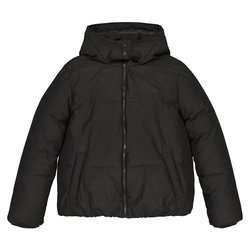
Padded warmth for everyday wear
A black coat for girls needs to earn its place on the hallway hook. It goes on before the school run, gets squeezed into a cloakroom and comes out again for trips to the park or weekend errands. A padded design is a useful starting point for colder days, helping to keep her comfortable without requiring several bulky layers underneath. The right choice depends on the journey she makes, the clothes she wears beneath it and the weather she is likely to meet.
At La Redoute, we suggest considering warmth, fit, weather protection and care together when choosing outerwear for your child. She wears her girls' black coat on chilly school mornings, so details such as covered wrists, a comfortable fastening and room for her school jumper deserve attention alongside its appearance.
Start with padded warmth that suits her routine
Match the insulation to time spent outside
A short walk from the car to the classroom calls for different outerwear from a twenty-minute journey on foot. Padded jacket warmth comes from the insulating filling held within the outer fabric and lining, but thickness alone does not tell you how warm a garment will feel. Coverage, openings and the layers underneath also affect comfort. Read the product description for information about the filling and lining rather than judging only from a photograph.
For regular walks, look for padding across the body and sleeves, with cuffs that sit comfortably around the wrists. A high collar can cover the gap above a jumper, while a hood offers extra coverage when the wind picks up. Check that the collar does not press against her chin when the fastening is fully closed; this matters when she is looking down to fasten her shoes or adjust a school bag.
A girls' padded coat should leave space for the clothes she actually wears. Try it over her usual school jumper rather than a thin T-shirt. If she spends much of the journey running or scooting, avoid adding thick layers automatically: removable layers make it easier to adjust before and after activity.
Choose linings for comfort as well as warmth
A fleece-lined body can feel comfortable when she first puts her coat on in a cold hallway. A borg lining has a more textured surface, so check how easily it moves over her usual knitwear. Smooth sleeve linings can make dressing simpler because jumper sleeves are less likely to bunch up near the elbows. These details are especially useful when she needs to get dressed independently before the school bell.
If she prefers a black faux fur coat for occasional outings, compare its fastening, coverage and care instructions with those of a padded style. The fur-like surface does not establish how well a garment handles wind or rain. For daily outdoor use, check the stated features rather than assuming that a fluffy finish offers the same protection as a weather-ready outer layer.
Check the fit for walking, sitting and carrying a bag
Use measurements rather than age labels alone
Children of the same age can need different sizes. Labels marked in yrs provide a starting point, while smaller sizes may use mths, but the size guide and your child's measurements are more useful for checking fit. Measure as directed by the retailer and compare the results with the relevant chart. For coats, pay particular attention to the measurements provided for height and chest.
Check the fit over her everyday layers before removing any labels. Buying a much larger size to allow for growth can leave sleeves covering her hands and shoulders sitting too low. Extra fabric may also get caught beneath a backpack or bunch up when she sits on the bus. A comfortable fit allows movement without leaving large gaps around the neck and cuffs.
- Ask her to reach forward as though holding scooter handlebars; the back should not feel tight.
- Have her raise both arms; check that the hem does not pull up excessively.
- Let her sit down with the coat fastened to check for pressure across the hips.
- Try her school bag over the shoulders to check that the straps sit securely.
- Ask her to open and close the fastening herself, including any press studs.
Choose a length that works with her activities
A shorter jacket leaves the legs freer for climbing steps and playground games. A longer coat gives more coverage over the hips and upper legs, which can be helpful when waiting at a bus stop. If you are considering a girls' long winter coat, check the hem position while she walks upstairs and sits down. Look at any lower fastening options described in the product details, as these may affect ease of movement.
She puts on her girls' black coat before walking to school, so the fastening needs to work without a lengthy struggle at the door. An easy-to-grip zip pull can help when fingers are cold. A fabric guard behind the zip may also help prevent it from catching on the layer underneath, depending on the design.
Read weather protection details before heading out
Know the difference between warmth and rain protection
A padded coat is not automatically waterproof. Some outer fabrics are designed to cope with a brief shower, while others have specified protection for wetter conditions. Check the stated water protection, including any information about seams and fastenings. If the description only mentions warmth, do not assume the garment will keep her dry during a long walk in steady rain.
For a route with little shelter, a waterproof outer layer may be more useful than extra padding alone. A raincoat can work over suitable warm layers in milder weather, provided there is enough room to move. Avoid squeezing several thick layers beneath a narrow shell, as this can make the shoulders and elbows uncomfortable. On colder, wet days, look for a coat whose description addresses both insulation and rain protection.
A hood should stay in place without blocking her view at crossings. Check its fit with her hair as she normally wears it, whether loose or tied back. If it has adjustment features, follow the garment instructions and make sure nothing hangs loosely where it could catch during play.
Plan for darker school journeys
Black works easily with many school uniforms, but it can be harder to see in low light. Add a suitable reflective accessory to her bag or outerwear, following its attachment instructions. This is particularly useful during winter afternoons when the walk home takes place near dusk. Do not cover reflective panels already included in the coat with a scarf or backpack strap.
If your search for a girls' warm winter coat is mainly about the school run, check pocket placement too. She should be able to reach tissues or gloves without opening the main fastening. Secure pockets help keep small belongings in place, although bulky items can feel uncomfortable under a backpack waist strap.
Make a black coat work for school and weekend wear
Her girls' black coat pairs neatly with boots for weekend errands. Add leggings or trousers with enough room for walking, and choose socks suited to the temperature. For school and weekend wear, black also makes it straightforward to change accessories: a pink hat is easy to spot on the cloakroom shelf, while a scarf with a bright print can help her recognise her own belongings.
Keep accessories practical. A scarf should sit comfortably without preventing the coat from closing, and gloves need to fit inside or over the cuffs without creating pressure. For active outings in milder weather, a gilet over a suitable top may offer more freedom around the arms than a fully padded jacket, but it leaves the arms without the same coverage.
Keep care manageable through the school week
Read the label before the first wash
Follow the garment's care label for washing and drying rather than applying one method to every padded style. Different fillings, trims and outer fabrics can need different treatment. Check whether a detachable hood or faux trim needs separate care, and empty every pocket before washing. A forgotten tissue can leave small pieces across a dark lining.
Deal with small marks according to the care instructions instead of putting the whole coat through a wash after every outing. Pay attention to cuffs, pocket edges and the area beneath the chin, where marks often appear first. Avoid using unfamiliar cleaning products without checking whether they are suitable for the fabric and finish.
Allow enough drying time between outings
After a wet school run, hang the coat where air can circulate, away from direct heat unless the care label says otherwise. Open it so the lining can dry too, and check the cuffs and hood before it goes back on. Let the coat dry fully before storage; putting it into a crowded cupboard while damp leaves less opportunity for moisture to escape.
If machine washing is permitted, plan it around the drying instructions so the coat is ready for the next school morning. Follow any directions for redistributing the filling, and do not assume that all padded jackets can go in a tumble dryer. Keeping an alternative outer layer available avoids sending her out in a coat that is still damp.
The most useful girls’ black coat is one she can move in, fasten and wear comfortably on her usual journeys. Check its warmth against time outdoors, test the fit with her school clothes, read the weather claims and make sure the care routine fits your week. Those checks give you a practical basis for choosing between coats that may look similar but serve different everyday needs.