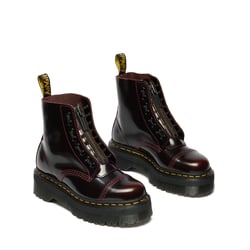
Start with the shade and the fit
The most useful burgundy boots are the ones that work with your trousers, feel secure around your feet and leave enough space for your usual socks. Before choosing a heel or fastening, compare the colour with the clothes you wear most often. A deep, brown-toned burgundy sits quietly beside navy and camel, while a brighter wine shade creates a stronger contrast with charcoal or washed black denim.
For everyday wear, ankle boots offer a practical starting point: they sit neatly beneath straight-leg trousers and are easier to accommodate under narrow hems than taller styles. At La Redoute, we recommend comparing the material, measurements and care instructions before settling on your new pair. A few checks can help you avoid a boot that looks appealing on screen but pinches across your toes or catches against your trouser hems.
Find a burgundy shade and finish that suit your wardrobe
Compare brown, purple and red undertones
Burgundy covers several colours, from muted reddish brown to deep plum. Brown-based shades work particularly well with tan bags, olive trousers and cream knitwear. Purple-leaning burgundy looks cooler beside grey tailoring or dark blue denim. Redder versions stand out more clearly against black, which can be useful if you want your footwear to provide the main colour in an otherwise simple outfit.
Check the shade in more than one product image, especially where the boots appear alongside clothing. Lighting and screen settings can affect how dark the colour looks. Once your order arrives, compare the boots with your coat and most-worn trousers in daylight, keeping the soles clean while you decide whether to keep them.
Decide between a smooth, soft or glossy surface
Smooth leather offers a defined outline that works with tailored trousers and structured skirts. A matte finish keeps the colour understated, while polished leather catches more light and makes folds around the ankle more noticeable. Patent finishes create a sharper contrast with wool and denim, though fingerprints and surface marks may show more readily.
Suede has a softer-looking surface that can make burgundy appear deeper or more muted. If you already wear flat suede boots, a burgundy version gives you a familiar texture with a different colour emphasis. Bear in mind that suede needs care suited to its finish, and unprotected styles are less convenient for wet pavements. Choose the surface according to your actual routine rather than judging it only against a studio photograph.
Check ankle-boot fit from toe to opening
Allow space without accepting heel slip
A good fit feels secure through the heel and instep without pressing your toes together. Try boots with the socks you intend to wear, preferably later in the day when your feet may be slightly fuller. Stand up, walk across a clean indoor surface and bend your knees gently. Your toes should not strike the front, and the upper should not dig into the crease where your foot meets your leg.
Do not rely on leather stretching to solve a painful fit. Some uppers soften with wear, but that does not reliably correct insufficient length or a toe box that is too narrow. A pointed boot can need more unused space at the front than a rounded style; what matters is where your toes sit, not simply how long the sole appears.
- Check both feet, since one may need slightly more room than the other.
- Compare the size guide with your foot measurements rather than assuming every brand fits alike.
- Look for a wide fit if a regular width presses across the forefoot.
- Walk and turn to check that your heel stays secure without rubbing.
- Test the fit with any insoles you normally use, provided the boot can accommodate them.
For women choosing between two sizes, the product’s sizing guidance is more useful than a blanket rule to size up. Extra length can cause sliding, particularly with a higher heel. If the width is the problem, a different fit or toe shape may work better than a larger size.
Match the opening to your trousers and lower leg
The ankle opening affects both comfort and how clothes sit. A close shaft can slip neatly beneath slim trousers, but it should not press against your leg when you sit down. A wider opening leaves more space around the ankle, although it may catch beneath a narrow trouser hem. Try your boots with at least one everyday outfit before removing the labels.
If you like the close fit that women's sock shoes ranges offer, look for ankle boots with a flexible shaft, then check how much support the foot section provides. Stretch around the leg does not necessarily mean extra room across the toes. For a taller shaft that reaches towards the lower calf, check its height and opening measurements. Unlike knee boots, ankle styles need less leg coverage, but their upper edge can still rub if it lands at an awkward point.
Choose a fastening that suits your daily routine
A side zip makes ankle boots straightforward to put on, particularly when you are leaving home with a bag in one hand. Check that it closes smoothly without needing to pull the upper tightly together. A small inner panel behind the zip can help prevent direct contact with your socks or skin.
Elastic-sided styles offer a pull-on option with fewer moving parts. If you are comparing block heel Chelsea boots, check that the elastic allows your foot through comfortably while the boot still feels secure once on. A pull tab helps with dressing, but repeated force on the tab should not be necessary to overcome an unsuitable fit.
Laces offer more adjustment over the instep and around the ankle. They can be useful when your preferred sock thickness changes between early autumn and colder weather. Some boots combine laces with a zip, allowing you to set the tension once and then use the zip each day. Buckles may be adjustable or purely decorative, so read the description before relying on them to alter the fit.
Compare heel height with the walking you actually do
Low heels for errands and longer days
Low heels and flat soles are sensible options when your day includes walking to the station, standing in queues or carrying shopping. Look beyond heel height to the outsole: tread can help on uneven surfaces, while a very smooth sole may feel less secure on wet paving. Cushioning can reduce the hard feeling underfoot, but it cannot compensate for a boot that squeezes.
Pair burgundy boots with dark denim for crisp autumn coffee runs. A low heel, straight-leg jeans and a short wool jacket keep the hem clear of the ground while allowing you to walk comfortably between home, the café and your next errand. Add socks that sit above the boot edge if the opening tends to rub against bare skin.
Mid and high heels for different schedules
A mid heel can work for office days that involve shorter walks and time seated at a desk. A block heel gives a broader contact area than a narrow heel, although stability also depends on its placement, the sole and your own walking preferences. High heels may suit an evening with limited walking better than a commute involving stairs and uneven pavements.
Test the boots while walking, turning and standing still. If your weight slides forwards or you need to grip with your toes, reconsider the fit or heel shape. For an occasion wardrobe, compare the intended use as well as the colour: gold low heel shoes may suit an indoor dinner, while burgundy ankle boots provide more coverage on the journey there. Similarly, gold ankle boots create a brighter statement, whereas dark burgundy is easier to repeat with navy office clothes.
Build outfits around your burgundy ankle boots
Style burgundy boots beneath a wool skirt for chilly office commutes. Leave enough space between the skirt and the shaft for the fabric to move freely, or choose a longer skirt that falls over the boot without catching. Charcoal tights connect darker boots with a grey skirt, while a cream jumper adds a lighter area near your face.
With cropped trousers, check the gap above the boot when you sit down as well as when you stand. A small strip of matching sock can look more deliberate than an unexpected band of bare skin on a cold day. Full-length trousers should fall without bunching heavily over the ankle; try a slightly wider hem if the fabric catches on the shaft.
For rainy market strolls, choose burgundy boots specifically described as waterproof, with suitable sole grip. A leather upper alone does not mean a boot is waterproof. Check the stated construction and care guidance before relying on a pair for prolonged rain. Ordinary fashion boots may be suitable only for brief exposure to light showers.
Balance price, care and frequency of wear
Compare price alongside the features you will use: an adjustable fastening, a suitable width or a practical outsole may matter more to your routine than decorative hardware. During a sale, check the same measurements and return conditions you would at regular price. A discount offers little benefit if the boots remain unworn because they pinch during your commute.
Care requirements also affect everyday convenience. Smooth leather may need cleaning and an appropriate conditioning product, while suede usually calls for a suitable brush and finish-specific protection. Patent and coated materials can require different products again. Always follow the manufacturer’s instructions, and test any treatment on a discreet area where advised.
- Remove surface dirt after wear using a method suitable for the material.
- Let damp boots dry naturally, away from radiators and direct heat.
- Use burgundy-coloured polish only when it is suitable for the leather and matches the shade.
- Store boots with enough support to limit deep creasing or a collapsed shaft.
- Check heels and soles for wear before grip or balance noticeably deteriorates.
The best choice starts with a burgundy shade you can repeat across several outfits, then a fit and heel that suit your week. Try the boots with your usual socks, walk in them indoors and check them beneath your favourite trousers. Those practical tests tell you more about everyday usefulness than colour alone.