Outdoor Lighting for Paths, Patios and Entrances
Getting home after dark, carrying dinner onto the patio or finding the garden gate all become easier when light falls in the right place. Outdoor lighting works best when you plan around these everyday movements rather than spreading the same brightness across the whole space. A low pathway light can reveal the edge of a step, while a wall fitting beside the front door helps you find your keys without lighting up the bedroom above.
At La Redoute, we suggest comparing three practical details for each area: placement, weather resistance and power supply. Start with the route you use most often, then add lighting for seating areas and occasional tasks. This approach helps you choose fixtures that suit your space without leaving trailing cables across a path or placing a solar panel beneath permanent shade.
Light the Route from the Driveway to the Door
Position pathway lights around changes in direction
Pathway lights illuminate evening walks from the driveway to the porch, particularly where paving meets gravel or a route turns around a planted border. Place them beside the walking surface rather than in its centre, leaving enough clearance for shopping bags, pushchairs and garden equipment. Prioritise steps, uneven edges and junctions before filling in long, straight stretches.
Aim the light down onto the route, not towards approaching eyes. Shielded fittings make it easier to see the ground without a bright bulb interrupting your view. There is no single spacing that suits every path: the height, beam spread and light output of each product affect coverage. Check the manufacturer's guidance, then test the position after dark before securing movable fixtures.
Low posts suit open borders, while recessed step lights can help define level changes where installation allows. Keep fittings clear of plants that may grow across the beam. A light that reaches the paving in spring may disappear behind summer foliage, leaving the same corner difficult to navigate.
Choose power to suit the length of the path
Solar lights are useful along routes where a cable would be difficult to install, provided their panels receive sufficient daylight. Their running time can shorten during dull weather and winter, so they should not be the only source of light on steps you rely on every evening. A wired outdoor system can offer more consistent coverage, although installation needs planning and suitable electrical protection.
For a short route beside the house, a well-positioned wall light may cover the ground without adding several separate fixtures. Check its reach at ground level: a decorative glow around the fitting does not necessarily illuminate the last step down to the driveway.
Make Entrances Clear and Easy to Use
Place wall lighting beside everyday tasks
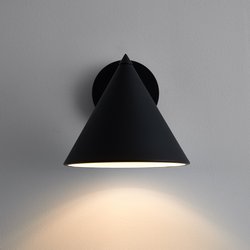
At the front door, direct light towards the lock, handle and threshold. A fitting placed beside the entrance can reduce the shadow you cast when standing in front of the door, although the best position depends on the beam and surrounding walls. Avoid locations where an opening door could strike the fixture or where a canopy blocks its output.
At La Redoute, our selection includes the Tobison Indoor/Outdoor Wall Light in black by AM.PM, a small, discreet and elegant wall light. Its compact format is worth considering beside an entrance where a larger fitting could crowd the doorway; check the product dimensions, installation instructions and weather rating against your intended position.
Finish affects how a fitting sits against the building. Black can provide a clear outline against pale brickwork, while white can blend with painted render. For either finish, check that the material and coating are suitable for the exposure, especially near the coast, where salt can affect surfaces and fixings.
Use sensors without lighting the street
Motion sensors can make entrances easier to use when your hands are full. Set the detection area to cover your approach rather than passing traffic or a neighbour's gate. Where adjustment is available, a short trial after dark helps you set the sensitivity and operating time for unlocking the door and stepping inside.
Keep security lighting directed within your boundary. A downward-angled beam can illuminate the threshold while limiting glare through nearby windows. If one sensor controls several lights, check that they do not switch off before you have walked from the driveway to the entrance.
Give Patios Light for Eating and Moving Around
Separate table lighting from access lighting
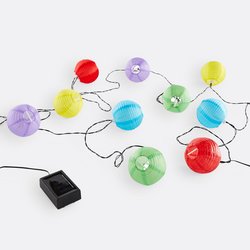
Patio string lights help families dine outdoors after sunset comfortably when they provide a gentle overhead glow without hanging at eye level. Position them above the dining area, following the manufacturer's fixing and support instructions. Keep them clear of doors, parasols, barbecue heat and routes where someone could catch a cable.
Use a separate light for the steps between the patio and kitchen. The brightness needed to see food on a table may not reach a change in level several metres away. A small downward-facing wall fitting or suitable step light can cover that route without making the entire seating area brighter.
Warm white light, often around 2,700-3,000 kelvin, is a useful starting point for relaxed outdoor dining. Cooler white light can suit a task-focused area, but avoid mixing noticeably different colour temperatures around one table unless that contrast is deliberate. Check the kelvin figure on the packaging rather than relying only on a photograph.
Use portable lights where sockets are limited
A rechargeable battery lamp can provide local light for a garden table away from the house. Check its stated runtime at the brightness setting you expect to use: a maximum runtime may apply only to the lowest setting. Recharge it before a long evening, and follow storage instructions rather than assuming it can remain outside overnight.
An outdoor label does not automatically mean a lamp can be left exposed throughout the year. Some portable designs are intended for temporary use outside and storage indoors afterwards. Check the instructions for both the lamp and its charging equipment.
Match Weather Resistance to the Exact Position
Check the IP rating for every exposed component, not just the light fitting. An IP rating describes protection against solid objects and water under defined test conditions. For example, IP44 indicates protection against solid objects larger than 1 mm and splashing water, while IP65 indicates dust-tight protection and resistance to water jets. Neither means that a product is suitable for submersion.
The right rating depends on the installation position and local requirements. A fitting beneath a deep porch faces different conditions from one on an open garden wall. Ground-level lights may encounter pooling water, wet leaves and irrigation, so their suitability needs particular attention. Ask a qualified electrician to confirm the specification where exposure or installation requirements are uncertain.
- Check whether the fitting is approved for the intended wall, ground or overhead position.
- Look for installation restrictions, including mounting direction and required clearances.
- Confirm that connectors, drivers and power supplies have suitable protection in their own locations.
- Consider drainage around ground fittings so water does not collect against them.
- Check operating temperature limits for exposed positions used throughout winter.
Compare Outdoor Power Options Before Installation
Mains-powered lighting for regular use
Mains-powered lights suit frequently used entrances, permanent patio arrangements and routes that need dependable illumination. Plan cable routes before installing paving or decking, where possible. Outdoor electrical work needs appropriate protection, including RCD protection where required, and installation by a qualified electrician in accordance with applicable regulations.
Never run an indoor extension lead outside as a permanent lighting supply. Even an outdoor-rated extension needs to be used within its instructions, with connections protected appropriately and cables kept away from foot traffic, tools and standing water. A fixed socket or professionally installed supply may be more practical for a patio used every week.
Solar and battery options for flexible placement
Solar lighting avoids the need for a nearby socket, but panel placement determines how much charge is available. A shaded fence corner may look convenient yet provide little useful daylight. Where a model has a separate panel, check the connecting cable length before choosing the light's position.
Battery-powered fittings can suit occasional use near a shed or side gate. Compare replacement or charging needs, access to the battery compartment and performance in cold conditions. If a fitting sits high on a wall, frequent battery changes may be less convenient than choosing a wired alternative.
Balance Brightness, Running Costs and Upkeep
Compare lumens when assessing light output; wattage measures energy use rather than brightness. LED lighting can provide useful output at relatively low wattage, but beam direction still matters. A focused light over a lock can be more useful than a brighter fitting that sends most of its output upwards.
For a rough running-cost estimate, multiply the total wattage by daily operating hours, divide by 1,000 and multiply by your electricity price per kilowatt-hour. Timers and dusk sensors can reduce unnecessary operating hours, provided their settings still cover the times you use the space.
When comparing a product in a sale with another from our collection, look beyond the ticket price. Check whether lamps, fixings, a power supply or a separate solar panel are included. Also confirm whether an LED light source is replaceable, as this affects maintenance when it eventually stops working.
Finish with an after-dark walk along your usual routes. Carry a bag from the driveway, unlock the door and walk from the kitchen to the patio table. Look for shadows on steps, glare at eye level and cables near your feet. Adjusting one beam or moving one portable lamp can solve a specific problem without adding more lights across the garden.