Choose the right piece for entertaining at home
If you enjoy having friends over for dinner, mixing a quick negroni on a Friday evening or simply keeping your favourite bottles in one organised spot, the right bar cabinet can make daily life easier. Rather than leaving glasses in one cupboard, spirits on an open shelf and tools in a kitchen drawer, you can bring everything together in one dedicated storage unit. That matters in real homes: when guests arrive, you do not want to search for the corkscrew in the kitchen while the tonic water is still in another room.
The best choice depends on three practical points: dimensions, storage layout and material quality. A compact model suits a flat where every centimetre counts, while a larger cabinet with shelves, a drawer and a bottle rack works well in a family living room used for regular entertaining. If you plan to store whiskey, glasses, and cocktail tools neatly in living room furniture, the inside layout matters just as much as the outside look. And if you prefer to hide bottles behind cabinet doors during dinner parties and gatherings, the type of door and shelf depth will make a noticeable difference.
Why a bar cabinet works so well in an entertaining space
A bar cabinet is not only about presentation. It is first and foremost about keeping your drinks storage practical. In a living room, dining area or open-plan home, it helps you create a serving point that stays tidy between occasions. One shelf can hold everyday glasses, another can keep a small wine collection, while a drawer can store bottle openers, coasters, napkins and cocktail tools. When everything has its place, preparing drinks becomes quicker and the room feels less cluttered.
This type of furniture is especially useful when your kitchen is already busy. If your worktop is used for cooking, a separate bar cabinet in the dining space can act as a compact entertaining station. You can display favourite liquors and decanters for easy evening entertaining, or close the door and keep the room looking calm once guests have gone home. In smaller interiors, this dual role is very helpful: the cabinet offers both display and hidden storage without taking over the room.
Start with the right dimensions for your room
Before looking at colour, finish or price, measure the space carefully. A cabinet that looks balanced on a product page can feel far too deep in a narrow room. Start with width, then check depth and height. In a compact sitting room, a slim unit around 35 to 45 cm deep often works better than a bulky piece that blocks the walkway. In a larger dining room, a wider cabinet can offer more shelves, a wine rack and a better serving surface on top.
Think about how you move around the furniture every day. If the cabinet sits near a dining table, make sure there is enough room to open the door fully and step back while choosing bottles or glasses. If it goes beside a sofa, check that it does not make the seating area feel cramped. For regular use, the top surface should also be easy to reach. If it is too high, pouring drinks or setting out glasses becomes awkward. If it is too low, it may end up used as a catch-all for post and keys rather than as a proper bar space.
A few useful checks before you buy:
- Measure the wall and note nearby sockets, radiators and skirting boards.
- Allow space in front for the door to open comfortably.
- Check shelf height if you store tall gin or whiskey bottles.
- Think about the top surface if you want space for a tray, decanter or ice bucket.
- Consider whether a compact cabinet or a larger unit suits your regular use.
Choose a storage layout that matches how you serve drinks
The inside of the cabinet should suit your habits. If you mainly keep a few bottles for weekends, you may only need two shelves and a drawer. If you enjoy making cocktails, look for a cabinet with a more thoughtful layout: glass storage above, bottles below, and a separate section for tools. A built-in rack can be useful for wine bottles, especially if you want to stop them rolling around on a flat shelf. For spirits, shelf depth is often more useful than a rack, because square and tall bottles need stable storage.
Think in zones. The top shelf can hold the pieces you use most often, such as tumblers or stemware. The middle section can keep mixers, cocktail tools and napkins. Lower shelves are ideal for heavier bottles, helping the cabinet stay balanced. If you host often, a drawer is particularly handy for small accessories that otherwise get lost. In practical terms, this means no more looking for the jigger while your guests are already seated.
Some cabinets are designed for open display, while others are made to keep everything hidden. Open shelves are useful if you want easy access to glasses and want your best decanters on show. Closed cabinets are often better in a busy family home, where you may prefer to hide bottles behind cabinet doors during dinner parties and gatherings, especially if the room doubles as a play area or workspace during the day.
Material quality: what to look for in daily use
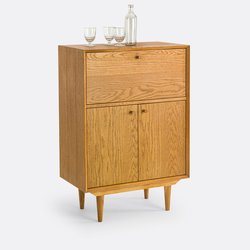
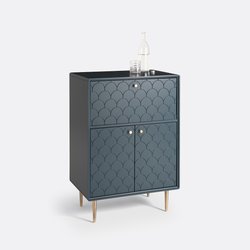
Material affects both style and durability. A wood cabinet often brings warmth to a living room or dining space, and it can suit both classic and modern interiors depending on the finish. A mango finish, for example, can add depth and character, especially if you like furniture with visible grain. If you want a cleaner look, painted cabinets or mixed-material designs with metal details may suit your home better.
Practical use should guide your choice. If you regularly rest bottles, an ice bucket or a tray on the top, the surface needs to cope with repeated use. Check whether shelves feel sturdy enough for several heavy drinks bottles. A thin shelf may look neat on the page, but under the weight of wine, whiskey and mixers, strength matters. Door hinges should also feel reliable, particularly if you open the cabinet most evenings. A solid door with good alignment is easier to use and tends to keep the furniture looking smart over time.
It is also worth thinking about maintenance. A textured wood finish can be forgiving if you use the cabinet often, while very glossy surfaces may show fingerprints more easily after gatherings. If your cabinet sits near a dining table, choose a material that is simple to wipe after spills. These small details make a difference when the furniture becomes part of your regular routine rather than something used only on special occasions.
How bar cabinets fit with other storage furniture
A bar cabinet does not have to stand alone. In a larger room, it can sit alongside other pieces to create a more complete entertaining area. If you need extra table linen storage or space for serving dishes, you may also want to explore sideboards & dressers so'home for a coordinated setup. If your style leans towards a more refined look with rich finishes, sideboards & dressers am.pm can help you build a dining space that feels cohesive.
In a compact flat, your bar cabinet may need to do more than one job. It can sit beside media storage in the living room or work as a serving station near the kitchen. If you are comparing shapes and proportions, other sideboards & dressers ranges can offer useful alternatives, especially when you want furniture with a decorative display role as well as practical storage. For more traditional interiors, sideboards & dressers willis & gambier may suit homes where classic wood tones already feature in the room.
And if you are planning a full entertaining zone in an open-plan layout, it makes sense to look at nearby storage too. Matching or complementary kitchen units & cabinets can help create a smoother link between cooking, dining and serving areas, especially when you host regularly.
Think about your routine, not just the look
It is easy to focus on appearance, but the best product is the one that works with your habits. Ask yourself how often you will use it. If the cabinet comes out of use only a few times a year, a simple model may be enough. If you reach for glasses and bottles most weekends, look for a layout that saves time. For example, a family that hosts Sunday lunches may want lower closed storage for extra bottles and a top shelf for water glasses, so serving can happen without trips back to the kitchen.
At La Redoute, our selection covers different sizes, finishes and layouts, so you can choose a cabinet that suits both your room and the way you entertain at home. It is also worth checking practical buying points such as delivery times, whether the unit arrives assembled or needs some setup, and how the sale price compares with the regular price if you are planning a larger room update.
When comparing each product page, look beyond the main photo. Read the dimensions carefully, note the number of shelves, and check whether the cabinet includes a rack, drawer or internal compartments. A lower price can be appealing, but if the layout does not suit your bottles, glasses and tools, it may not save you time or space in the long run. Good home storage works best when the design matches real use.
What you need to know before buying
What are the best bar cabinets for home use?
The best bar cabinets for home use are the ones that fit your room size, the way you entertain and the type of drinks storage you actually need. For a smaller flat, a compact cabinet with closed doors, one drawer and a slim top surface is often the most practical option. It keeps bottles and glasses together without taking up too much floor space. In a larger living room or dining room, a wider unit with open display shelves and a built-in wine rack can work well if you like to serve drinks regularly and want everything easy to reach.
A good buying approach is to match the cabinet to a real use case. If you mainly store whiskey, glasses, and cocktail tools neatly in living room furniture, choose a model with adjustable shelves for tall bottles and a drawer for tools. If you prefer a cleaner look between gatherings, choose cabinets with a solid door so bottles can be hidden quickly before dinner. If you enjoy styling the room, a cabinet with a display section for decanters and favourite liquors may suit you better.
Focus on these points when comparing options:
- Choose dimensions that fit the wall and leave room for movement.
- Check shelf height for tall spirits and mixers.
- Look for sturdy materials such as solid-feel wood or well-built mixed materials.
- Consider whether you need open display, closed storage or both.
- Review the top surface if you want to use it as a serving spot.
A common mistake is buying a cabinet based only on style. For example, a beautiful narrow piece may not hold your glasses safely, while a large unit may dominate a small room. The best home bar furniture is practical first, then decorative.
What are the pros and cons of a bar cabinet?
A bar cabinet offers clear benefits if you like organised entertaining at home. The main advantage is convenience: it brings bottles, glasses, mixers and tools into one place, which makes serving simpler. In practical terms, that means you can prepare drinks in the living room or dining area without going back and forth to the kitchen. It also improves storage by reducing clutter on worktops and open shelves. If you host often, a cabinet can act as a dedicated station where everything is ready for guests. Another advantage is flexibility in appearance. You can choose open display if you like your drinks collection on show, or a closed-door design if you want a tidier room between occasions.
There are, however, a few drawbacks to consider. A bar cabinet takes up floor space, so in a very small room it needs to earn its place. Some models look attractive but have limited internal storage, which can be frustrating if you own tall bottles or several types of glasses. Others may include a wine rack that looks useful but does not suit your actual drinks collection if you mainly keep spirits. Weight is another point: once filled with bottles, a cabinet becomes heavy, so you will want to place it carefully from the start.
To weigh up the pros and cons, think about:
- How often you entertain and whether you need drinks close to the seating area.
- Whether you want to hide bottles behind cabinet doors during dinner parties and gatherings.
- How much floor space you can give to the unit.
- Whether the internal storage suits wine, spirits, glassware and tools.
- If the material and finish are robust enough for regular use.
A practical example: if your kitchen cupboards are already full and you often serve guests in the dining room, the advantages usually outweigh the drawbacks. If you rarely entertain and only keep a few bottles, a small sideboard or another cabinet may be enough.