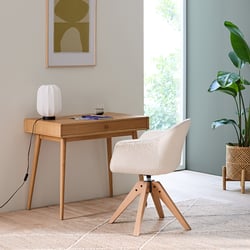
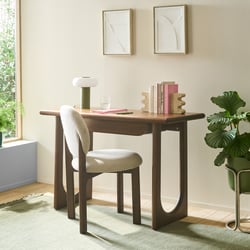
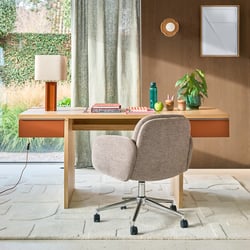
Keep work essentials within reach
A wooden desk with drawers gives everyday work a clear home: notebooks below the desktop, pens close to your writing hand and charging cables stored rather than tangled beside your laptop. When your working area also serves as a bedroom or living room, integrated drawer storage helps you put small items away at the end of the day without finding another cupboard. The right choice depends on three practical details: what the drawers can hold, how the desk fits your room and how you will care for its wood surface.
We suggest starting with the items you use most often. Lay out your laptop, notebook, lamp and any paperwork, then separate the things that need to stay on top from those you can store underneath. This gives you a useful starting point for comparing drawer layouts and desktop dimensions, rather than choosing furniture by appearance alone.
Choose drawer storage around your daily routine
Shallow drawers for pens, cables and small accessories
A shallow drawer suits the little essentials that otherwise spread across a work surface. Keep pens and charging cables organised in the desk’s shallow drawers, using separate compartments so that a loose lead does not catch around scissors or stationery. Check the internal height before adding a tray: the organiser and its contents must sit below the closing clearance.
Measure the usable interior, not just the drawer front. A broad front can conceal a narrower compartment because of the surrounding frame and runners. If you want to store a calculator, headphones or a power bank, compare their dimensions with the internal measurements. Avoid closing a drawer over a connected cable, as repeated pressure can damage the cable and prevent the drawer from shutting properly.
Deeper drawers for notebooks and paperwork
Deeper storage is useful when you switch between written work and screen-based tasks. Store notebooks in the drawers while writing assignments on the wooden desktop, then take out only the book you need for your next session. Check that A4 pads fit flat if that is how you prefer to store them; a drawer described as spacious may still be too short from front to back.
For household administration, sort bills inside the drawers and pay them at the wooden desk. A simple arrangement of labelled folders separates documents awaiting payment from those ready to file. Standard desk drawers are not necessarily designed for hanging files, so check the specification if that format matters to you.
- Choose a shallow compartment for pens, sticky notes and frequently used leads.
- Allow enough internal depth for notebooks and folders without bending their corners.
- Check drawer load limits before stacking paper or storing heavier equipment.
- Look at the opening distance so you can reach items at the back.
- Check whether handles or finger recesses remain easy to use beside your chair.
One central drawer or several side drawers
A central drawer keeps a few essentials close without occupying the full height beneath the desktop. However, it can reduce thigh clearance, particularly if you sit on a chair with a thick seat cushion. A bank of drawers to one side offers more separate compartments, but narrows the space available for your knees and chair. Compare storage capacity with seated clearance, especially if you regularly change position while working.
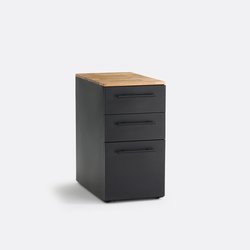
If a compact desk does not provide enough storage, a wooden drawer unit can hold extra paperwork nearby. Measure the combined footprint before placing it underneath: you still need room for your legs, and the drawers must open without hitting chair arms. Positioned alongside the desk instead, a separate unit can keep less frequently used supplies within reach without reducing the seating area.
Match the desk dimensions to your home office
Plan the working surface, not just the room footprint
A desk may fit neatly against a wall yet leave too little depth for comfortable work. Measure your equipment in its working position, including the keyboard, mouse and an open notebook. If you use a separate monitor, account for its stand and leave enough room to position the screen at a comfortable viewing distance. A shallow table may suit occasional paperwork but feel restricted when a laptop, textbook and lamp are all in use.
Mark the desk footprint on the floor before choosing a size. Use removable tape to show its width and depth, then place your chair behind it. Check that you can sit down, pull the chair back and walk past without catching nearby furniture. Remember to allow additional clearance in front of drawers: the closed footprint does not show the space needed to open them.
Check seat height, legroom and neighbouring furniture
An adjustable chair helps you find a workable sitting position, but it cannot compensate for a low drawer pressing against your thighs. Compare the height beneath the drawer with your seated position, rather than relying only on the overall desk height. Check whether chair arms slide underneath if you plan to tuck the chair away between working days.
In a small room, plan your desk and shelves together. Shelves can accommodate reference books and spare paper, leaving integrated drawers free for everyday items. Keep the lowest shelf clear of your monitor and ensure you can reach stored objects without leaning awkwardly across the screen. Also check nearby sockets so that plugs remain accessible once the desk is in position.
Understand the wood material and finish
Compare solid wood, veneer and painted surfaces
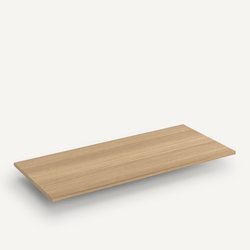
The word wooden can describe different types of construction, so read the material details for the desktop, legs and drawer fronts separately. Solid wood may show variations in grain and colour across its surface. Wood veneer uses a thin layer of wood over a supporting board, giving a visible grain without the desktop being solid timber throughout. Painted finishes cover much of that natural pattern and need care suited to the coating.
An oak desk can bring a noticeable grain pattern to your working area, although its construction and protective finish will determine how you should maintain it. A white wood desk gives a lighter-coloured surface, where ink marks or dark scuffs may be more noticeable. Neither colour nor wood species alone tells you how resistant a desk is to spills, heat or scratches: check the stated finish and care instructions.
Look at edges, drawer access and design details
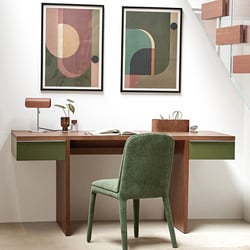
At La Redoute, we offer the Murwara Walnut 1 Drawer Desk by ÉDITÉ in walnut, whose strong, elegant design draws on mid-century and Scandinavian styles and features tactile soft edges and a practical drawer. These details give you specific points to assess: the drawer for your everyday supplies and the edge shape where your forearms may rest while writing.
For any wood office desk, look beyond the front view. Product images and specifications can help you check whether a drawer sits centrally, whether the rear panel suits an open-plan position and whether cables have a clear route to a socket. If the desk will stand away from a wall, the back finish matters because it will remain visible from elsewhere in the room.
Keep the wooden surface ready for daily use
Protect the areas you use most
A writing mat can protect the surface beneath handwritten notes, while a suitable coaster separates a drink from the finish. Avoid placing hot mugs directly on the desktop, and wipe up spills promptly rather than leaving liquid around the drawer opening. Follow the care instructions for the specific finish: a product intended for unfinished timber may be unsuitable for lacquered, painted or veneered furniture.
For routine cleaning, use the method recommended by the manufacturer. Where a lightly dampened cloth is permitted, remove remaining moisture afterwards with a soft, dry cloth. Do not spray cleaner into drawer joints or allow water to collect along edges. Test any approved cleaning product on an inconspicuous area first, particularly on a dark finish where streaking may be noticeable.
Check drawers and fixings over time
Keep drawer runners clear of paper scraps and small objects that can obstruct movement. If a drawer becomes stiff, check for overfilling or an item caught behind it before applying any treatment. Use lubricants only where the manufacturer recommends them, as the wrong product can mark surrounding wood or attract dust. After moving the desk, check accessible fixings according to the assembly instructions.
Positioning also affects care. Avoid placing the desk directly against a radiator, and follow any guidance about distance from heat sources. Prolonged direct sunlight can alter the colour of some wood and finishes, so consider where daylight falls during your working hours. Moving desk accessories occasionally may help reduce uneven exposure, where appropriate for the finish.
Compare price alongside useful storage and fit
When comparing price, consider how much of the desk you will use every day. Three drawers are not automatically more useful than one well-sized compartment if they leave insufficient legroom. Equally, a low-priced model may require separate storage for your paperwork, increasing the total space and budget needed. Check assembly requirements, delivery arrangements and whether any offers or free delivery terms apply to your order rather than assuming they are included.
Prioritise the dimensions and storage layout you have measured for. A desk that holds your notebooks, gives your knees room and accommodates your working equipment will be easier to use through busy days. With a suitable finish and a straightforward care routine, your wooden desk can keep daily essentials close while leaving enough clear surface to write, study or manage household paperwork.