Make your entryway storage work vertically
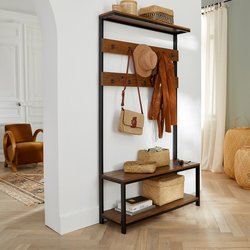
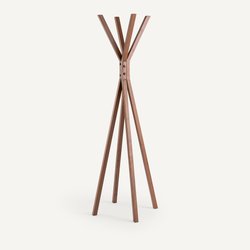
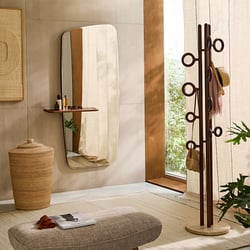
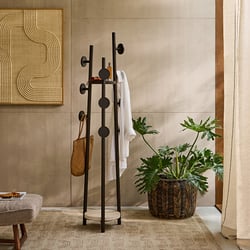
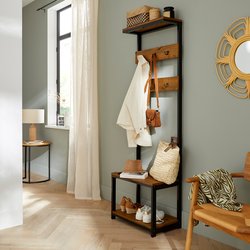
A wooden coat stand puts the height of your hallway to work, giving jackets, scarves and bags a place to land without adding a wide cupboard. Start with the space around it rather than the number of hooks. A stand that fits neatly beside the front door still needs room for hanging sleeves, an opening door and someone taking off their shoes. Once you have checked that everyday movement, you can compare hanging capacity, wood construction and base shape with a clearer idea of what your home needs.
At La Redoute, we suggest choosing hallway furniture around your busiest arrival: shopping bags in hand, a child reaching for a jacket or guests looking for somewhere to leave their coats. Those moments help you decide whether a compact rack will do or whether you need a broader stand with hooks at several heights.
Start with the footprint, not just the height
Measure the space your coats will actually occupy
The listed width of a coat stand may describe its base or its widest arms, so check the product dimensions carefully. Hanging clothes can extend beyond both. A padded winter coat takes up more space than a light jacket, while a shoulder bag can swing into a walkway when someone brushes past. Measure the stand with room for hanging clothes around it, rather than treating its bare frame as the full footprint.
For example, if a base measures 45 cm across, mark that area on the floor with paper, then hold a winter coat above it to see where the sleeves fall. Open the front door fully and walk past carrying your usual shopping bags. This simple test can reveal whether a branching arm will sit too close to a door handle or whether the lower hooks will catch clothing as you pass.
Choose a position that keeps the entrance usable
Place the wooden coat stand beside the entryway for guests’ jackets, but leave the door swing and route into the house clear. A corner can work well if the arms remain accessible from the front and side. Avoid pushing a loaded stand so close to the wall that damp sleeves rest against the paintwork or bags scrape it whenever they are lifted off.
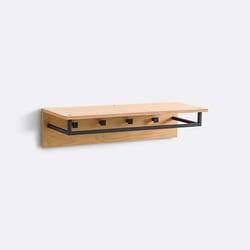
Keep the relationship with other hallway furniture practical. A shoe bench needs enough space in front for you to sit and bend down, while a console drawer needs room to open. If a freestanding base would occupy the only comfortable walking route, a wall-mounted coat rack may suit the layout better. It keeps the floor free, although its suitability depends on the wall, fixings and permitted load.
Match hook capacity to your daily routine
Count garments as well as hooks
Six hooks do not necessarily mean comfortable storage for six bulky coats. Closely spaced hooks may work well for scarves and hats but leave thick jackets pressed together. Look at the distance between hanging points, the length of each arm and whether the design offers access from several sides. Spread bulky coats across separate arms so you can remove one without pulling another onto the floor.
Think about a normal weekday before planning for occasional visitors. If four people each leave a coat and bag by the door, a small stand can become crowded quickly. A useful approach is to reserve the main hooks for current outerwear and move spare jackets into a cupboard. This keeps the rack easier to use and makes its available capacity more predictable.
- Use upper hooks for adult coats, checking that long hems remain clear of the floor.
- Keep a lower hanging point available for a frequently used bag, within the stated load limit.
- Hang scarves loosely over an arm so they are easy to find without hiding a jacket beneath them.
- Give hats their own space where possible, rather than squeezing them behind heavy outerwear.
- Leave one accessible hook empty when you expect a visitor, instead of stacking several jackets together.
Check hook shape and reach
Hang coats, scarves and hats on sturdy wooden hooks, checking that each item sits securely without being forced over a thick peg. Rounded ends are useful for handling garments, but the shape still needs to suit your coat loops and bag straps. A narrow hanging loop may not fit over a broad branch. For a structured jacket, a hanger may support the shoulders better, provided the stand is designed to accommodate one and the garment does not obstruct neighbouring hooks.
Height matters for shared use. Children should not need to climb or pull the stand towards them to reach their belongings. If the main arms are too high, separate kids’ hooks fitted at a suitable height can give school coats a more accessible home. Keep heavy school bags off the upper branches, where reaching and pulling could make a freestanding stand less stable.
Compare wood construction, finish and base design
Look beyond the colour of the wood
Wood construction affects the appearance, weight and care needs of a coat stand. Solid timber components and engineered wood components have different construction methods, so read the material description rather than relying on photographs alone. Oak, beech and pine also differ in grain and density, but the species by itself does not establish how much weight the finished stand can carry. Joints, component dimensions and base design matter too.
Use the stated load capacity as your guide, including any separate limit for individual hooks. A substantial-looking central pole does not tell you whether a small projecting arm can hold a heavy bag. If capacity information is missing, seek clarification before choosing the product for several winter coats.
For colour, compare the stand with furniture that will sit immediately beside it. A pale wooden finish can sit comfortably next to a light shoe cabinet, while black can repeat the colour of door handles or a mirror frame. Check whether the surface is painted, lacquered, oiled or otherwise finished, as that detail will influence cleaning and maintenance.
Compare freestanding alternatives fairly
A wooden stand brings visible grain or a painted timber surface into the hallway, while a metal coat stand may offer slimmer arms or a different base structure. Neither material guarantees better stability: compare the complete design, its weight, its footprint and the manufacturer’s loading guidance. When comparing racks, make sure the dimensions refer to equivalent points, such as overall width rather than base width alone.
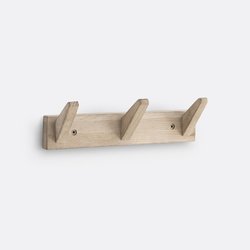
If you only need a few hanging points, wooden coat hooks can provide storage without a freestanding base. In a utility area, metal wall hooks may be another option, subject to suitable fixings and load limits. A floor-standing model remains useful when you want to avoid wall installation or move the hanging area between rooms, but allow enough space to carry it safely when empty.
Keep your wooden coat stand steady and easy to use
Balance the load around the base
A stand needs a level surface and an evenly distributed load. Follow the assembly instructions, tighten fittings as directed and check that every foot makes proper contact with the floor. Thick rugs and uneven tiles can affect how securely the base sits. Do not load all the heavy items on one side, even if several hooks remain unused there.
As a practical routine, put the first coat on one side and the next on the opposite side. Keep bags within the specified limits and avoid hanging shopping from the highest arm. A stand is not a support rail: do not lean on it while putting on shoes or let children swing from its branches. If fittings loosen during use, unload the stand before checking them according to the instructions.
Care for the finish after wet-weather use
Dust the wood with a soft cloth and follow the care guidance for its particular finish. A lightly dampened cloth may be suitable for some sealed surfaces, but avoid soaking joints or leaving water behind. Wipe away drips promptly, especially around hook connections and the base, and do not use abrasive cleaners unless the manufacturer specifically permits them.
You can use its branching arms to air out lightly damp outerwear overnight when the care instructions allow it, the room is ventilated and garments are spaced apart. Keep wet fabric away from the wooden pole and nearby walls. Dripping rainwear is better left in a suitable drying area first; a coat stand is not a substitute for a drying rack. Check the floor underneath before leaving damp clothing hanging.
Check the details before bringing your stand home
Compare the price alongside the information that affects everyday use: overall dimensions, base footprint, hook spacing, material, finish and load capacity. Check whether assembly is required and whether the package will fit through your entrance. If delivery options are available, confirm the charge, timing and any access requirements before ordering. Do not assume that free delivery applies to every item or address.
Customer feedback can add useful context when it describes a specific experience. Rather than relying only on the number of stars, read a review for details about assembly, movement on hard floors or the space occupied by loaded coats. A comment from someone using the stand for two light jackets may be less relevant if you need storage for a family’s winter outerwear.
The most useful wooden coat stand is one you can load without crowding the doorway, reach without stretching and clean without complicated upkeep. Choose the footprint first, check the hanging capacity next, then compare the wood and finish. That order helps you find a place for everyday coats and accessories while keeping the route through your hallway clear.