Check the lining before choosing
Before you choose white bikini bottoms, check how they are lined. A bright white finish can look reassuring in a product photograph, but the outer fabric alone does not tell you how much coverage you will get after a swim. Look for lining across both the front and back, rather than assuming that a lined gusset means the whole garment has a second layer. That distinction matters when you climb out of a pool, sit on a wet towel or walk along the shoreline.
When we help you compare swimwear at La Redoute, we recommend starting with the product description, then checking the photographs and size guide together. Fabric composition, lining coverage and fit each give you different information. Use them as a combined checklist rather than relying on colour or thickness alone.
Start with opacity, not just the shape
Understand what the lining description tells you
White bikini bottom opacity depends on several factors: the density of the outer fabric, the lining, the amount of stretch and whether the material is wet. A description that says “fully lined” is more useful than one that simply mentions a lining, although it still does not guarantee complete opacity in every situation. Check whether the description specifies front and back coverage, and inspect any close-up images of the inside.
A gusset is the section at the crotch of the briefs. Extra fabric here can provide coverage in that area without doing the same across the hips or seat. If your main concern is sheerness when leaving the water, a gusset-only lining does not address the whole garment. Do not confuse a lined gusset with full lining.
Lining colour also deserves attention. White lining adds another layer, while a lining closer to your skin tone may reduce contrast beneath the outer fabric. Neither colour is a guarantee of opacity: fabric density and stretch still matter. Look at any available interior photographs rather than deciding from the lining colour alone.
Use photographs and descriptions together
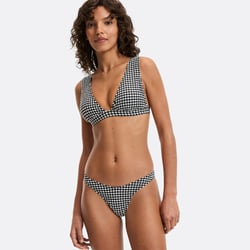
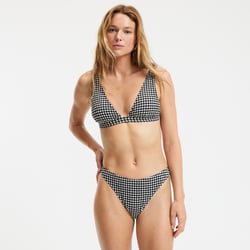
Product images can help you identify seam placement, fabric texture and the position of ties, but studio lighting cannot reproduce every beach or pool setting. Zoom in to see whether the fabric looks stretched across the model’s hips and whether seams appear to pull. These details can flag fit considerations, but they cannot establish how opaque the bottoms will be when wet.
- Check whether lining covers the front, back and gusset.
- Read the outer fabric and lining compositions separately, where both are listed.
- Look for specific wet-opacity information rather than treating a general coverage description as proof.
- Read reviews for comments about swimming and wet fabric, keeping differences in size and fit in mind.
- If the listing is unclear, ask for more detail before ordering.
Choose fabric with swimming and movement in mind
Look beyond the fibre percentages
Many women’s swimwear styles use polyamide or polyester blended with elastane. These fibres help explain how the fabric stretches, but percentages alone do not tell you whether white bottoms will be opaque. Two fabrics with similar compositions can have different weights, constructions and finishes. A smooth fabric may feel substantial when relaxed yet become less opaque when pulled tightly across the body.
Textured fabrics, including ribbed designs, also need careful checking. Raised ribs can make a garment feel thicker without confirming the density of the material between them. Examine the lining details just as closely as you would for smooth bikini briefs. If a listing describes quick drying or stretch recovery, treat those as separate features, not evidence of opacity.
Avoid sizing down to make the bottoms feel more secure. Excess tension can spread the fabric and make coverage less dependable. Security should come from a suitable cut and a comfortable waistband, not from fabric being stretched to its limit.
Check the fabric under realistic conditions
For an initial dry fit check, follow the retailer’s hygiene and returns instructions, keep any protective strip in place and wear your own underwear. Look for digging at the leg openings, a rolling waistband or fabric pulled taut across the seat. Underwear may show through during this check, so it cannot establish how the bikini will look when worn for swimming.
Once you have decided to keep your new bottoms, a private wet check can help you assess coverage before a public swim. Use clean water, view the front and back in daylight and check again while bending or sitting. Do not wet-test an item you may want to return, as washing or wearing it may affect return eligibility. Always check the applicable policy first.
Find a size and cut that support comfortable coverage
Use measurements rather than the label alone
Check the size guide for the individual brand, especially when switching between swimwear labels. Measure your hips at their fullest point and use the stated waist measurement where relevant. If you usually search for a size 6 bikini, do not assume that every style will have the same proportions or rise.
A high waist can provide more coverage over the lower stomach, while a fuller brief can cover more of the seat. Neither feature automatically improves fabric opacity. Pay attention to both the amount of skin covered and the behaviour of the material over that area. During a dry fitting, sit down and take a few steps: the waistband should stay comfortable without the leg openings pulling sharply.
Compare fixed sides and adjustable ties
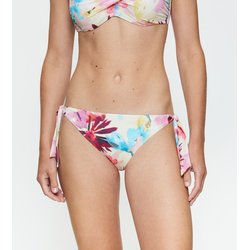
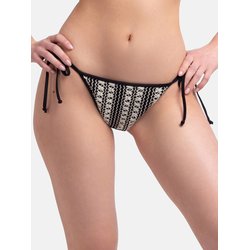
Tie-side bottoms let you adjust the sides independently, which can be useful if a fixed waistband feels tight at the hips. Secure each tie according to the design and check that the front and back panels still provide the coverage you want. Loosening a tie changes the fit, but it does not increase the size of the fabric panels.
Fixed-side briefs offer a different option if you prefer not to check knots before swimming. For pool laps, consider how the waistband and leg openings feel when you stretch upwards and bend forward. You should have free movement without needing to keep pulling the bottoms back into position.
Build a beach outfit around the coverage you prefer
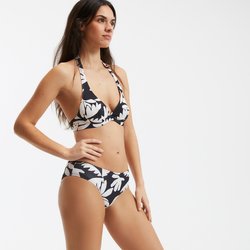
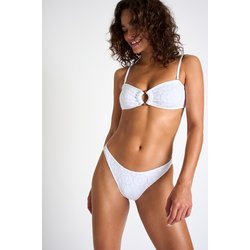
White bottoms can work with a matching top or a separate colour, but check both pieces individually when buying a set. The top may have padding while the bottoms have only a lightweight lining, so their coverage can differ. A halter top changes the support and neckline of your outfit; it does not tell you anything about the opacity of the matching briefs.
Pair white bikini bottoms with a linen cover-up for beachside lounging, particularly when moving between your sunbed and a shaded café. Choose a loose shape that is comfortable over damp swimwear. If you wear white bikini bottoms under a sheer sarong while walking the boardwalk, remember that the wrap adds some visual coverage but is not a substitute for opaque swimwear.
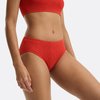
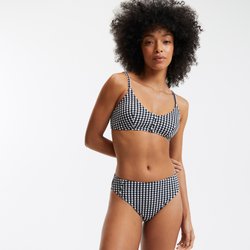
If you are browsing a ruffle bikini, look beneath the decorative detail: a ruffle may cover part of the front while leaving the seat unchanged. Comparing a red bikini with a white option can also help you decide how much colour you want in your beach outfit, but each needs its own lining check. Darker alternatives such as navy bikini bottoms can be worth considering if visible wet fabric remains a concern, without assuming that dark colour alone guarantees coverage.
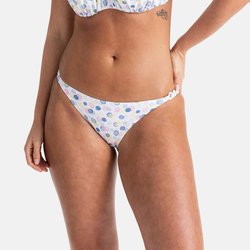
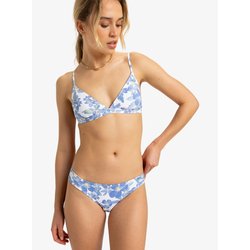
A polka dot bikini offers another styling direction if you prefer a pattern. Check the light-coloured areas as carefully as an all-white fabric, especially where the material stretches across the hips.
Care for white swimwear after every dip
Rinse white bikini bottoms after pool laps to help remove chlorine residue before it dries into the fabric. Prompt rinsing may help limit discolouration, although it cannot guarantee stain prevention. Follow the care label for washing temperature, detergent and drying instructions, and avoid leaving damp swimwear bundled inside a bag.
Sunscreen, body oils and some pool products can leave marks on pale fabric. Apply sunscreen as directed and allow it to settle before dressing where possible, without reducing or delaying the protection you need. As a pre-swim habit, check that your bottoms are clean and free from detergent residue. After swimming, avoid wringing them tightly; gently press out excess water if the care instructions allow.
If you are replacing a pair you have owned for several seasons, compare its condition with its original fit. Thinning patches, persistent sagging and stretched seams are reasons to reassess coverage. Before you click to buy a replacement, check the lining details again rather than assuming a similar-looking design uses the same construction.
What to know about white bikini bottom coverage
Are white bikini bottoms see through?
White bikini bottoms can be see through, particularly when wet or stretched, but this varies with the fabric, lining and fit. Some provide dependable coverage, while others reveal more once the outer layer becomes wet. Full lining is a useful starting point, not an absolute guarantee. A product photograph taken in dry conditions cannot confirm how the fabric will behave after swimming.
Before choosing, focus on three practical checks:
- Lining coverage: look for a second layer across the front and back, not only at the gusset.
- Fabric tension: choose a size that does not pull the material tightly across your hips or seat.
- Specific product information: look for wet-opacity details or ask for clarification if the description is unclear.
A common pitfall is choosing smaller bottoms because they feel firmer during a dry fitting. That extra tension can reduce coverage rather than improve it. Another is relying on a beach wrap to hide sheerness: it will not help when you take it off to swim.
For example, if you plan to swim and then walk directly to a poolside lounger, assess your chosen pair privately in wet conditions once you have committed to keeping it. Check the back as well as the front in daylight. If you feel exposed, choose a different construction or wear a suitable cover-up outside the water rather than spending your swim adjusting the fabric.