Comfort that moves with you
Some mornings leave little time for laces, stiff footwear or a lengthy outfit rethink. Stretch ankle boots offer a practical option: a flexible upper that can move as you walk, with ankle coverage for cooler days. Pull them on for a chilly school run, wear them with jeans on your weekday commute, or choose a suitable weather-resistant pair for an afternoon browsing the shops. The details that matter are the fit around your foot, the flexibility of the upper and the support underneath.
At La Redoute, we recommend checking how a boot fits from heel to toe rather than judging comfort by its stretchy feel alone. A soft ankle opening can make dressing easier, but you still need enough space at the front, a stable sole and a heel that stays in place. Here is how to assess those details and care for your chosen pair.
Start with fit, not just your usual size
Stretch can help an upper accommodate movement, but it cannot correct a boot that is too short or too narrow through its structured sections. Begin with your usual size, then check the product’s size guide and any model-specific fit information. Try boots on with the socks you expect to wear, preferably later in the day when your feet may have expanded after walking or standing.
Check the space around your toes
Your toes should remain free to move without pressing against the front or being squeezed together at the sides. Stand up during your fitting check: a boot can feel roomy when you are sitting, then become restrictive once your weight spreads across your foot. With a pointed toe, the tapered tip is not usable toe space, so assess where your toes actually sit rather than relying on the visible length of the boot.
Do not rely on stretch to create extra length. If your longest toe touches the end when you walk, try another size or a different shape. For school-run mornings involving a brisk walk, a rounded or softly squared front may give you more usable room than a sharply tapered design, depending on the individual fit.
Look for a secure heel and comfortable ankle opening
A little movement may occur as you walk, but repeated heel lifting can cause rubbing and make your stride feel less controlled. Check that the back of your foot stays comfortably seated without pinching. Around the ankle, the upper should sit close enough not to sag excessively, while allowing you to bend your leg and climb stairs without a tight band digging into your skin.
- Walk across a clean indoor surface to check heel movement and toe clearance.
- Bend your knees and take a few steps upstairs, where safe, to assess ankle flexibility.
- Try both boots, since the fit may differ slightly between your feet.
- Check that seams, zip edges and elastic panels do not press against sensitive areas.
Understand what a stretch upper actually does
Stretch ankle boots can use knitted fabric, elasticated panels or materials designed to flex around the foot and ankle. These constructions do not all behave in the same way. A knitted shaft may feel flexible over a larger area, while a leather boot with elastic side panels keeps more structure through the foot and stretches mainly at the sides. Read the material description to understand where the flexibility comes from.
A flexible upper is not the same as a supportive sole. Stretch can reduce resistance as your ankle bends, but the footbed, outsole and heel construction still determine much of the underfoot feel. If you have been searching for women's sock shoes styles because you like a close-fitting outline, check whether a similarly shaped ankle boot also has the sole structure you need for your daily walking.
Match the stretch construction to your routine
For quick school-run mornings in chilly weather, a pull-on design can reduce fastening time. Check that the opening stretches enough to admit your foot without a struggle, then returns to sit comfortably around your ankle. A pull tab can help, although it should guide the boot on rather than take the full force of a hard tug.
A zip fastening may be more convenient if you find narrow pull-on openings awkward. For women who wear thicker socks during colder months, trying the boots with those socks is especially useful: extra fabric can change both ankle pressure and the space available across the instep.
Choose support for the distances you walk
Your route matters as much as your outfit. A short walk from the car to the office makes different demands from a commute involving station stairs, long platforms and uneven pavements. Check sole flexibility, cushioning and heel stability against the journeys you make most often. A chunky sole may provide a substantial platform underfoot, but its appearance alone does not tell you how cushioned or grippy it will feel.
Consider heel height and shape together
A low heel can be practical for frequent walking, while a wider block heel offers a broader contact area than a narrow heel of similar height. Neither guarantees comfort, so test how naturally you can stride and whether your foot slides forwards. If you spend much of the day standing, prioritise a secure fit and a heel height you already find manageable.
When comparing block heel Chelsea boots with close-fitting stretch designs, look beyond the side profile. Check the sole tread, the weight of each boot and how easily you can bend through your step. A heavier style might suit a short journey but feel tiring during an afternoon moving between shops.
Stretch around the ankle should allow movement, not be treated as medical support. If you need prescribed support or wear an orthotic, check the boot’s internal space and whether its insole is removable. Follow advice from your healthcare professional where relevant.
Make black and brown stretch boots work with everyday clothes
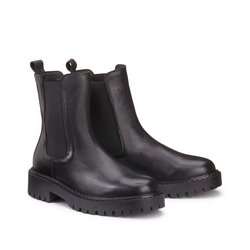
Black stretch ankle boots are straightforward to wear with jeans for weekday office commutes. Try straight-leg denim that finishes just above the shaft or falls over it without catching. With a close-fitting ankle, wider trouser hems can hang smoothly, while cropped trousers leave the outline of the boot visible. Sit down as well as stand during your outfit check to see whether the hem rides up or bunches.
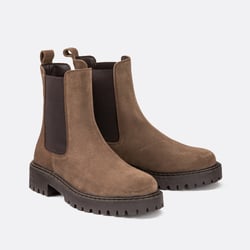
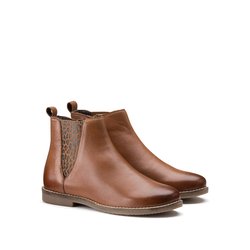
Brown boots work well with dark blue denim, cream knitwear and navy trousers when you want an alternative to black. Check the shade in the product photographs: a lighter brown creates a stronger contrast with dark trousers, while a deeper tone can produce a less broken-up outline.
If you are comparing flat suede boots for casual days, consider the care requirements alongside the shape. Suede needs different cleaning methods from smooth leather or textile stretch uppers. For evening plans, gold ankle boots offer a more noticeable metallic finish, while gold low heel shoes leave the ankle uncovered and may suit an indoor occasion better. These alternatives help you decide whether warmth, coverage or a particular finish matters most for that outing.
Plan for chilly mornings and wet pavements
For a cold school run, check the lining as carefully as the outer material. A faux fur lining may feel warm, but it also takes up internal space, so assess the fit with your usual winter socks. If your feet feel compressed, changing to thinner socks or trying a roomier model is more sensible than expecting the lining to make pressure disappear.
For rainy afternoons spent browsing shops, choose boots with weather protection explicitly stated in the product details. A stretch upper is not automatically waterproof. Water can enter through fabric, seams or openings, even when the main upper looks substantial. Check the outsole tread too, and take care on wet tiles and smooth shop entrances; no sole should be assumed to prevent slipping in every condition.
Care for flexible uppers without weakening them
Regular, material-appropriate care helps you spot wear before it becomes a bigger problem. Remove surface dirt after use, especially around the sole edge and where the upper bends. Follow the manufacturer’s instructions before applying cleaners or protective products, since a treatment intended for leather may not suit elastic, suede or a coated faux leather finish.
- For textile stretch uppers, use the recommended gentle cleaning method and avoid soaking unless the care instructions allow it.
- For smooth leather sections, use a suitable cleaner and conditioner, keeping products away from elastic panels unless approved.
- For suede sections, let mud dry before using an appropriate suede brush.
- After damp weather, allow boots to dry naturally away from radiators and other direct heat.
- Check heels, soles and seams regularly, particularly if you wear the same pair for daily commuting.
Ease boots off rather than stretching the shaft to remove them. Open any fastening fully and support the heel with your hand. Repeated pulling at the top edge places unnecessary strain on the material and seams. Store the pair upright without folding the ankle section sharply, and avoid packing heavy items on top of them.
Check the practical details before ordering
When comparing a new pair, weigh the price against the features you will use: an easy fastening for rushed mornings, a comfortable toe shape for longer walks, or a lining suited to colder weather. Check the delivery information, return conditions and indoor try-on requirements before placing your order. This gives you time to assess both boots properly rather than making a decision after a few seated seconds.
Keep the first fitting indoors and follow the retailer’s return guidance. Walk, sit and bend your ankles in the socks and trousers you plan to wear. A well-chosen stretch ankle boot should give you room where you need it, hold your foot securely and flex comfortably through your usual movements, from the first school-run steps to the journey home.