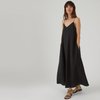
Slip dresses: check the drape, cut and length first
A maxi slip dress should skim your body without pulling across your hips, sit comfortably at the neck and fall to a length you can walk in. Before choosing a colour or planning your accessories, check those three details. They decide whether the dress hangs smoothly when you stand, stays comfortable when you sit and moves freely when you climb stairs. A fitted-looking silhouette does not need to feel tight: the best fit leaves enough room for everyday movement while keeping the clean, elongated line that defines a slip.
For women choosing a new maxi dress, we recommend working through fit, fabric and length before thinking about the occasion. A black satin style for dinner may need different underwear and footwear from a lightweight blue cami dress packed for a weekend away. Start with how you want to wear yours, then use these practical checks to narrow your options.
Start with a slip silhouette that follows your shape
Look for a smooth line rather than a tight fit
The slip-dress silhouette typically has narrow straps, a simple neckline and a softly shaped body. Some dresses fall almost straight from the bust; others narrow at the waist before opening into a flared skirt. Neither cut needs to cling. Look for fabric that skims your bust and hips without horizontal pulling. If the side seams twist towards the front or the skirt gathers above your hips, compare the garment measurements with your own and consider a different size or cut.
Try the dress on with the underwear you intend to wear beneath it. Walk across the room, sit on a chair and reach forward as if picking up your bag. The neckline should remain comfortable, and the skirt should settle back into place without constant adjustment. If you need to keep tugging the fabric down, a roomier hip measurement or a more flared skirt may suit you better than simply tightening the straps.
Check the neckline, straps and bust shaping
A v-neck draws the eye down the centre of the dress, while a square or softly curved neck creates a different frame around your shoulders. Choose according to comfort as well as appearance. If you prefer more coverage, check the neckline depth in the product measurements or photographs rather than assuming that every cami style sits at the same height.
Adjustable straps help position the neckline, but they cannot correct a poor bust fit. If the fabric pulls across your chest or the armholes gape, look for a different cut, more shaping or a size that accommodates your bust. If you want to wear a supportive bra, compare its strap position with the dress straps before removing any labels.
At La Redoute, our pastel yellow Satin Maxi Cami Dress from LA REDOUTE COLLECTIONS takes inspiration from lingerie, with a v-neck, shoestring straps, gathered cut-outs under the bust and a feminine cut that flares from the waist. Those details give you specific points to assess: check where the under-bust shaping sits on your body, how much coverage the cut-outs provide and whether the flared line gives you the movement you want through the skirt.
Choose fabric for the way you will wear your dress
Understand the difference between silk and satin
Silk describes a fibre, while satin describes a fabric construction with a smooth, lustrous face. A satin slip dress is therefore not necessarily made from silk. Check the composition and care label before buying, particularly if you want a dress you can wash at home. For frequent wear, care requirements can matter as much as colour: a style needing specialist cleaning may be less convenient for weekly office outfits.
Fabric weight also changes the drape. A very lightweight material can reveal underwear seams or catch around your legs, while a more substantial fabric may fall with fewer interruptions. Check opacity in daylight and while seated, especially with white, pastel yellow or pale blue dresses. A lining can offer extra coverage, but check how far it extends down the skirt and whether it remains comfortable when you walk.
Pay attention to seams, lace and surface finish
On a simple slip, small details are easy to notice. Seams should sit smoothly rather than pucker, and lace panels should feel comfortable against your skin. If the dress has lace at the neckline, check whether it lies flat beneath a blazer. A raised or wide trim may show through a fine knit worn over the top, which matters if you plan to use the dress as the base of several layered outfits.
A glossy satin finish reflects light and can make folds more noticeable in photographs. If you prefer a quieter surface for daytime wear, compare it with a less reflective fabric. Deep green, brown and black can work well with shoes and jackets you already own; check them beside those pieces rather than choosing from a colour name alone. This can save you buying extra accessories just to make one outfit work.
Balance maxi length with your height and shoes
Check where the hem falls when you move
Maxi-length proportions depend on more than your height. Your torso length, the position of the waist shaping and your footwear all influence where a dress finishes. Consult the garment length and model information where available, then compare those details with a dress you already wear comfortably. A maxi on one person may sit closer to the ankle on another.
Try your dress with the shoes you will actually wear. For everyday use, a hem that clears the ground reduces the chance of catching it beneath your heel or dragging it across a wet pavement. Walk up a step and turn around in front of a mirror. If the skirt catches underfoot, consider an alteration or another length rather than relying on holding it up throughout the day.
- For flat sandals or trainers, check that the hem stays clear of the sole as you walk.
- For heels, test the dress at your usual stride rather than standing still in front of the mirror.
- For a petite frame, check strap length and under-bust placement as well as the hem.
- For a taller frame, confirm that the waist shaping sits comfortably rather than pulling upwards.
- For travel, consider how easily you can manage the skirt on stairs, station platforms and restaurant chairs.
If a floor-skimming skirt feels inconvenient for your routine, a midi slip can give you similar neckline and drape details with more clearance around your ankles. If you prefer a fuller skirt rather than a close skim through the hips, compare the slip with a tiered dress. The extra skirt volume changes how the fabric moves and may feel more comfortable when you spend much of the day seated.
Build outfits around the occasion
Office layering with a blazer
Wear a silk slip dress beneath a blazer for office layering, checking that the neckline gives you the coverage you need when seated at your desk. A lined blazer can sit more smoothly over the dress than a rough-textured jacket that catches against it. Keep the hem clear of the floor and choose loafers, closed-toe flats or low heels you can walk in during your commute.
If narrow straps or an open neckline do not suit your workplace, a red dress with sleeves gives you an alternative that does not depend on keeping a jacket on all day. For a slip outfit, test the full combination while seated: the blazer should not pull the dress upwards, and the skirt should leave room to cross or uncross your legs comfortably.
Weekend dinners and casual brunch
Pack a lightweight slip dress for comfortable weekend travel dinners, choosing a fabric with care instructions you can manage away from home. Check whether it creases easily before packing, and leave time to hang it on arrival. A dark brown or black dress can work with the same flat sandals you wear during the day, keeping your luggage lighter without leaving you short of a dinner outfit.
For casual brunch, layer a slip dress over a tee. Choose a close-fitting T-shirt with sleeves and seams that sit smoothly beneath the bodice, then check that the extra layer does not make the bust feel tight. Trainers and an ankle-clearing hem keep the outfit practical for a walk afterwards. If you prefer more room through the body and covered arms in one piece, compare this layered option with a long sleeve smock dress.
Wedding invitations and evening plans
If you are comparing long dresses for wedding guest outfits, assess the venue and dress code before settling on a slip. A smooth satin maxi can work for an evening reception with secure shoes and a jacket for the journey home. For an outdoor celebration, check that the hem will not trail across grass and choose footwear suited to the ground. Avoid white unless the couple has specifically requested it.
For dinner events where you will be seated for several hours, prioritise room through the waist and hips over a close standing fit. If you enjoy a looser skirt, compare slip styles with floaty dresses and check how each behaves when you sit. A fuller cut may offer more legroom, while a straighter slip may fit more neatly beneath a longer coat.
Choosing a slip dress for your shape
What body type do slip dresses look good on?
Slip dresses can suit a wide range of body types; the useful distinction is how a particular cut fits your proportions, not whether your shape belongs to a fixed category. A straight-cut slip, a bias-cut style and a dress that flares from the waist will sit differently on the same person. Use your bust, waist and hip measurements together, then check the product’s size guidance rather than choosing by your usual size alone.
- If your hips need more room than your bust, look for a flared skirt and check that the upper body still sits securely.
- If you have a fuller bust, prioritise sufficient coverage, suitable shaping and compatibility with your preferred bra.
- If you prefer definition at the waist, look for shaped seams or a cut that narrows before opening into the skirt.
- If you prefer less emphasis around your middle, try a gently skimming cut with enough room to sit without pulling.
A common pitfall is sizing down to create waist definition, only to find that the fabric strains across the hips. Another is shortening the straps so much that the armholes dig in. For a practical comparison, try two cuts with the same underwear and shoes: sit, walk and check the side view in each. Choose the one that stays comfortable and falls back into place without repeated adjustment. That gives you a more reliable guide than a body-shape label, whether you are buying your first slip or adding another maxi to your wardrobe.