Make room for shared meals
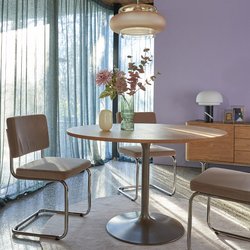
A round dining table for 4 gives everyone a place in the conversation without putting anyone at the head of the table. Four family members can gather around its round top for weekday dinner, with plates, glasses and a serving bowl within reach. The same surface can work just as well earlier in the day, when two friends share coffee and pastries or a child does homework while dinner cooks.
Getting that everyday comfort right means looking beyond the shape. The tabletop needs enough room for four place settings, the base must leave space for knees, and the finish should suit the spills and crumbs you expect. At La Redoute, we recommend comparing these details alongside the floor space you have available, so your dining furniture fits both your room and your routine.
Choose a tabletop diameter that lets four people settle in
The diameter is the measurement across the centre of a round tabletop, from one edge to the other. It tells you how much space the table occupies, but it also affects how comfortably four people can eat together. A diameter of around 100-110 cm is a useful starting point for four everyday place settings, although plate sizes, chair widths and the table base all influence the fit.
Compare compact and more generous sizes
A table around 90 cm across can accommodate four in some layouts, but it leaves less room for shared dishes. Picture four dinner plates, four glasses and a saucepan on a heat-resistant mat: the centre soon becomes busy. This size may suit a small kitchen where meals are usually served straight onto plates and additional dishes stay on the worktop.
At around 100-110 cm, you generally gain more usable space between place settings. A diameter of approximately 120 cm provides extra room for serving bowls, bread and drinks, but requires a larger footprint once the chairs are in use. Check the manufacturer's seating guidance rather than assuming every round table of the same diameter offers the same comfort.
- 90 cm diameter: consider this for tighter layouts, while checking that four chairs fit without crowding their neighbours.
- 100-110 cm diameter: a practical range to investigate for regular meals for four.
- 120 cm diameter: worth considering when you regularly put several dishes in the middle and have sufficient floor space.
Before ordering, mark the proposed circle on the floor with removable tape or use a paper template. Position your existing chairs around it and lay out four place settings within the marked area. This simple test makes the difference between a compact fit and a cramped meal much easier to judge.
Measure the room with the chairs pulled out
A tabletop can fit neatly into a corner while still leaving too little room to sit down. Measure from its proposed edge to the nearest wall, cabinet or other furniture. Aim for roughly 75-90 cm behind the tabletop edge for chair movement, allowing more wherever people need to walk behind someone who is seated. These are planning guidelines rather than a substitute for testing your particular chairs and layout.
For example, a 100 cm table with 90 cm of clearance on opposite sides needs a span of around 280 cm in that direction. In an open-plan room, you may be able to share some circulation space with the living area, provided a pulled-out chair does not block the main route to the kitchen.
Check cupboard doors, drawers and nearby appliances too. A dining chair should not prevent you from opening the dishwasher after dinner. If you are furnishing a particularly narrow room, compare the complete footprint of several tables rather than assuming a round shape will always take up less space.
Look below the tabletop for comfortable legroom
Two tables with matching diameters can feel quite different once four people sit down. The position of the legs, the width of the base and any support beneath the top determine where knees and feet can go. A central pedestal may remove legs from the outer edge, but a broad floor plate can still get in the way of your feet.
Match the base to your chairs
Four separate legs can work comfortably when they are positioned between the seats. However, angled legs may narrow the gaps where chairs slide in. A cross-shaped metal base needs similar attention: check whether its lower supports occupy the spots where you naturally rest your feet.
As a general guide, dining tables are often around 74-76 cm high, while chair seats commonly sit around 45-48 cm from the floor. The critical measurement is the gap between the seat and the underside of the table, including any rail beneath it. Allow approximately 25-30 cm between the seat and the underside, then check that armrests can slide underneath if you want chairs to tuck away.
Whether you buy a matching set or choose chairs separately, look at their overall width as well as their seat width. Four generous upholstered chairs may need more room than four slim wooden designs, even when both are described as dining chairs.
Compare materials through everyday use
The best surface for your household depends on what happens between meals as much as what happens during them. If the table doubles as a homework desk, consider protection from pen marks and scratches. If breakfast is a hurried affair, look for clear care instructions that fit the time you have available.
Wooden finishes and oak
A wooden table gives you several construction options, including solid wood, veneer and wood-effect surfaces. Check the product description carefully because each can require different treatment. Oak can bring visible grain to the room, but its resistance to spills depends on the finish applied. Do not assume an oiled surface and a lacquered surface need the same cleaning products.
For family dinners, use placemats beneath plates and coasters beneath drinks, then wipe up spills promptly. A padded writing mat is useful when a child presses hard with a pencil during homework, particularly on a surface that could mark under pressure.
Glass and metal
A glass top allows you to see the base and floor beneath it, which can make the table's outline less visually dominant in a small room. The trade-off is that fingerprints and crumbs remain easy to spot. When comparing a glass dining room table with a wooden design, consider whether you are happy to give the surface a quick wipe after meals.
At La Redoute, our selection includes the Calissa round glass dining table (Seats 4) from SO'HOME, which combines a glass top, clean lines and a cross metal detail base for a contemporary design. Check its listed dimensions and base arrangement against your chairs, especially if you want to seat four adults regularly.
Marble, coated surfaces and colour
Marble requires care around acidic foods and drinks, including lemon juice and some sauces, which can damage certain stone surfaces. Follow the supplier's guidance on sealing and cleaning. Marble-effect finishes can have very different care requirements, so check the actual surface material rather than judging by appearance alone.
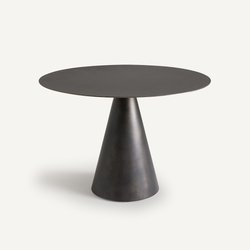
A white finish can sit comfortably alongside pale kitchen units, while a black round table creates a stronger outline against light flooring. In either case, inspect the cleaning guidance: colour does not tell you whether a top can withstand abrasive cleaners, heat or standing water.
Plan for guests without crowding daily meals
A fixed round table keeps the daily layout straightforward when four seats are all you need. If you occasionally host extra guests, a round extendable dining table may offer useful flexibility. Check its closed and open dimensions, the number of seats recommended in each position and where the additional leaf is stored.
Some extending designs become oval when opened, so repeat your floor-space measurements using that longer shape. A white extendable dining table might suit a kitchen-diner with pale cabinetry, but the extension still needs to clear doors, sideboards and the route into the room.
If your guest list regularly reaches eight, compare the space needed for an extendable dining table that seats 8 with your everyday four-person layout. Measure for the extra chairs as well as the larger top. Borrowed seating only helps if guests can sit down without blocking a doorway or pressing against neighbouring chairs.
Keep everyday surface care manageable
Use the manufacturer's care instructions as your first reference, because the finish determines which products are suitable. For many surfaces, a soft cloth and prompt attention to spills form the basis of daily care, but stone, wood and glass may need different cleaners. Avoid soaking joints or leaving moisture around extension mechanisms.
- Clear crumbs before wiping, so you do not drag grit across the surface.
- Use heat-resistant mats beneath hot serving dishes rather than placing pans directly on the top.
- Keep a washable mat handy for painting, glueing or homework sessions.
- Dry the surface as directed after cleaning, paying attention to edges and joins.
- Check fixings periodically and tighten them only according to the assembly instructions.
For a table used from breakfast through to evening homework, keep coasters and placemats in a nearby drawer. You can protect the surface without having to search for them while food is cooling or someone is waiting to start writing.
Check the practical details before ordering
Before buying, confirm the tabletop diameter, overall height, clearance beneath the top and assembly requirements. Review delivery information, including package dimensions and whether access through your hallway or stairs could be difficult. Glass and stone components can be heavy, so check any handling guidance before arranging help.
If you spot a table in a sale, apply the same checks you would at any other time: four comfortable seats, enough circulation space and care requirements you can manage. Once those details work, your round dining table for 4 can support weekday dinners, coffee with friends and the everyday activities that gather everyone around the same surface.