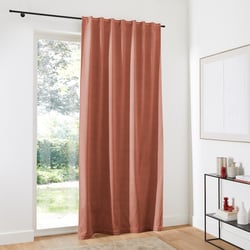
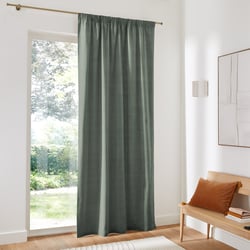
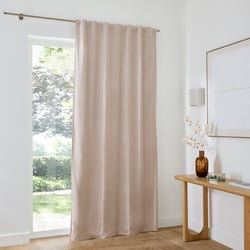
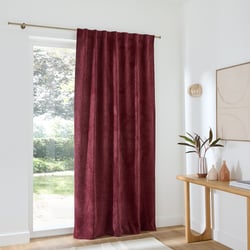
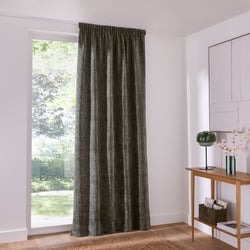
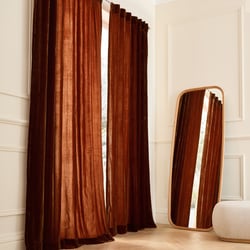
Soft texture without the wait
Soft to the eye and inviting to the touch, velvet gives windows a richer finish while helping a room feel more enclosed when evening comes. Ready-made velvet curtains offer that texture in standard sizes, so you can choose your panels without arranging a made-to-measure order. Whether you are furnishing a new bedroom or replacing thin living room curtains, the practical decisions come down to fabric, fit and care.
At La Redoute, we suggest starting with how you use the room. You might want to block streetlight glare during bedtime, add rich texture to living room windows or soften morning light by closing the curtains before breakfast. Each situation calls for a slightly different combination of fabric weight, lining and coverage. Here is how to make your choice with confidence.
Compare the fabric before choosing the colour
Understand the pile and the way it catches light
Velvet has a raised surface, known as a pile, that changes appearance as the fibres catch the light. A navy panel can look brighter beside a sunny window and darker beneath a ceiling lamp. Before choosing a shade, view the product photographs closely and, where a sample is available, examine it beside your wall colour in daylight and under your evening lighting.
Smooth velvet produces a more even-looking surface, although its shading still shifts with the pile direction. Crushed velvet has a deliberately irregular finish that reflects light in several directions. Choose smooth velvet if you want broad, quiet folds beside patterned wallpaper; consider a crushed finish if you want the fabric itself to provide more visual variation against plain walls.
Fibre composition matters as much as appearance. Polyester velvet, cotton velvet and blended fabrics can differ in weight, handle and cleaning requirements. Read the composition and care label together: a fabric that looks right in the photographs may need professional cleaning rather than the machine washing you had planned.
Separate decorative softness from light control
A dense velvet face fabric can reduce incoming light, but velvet is not automatically blackout. For a bedroom facing a streetlamp, look for a curtain specifically described as having a blackout lining or coating. Even then, light can enter around the sides, above the heading and between the panels, so the hanging arrangement matters too.
Lined curtains have an additional backing layer, but the word “lined” alone does not confirm blackout performance. Check the stated function of that lining. If you use curtain ties to hold panels open, remember that open panels let in more light. When comparing velvet panels with blackout curtains, compare their light-control specifications rather than assuming the thicker-looking fabric will block more glare.
For breakfast beside a bright east-facing window, standard lined velvet may reduce the intensity of direct sunlight without needing complete darkness. If you want privacy while keeping more daylight during the afternoon, hang linen voile curtains on a separate track behind the velvet. You can then draw the lighter layer during the day and close the heavier panels after dark.
Measure for ready-made velvet panels
Start with the pole or track, not the glass
Ready-made sizes make ordering simpler, but only when you compare them with the correct measurements. Measure the usable width of your curtain pole or track rather than the width of the window glass. The curtains need to cover the full hanging area and retain enough fullness to form folds when closed.
Check whether the listed width refers to one panel or a pair. A product photographed with two panels may still be sold individually. For example, two panels each measuring 140 cm wide provide a combined flat width of 280 cm. Across a 180 cm pole, that gives roughly 1.55 times fullness; whether that is suitable depends on the heading and the product guidance.
- Measure the pole or track width, excluding decorative finials.
- Check the recommended fullness for the particular heading.
- Confirm the number of panels included in the pack.
- Measure the drop from the correct hanging point for that heading.
- Allow for radiators, window handles and nearby furniture before ordering.
For the length, follow the product’s measuring instructions. Eyelet curtains are commonly measured from the top of the pole, with fabric extending above it, while hook-hung headings depend on the hook position. Small differences at the top can leave an unexpected gap at the floor.
Choose an eyelet or pencil pleat heading
An eyelet heading slides onto a compatible pole and creates broad folds. Check that the eyelet diameter suits your pole and that there is enough clearance from the wall for the fabric to move. The folds project both forwards and backwards, which matters beside a deep window reveal or a projecting handle.
A pencil pleat heading uses gathering tape and hooks, giving you some control over the finished width. Depending on the fittings, it can work with a track or a pole fitted with rings. Gather each panel evenly, secure the cords according to the instructions and avoid cutting them before the width is settled.
Our catalogue describes the Velvet Eyelet Curtain from the LA REDOUTE INTERIEURS brand as a quick way to change your decor with colour and softness, highlighting its cut and finish. Before choosing it, check the available dimensions, pack quantity and care instructions against your own window measurements.
Make colour and placement work in your room
Use the window as a practical starting point
For living room windows beside a pale sofa, yellow velvet curtains can introduce a warm colour without replacing larger furniture. Repeat a similar shade in a cushion or lampshade if you want a visible connection across the room. Keep neighbouring patterned accessories limited if the curtains already provide a strong block of colour.
In a bedroom with light walls, navy blue velvet curtains create a darker frame around the window. Remember that a dark face fabric is not a substitute for a blackout specification. To reduce streetlight glare at bedtime, combine suitable panels with generous side coverage and a central overlap where the hanging system allows it.
Leave space for opening, heating and cleaning
Velvet panels can form a substantial stack when open. Where space permits, extend the pole beyond the window so more fabric can sit beside the glass rather than across it. This helps preserve your daytime view and lets more light reach a desk or reading chair near the window.
Keep curtains clear of heaters and follow appliance clearance guidance. Long panels should not rest against a heater or obstruct a vent. Where a radiator sits directly beneath the window, consider a shorter drop or suitable blinds for light control, with velvet panels positioned safely at the sides. Check access too: you should still be able to reach the window latch without repeatedly pulling on the fabric.
Fabric and washing guidance before you buy
Can I put velvet curtains in the washer?
You can put some velvet curtains in the washer, but only when the care label specifically permits it. The word “velvet” describes a fabric surface, not a universal washing method. Fibre content, lining, coatings and decorative details can all affect whether a panel can be machine washed. If the label says dry clean only, do not substitute a gentle machine cycle. Water and agitation may alter the pile, shrink the fabric or affect the way the lining hangs.
Before washing, check that the machine has enough capacity for the panels to move as directed. Heavy curtains can become considerably heavier when wet, and forcing them into a small drum can lead to poor rinsing and excessive creasing. Follow the specified temperature, cycle and drying method rather than choosing settings based on another velvet item you own.
- Remove hooks and detachable fittings where the instructions require it.
- Use only the detergent type and washing settings permitted by the label.
- Avoid bleach, fabric softener and tumble drying unless expressly allowed.
- Check whether pressing or steaming is permitted before treating creases.
For example, washable polyester panels in a breakfast room may be suitable for a labelled delicate cycle, while lined cotton velvet curtains in the bedroom may require professional cleaning. Do not assume both can go into the same load. Between deeper cleans, keep the surface free of dust using a method recommended by the manufacturer. If vacuuming is permitted, use a suitable upholstery attachment and gentle suction without dragging across the pile. Deal with spills according to the care guidance rather than scrubbing, which can leave a visible change in texture.
Which is better, velvet or velour?
Neither is automatically better: the best choice depends on the drape, appearance and care routine you need. Velvet is traditionally woven with a cut pile, while velour commonly has a knitted construction and may feel stretchier or more yielding. However, retail descriptions vary, so check the construction, composition and product specifications rather than relying on the name alone. Both can have a soft, plush surface, and both may be available in different weights.
For broad living room windows, a more substantial woven velvet may give you the defined folds you want. A lighter velour panel may be easier to handle when opening curtains every morning, but its suitability still depends on the heading, dimensions and backing. Neither fabric name guarantees blackout performance, easy washing or a particular level of thickness.
- Compare the stated fabric weight, where provided, for an indication of substance.
- Look closely at photographs showing the panels hanging, not just close-up texture.
- Check whether a lining or blackout layer is included.
- Compare cleaning instructions before deciding which option suits your household.
For example, if you close your bedroom curtains nightly to block streetlight glare, prioritise verified blackout performance and adequate coverage over whether the label says velvet or velour. If your aim is to add texture around living room windows while separate blinds manage the light, focus on how the fabric falls and how much space it occupies when open. Avoid choosing solely by softness: a pleasing sample still needs to work with your pole, your measurements and the cleaning arrangements you can realistically manage.