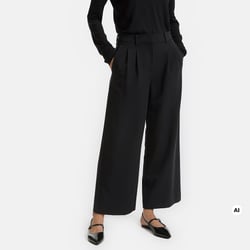
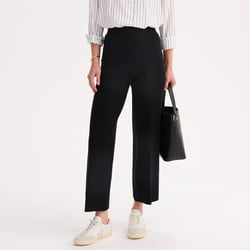
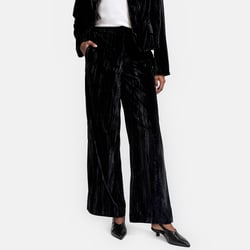
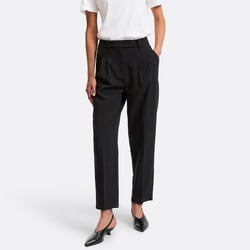
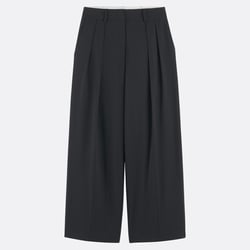
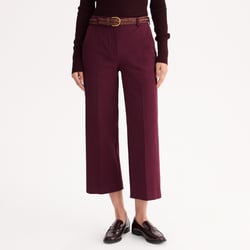
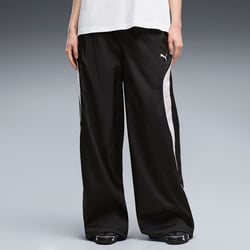
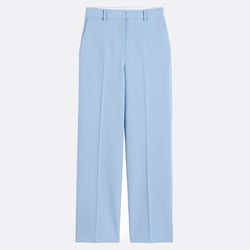
Plus size black trousers with room for everyday life
A roomy leg makes sense on days that involve more than sitting still. From the morning commute to a lunchtime walk and dinner after work, plus size black trousers with a wide-leg cut give you space to move without needing a different outfit for each stop. The aim is not to conceal your shape: it is to find trousers that feel comfortable at your waist, sit smoothly over your hips and give you the amount of volume you enjoy wearing.
At La Redoute, we suggest looking at fit, rise, fabric and length together when comparing trousers for your daily routine. A soft waistband can make a long train journey more comfortable, while a considered hem length keeps a wide leg clear of the pavement. Start with those practical details, then build your outfit around the shoes and tops you already reach for.
Start with a plus-size trouser fit that lets you move
Give your hips, thighs and seat enough space
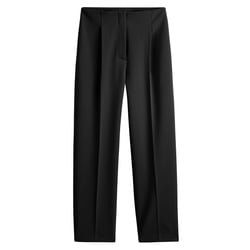
A black wide-leg silhouette usually falls generously from the hip or upper thigh towards the hem. That extra width should come from the cut, rather than from buying a larger size simply to gain room through the leg. If the waistband slips down while the thighs still feel tight, a different cut may suit you better than another size in the same design.
Use your waist and hip measurements alongside the size guide for each brand. Size labels can vary, so the number you wear in jeans is a starting point rather than a guarantee. If your measurements fall between sizes, look at the fabric composition and the waistband construction before deciding. A rigid woven fabric offers less flexibility than a stretch blend, particularly when you sit.
Try sitting, walking and bending your knees when assessing the fit at home. The waistband should not dig in when you sit at your desk, and the fabric should not pull tightly across the front when you climb a step. Pockets that gape or horizontal tension lines across the hips can indicate that you need more room in that area.
Separate a wide leg from a loose waist
Loose-fit styling does not mean every part of the garment needs to be oversized. You might prefer trousers that sit close at the waist, skim the hips and open into a wide leg. Alternatively, a softer shape with an adjustable waistband may feel better for long periods of sitting. Neither approach depends on a particular body shape; the useful test is whether the trousers stay comfortably in place during your day.
Compare the cut with other shapes you know. Straight trousers keep a more consistent line from the thigh down, while tapered trousers narrow towards the ankle. A wide-leg style gives more space around the lower leg. If you enjoy women's flared trousers, note that a flare usually widens from around the knee, whereas a wide leg often carries its volume from higher up.
Find a rise and waistband that suit your routine
Use the rise to position the waist comfortably
The rise affects where trousers sit on your body and how much space they provide through the seat. A higher rise can work well with a tucked blouse because it gives the fabric somewhere to sit without leaving a gap above the waistband. A mid-rise may feel more comfortable if you prefer the waistband lower on your torso, especially when seated.
Judge the rise while sitting as well as standing. If the waistband presses into your ribs at a desk, try a lower rise or a softer construction. If the back dips when you bend forward, look for a cut with more coverage through the seat. A belt can adjust a slightly roomy waist, but it cannot add missing length to the rise.
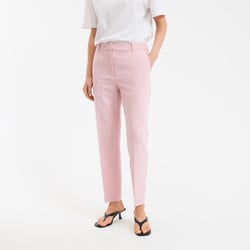
If you already enjoy the waist position of pink high waisted trousers, use that pair as a reference when comparing measurements for a new black style. Measuring the front rise of trousers you own can be more useful than relying on a product photograph, where the model's proportions may differ from yours.
Consider elasticated and pull-on options
An elasticated waistband can give you flexibility during a day that includes travel, lunch out and several hours at a desk. A flat front with elastic at the back offers some adjustment while keeping the front smooth beneath a tucked top. A fully elasticated pull-on design can be convenient when you want an outfit that takes little time to put together.
Check how the waistband feels rather than assuming elastic will always be comfortable. Narrow, firm elastic may press more noticeably than a wider band. If there is a drawstring, adjust it while sitting so that you do not accidentally tighten the waist more than you need. For women who prefer a fastening, a zip-and-button design can also work well when the waist and hip measurements match their proportions.
Match the fabric to the way you wear your trousers
Look at weight, stretch and movement
Fabric changes how a wide leg behaves. A lightweight woven material moves readily as you walk, while a heavier fabric can hold a more structured outline. For office wear, look for enough substance that the trousers do not cling around the knees after sitting. For relaxed weekends, a soft jersey may give you the flexibility you want when getting in and out of the car or walking between shops.
Polyester is used in many trouser fabrics, often in blends. Rather than judging by the fibre name alone, check the full composition, care instructions and any information about stretch. A polyester blend with elastane may offer flexibility, but the amount and construction will affect how it feels. Stretch supports movement; it should not compensate for a tight fit.
Black fabrics can also differ in surface finish. A matte finish is easy to combine with cotton shirts and everyday knitwear, while a fabric with a slight sheen can work for evening dinners. Examine the trousers in daylight when trying them on, particularly across the seat and thighs, to check coverage and see how the material looks when stretched by movement.
Check practical details before the first wear
- Read the care label so you know whether the trousers fit your usual washing routine.
- Try the pockets with your phone inside; bulky contents can change how the fabric falls at the hips.
- Check whether front pleats lie comfortably when you sit, rather than opening under tension.
- Wear your usual underwear during the fitting to assess visible lines and coverage.
- Walk a few steps to see whether the fabric moves freely around your calves.
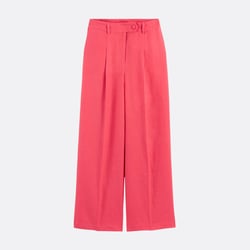
If you like pleat front trousers, pay attention to where the pleats begin and how they fall over your upper thighs. They can provide extra room through the front, but their position needs to work with your proportions. A smooth-front design is another option if you prefer less fabric gathered near the waist.
Set the length around your everyday shoes
Keep a full-length hem clear of the ground
A generous leg needs enough clearance to avoid catching under your heel. Try your trousers with the shoes you plan to wear most. A pair that sits neatly over ankle boots may drag when worn with flat trainers. For everyday use, choose a length that stays off the floor as you walk, not just while you stand still in front of a mirror.
If you regularly switch between flats and heels, decide which shoe height matters most before arranging alterations. Pin both legs while wearing those shoes and check the back as well as the front. Avoid relying only on the stated length: the rise and the way the trousers sit at your waist also affect where the hem finishes.
Use cropped lengths deliberately
A cropped wide leg leaves more of your footwear visible and can be practical on wet pavements. Try it with ankle boots whose shafts sit beneath the hem, or with trainers and socks you are happy to show. If you are comparing navy wide leg trousers with a black pair, use similar footwear for both fittings so that colour does not distract from differences in length and cut.
Make loose-fit styling work from Monday to Sunday
A tucked blouse for office meetings
Pair plus-size black trousers with a tucked blouse for office meetings when you want a clear waistline without a close-fitting leg. Choose a blouse with enough length to stay tucked when you reach for a notebook or sit at a meeting table. If a full tuck feels bulky, try a small front tuck and leave the back loose. Add loafers or low-heeled shoes, checking that the hem clears them comfortably.
A shirt with sleeves you can roll back is useful when moving between a warm commute and an air-conditioned office. Keep any belt comfortable enough for seated work, and check that its buckle does not press against the waistband when you lean towards your laptop.
Trainers for comfortable weekend errands
Wear plus-size black trousers with trainers for weekend errands, adding a T-shirt and a short jacket or an open overshirt. The wide leg gives you room to walk, while a secure waistband helps keep the trousers in place when you carry shopping bags. Keep the hem above the sole of your trainers so it does not slip beneath your foot on stairs.
If you normally wear jeans at the weekend, this combination gives you another option without changing the rest of your wardrobe. When browsing ladies' casual styles, compare pocket depth and waistband comfort as closely as appearance. For a morning spent collecting parcels and buying groceries, those details have a direct effect on how useful the trousers feel.
A blazer for evening dinners
Style plus-size black trousers with a blazer for evening dinners, using a simple top underneath to keep getting dressed straightforward. A shorter blazer leaves more of the trouser line visible, while a longer one gives extra coverage if that is your preference. Both can work: check the outfit seated, especially if the blazer fastens across your hips.
If JDY wide leg trousers are among the styles you are considering, compare the individual product measurements and fabric details rather than assuming every pair from the same brand fits alike. The best choice for you is the pair that accommodates your waist and hips, moves comfortably through the leg and finishes at a useful length. Once those details work, your black trousers can take their place alongside the blouses, trainers and jackets you already wear.