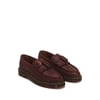
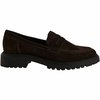
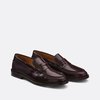
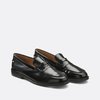
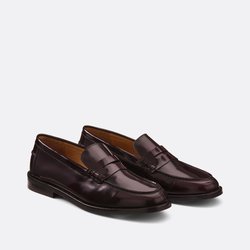
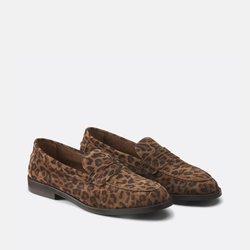
Find women’s loafers that fit your routine
The right loafers earn their place by working with the day you actually have: a walk to the station, several hours at a desk, a school pick-up and a stop for groceries. Before choosing a colour or decorative detail, think about how far you walk, which socks you wear and how often you move between indoors and outside. Those details help you choose shoes that feel secure rather than a pair you keep adjusting with every step.
At La Redoute, we recommend considering fit, upper material and sole construction before deciding how a pair will work with your everyday clothes. For women moving between work and family plans, this approach makes it easier to compare loafers on practical details, rather than appearance alone.
Start with fit and sizing
Check the heel, toes and widest part of your foot
Loafers have no laces to tighten, so their shape needs to hold your foot without squeezing it. Your heel should stay reasonably secure as you walk, with no repeated slipping that makes you grip with your toes. Across the front, your toes need room to lie naturally rather than overlap or press against the upper. The widest part of your foot should sit comfortably within the widest part of the shoe.
Try both shoes on and walk in them, preferably on a clean indoor surface while you assess the fit. Stand, turn and take several normal-length steps. A pair that feels fine while seated may press across the top of your foot once you stand. If you notice rubbing, pinching or numbness during this short test, do not assume regular wear will solve it.
Use the size guide rather than relying on habit
Your usual size is a starting point, not a guarantee across every style. A rounded toe, a narrow almond shape and a broad square toe can feel different even when their size labels match. Measure both feet according to the size guide and use the larger measurement when comparing options. If the product information includes width guidance, check that as well as length.
Try loafers with the socks you intend to wear. Thin socks for office days take up less room than thicker cotton socks for cooler mornings. If you use an orthotic, check whether the insole is removable and whether there is enough depth to accommodate it without pushing your heel out of the shoe.
- Check that your toes are not touching the front when you stand.
- Look for a secure heel without a tight edge digging into your skin.
- Notice any pressure across the top of your foot, especially beneath a strap or metal trim.
- Compare both feet, as one may need slightly more space.
- Repeat the walking test with your usual socks or inserts.
Do not size down simply to stop heel slipping. If a smaller pair crushes your toes, a different shape or width is a better direction. Likewise, going up a size to gain width can leave excess length and make the shoes harder to keep on during a brisk commute.
Choose an upper material that suits your week
Leather for regular office and everyday wear
Leather loafers can work well for office commutes and desk-side meetings, provided the fit and sole suit your walking distance. A smooth upper is straightforward to wipe after a dusty journey, while a simple strap detail sits neatly beneath tailored trousers. Leather may soften with wear, but that does not mean an initially painful pair will become comfortable.
If you are using women's black leather loafers as a search phrase, compare more than the front view. Side and rear photographs can help you assess the height of the heel collar, the thickness of the sole and the shape around the instep. These details matter when you need shoes that stay comfortable between the station and your desk.
For care, remove surface dirt with a soft cloth, then use a cleaner or conditioner suitable for the leather finish, following the product instructions. Test any treatment on a discreet area first. Let damp leather dry naturally away from direct heat; placing shoes beside a radiator can make the material stiff or damage the finish.
Suede for texture, with a different care routine
Suede brings a softer-looking surface to jeans, woven trousers and knitted dresses. It needs a different cleaning method from smooth leather, so keep a suitable suede brush available if you plan to wear it regularly. Brush gently when the upper is dry, and use a specialist treatment only if it is suitable for the material and colour.
When browsing women's black suede loafers, think about your route as well as your wardrobe. A mostly indoor day with a short walk from the car gives suede less exposure to puddles than a long, wet school run. If suede loafers for women is your starting search, check the material description carefully: similar-looking finishes may require different care.
A suitable protective spray may help with surface marks, but it does not make suede waterproof. Follow the care instructions, allow the shoes to dry fully after treatment and choose another pair when heavy rain is forecast.
Synthetic uppers for a straightforward cleaning routine
Synthetic loafers vary in softness, flexibility and finish. Check how the upper bends over the front of your foot and whether the edge feels comfortable against your heel. Do not expect a stiff synthetic upper to stretch in the same way as some leather uppers; the initial fit should already feel comfortable.
For many synthetic finishes, a lightly dampened cloth is sufficient for everyday surface dirt, but always follow the stated care guidance. Avoid applying leather conditioner unless the instructions specifically allow it. After a grocery store trip on dusty pavements, wiping the upper and cleaning debris from the sole before putting the shoes away keeps dirt out of your wardrobe.
Look closely at the sole for daily comfort
Balance cushioning, flexibility and grip
A substantial-looking sole is not automatically a comfortable one. Look at the cushioning beneath your heel and forefoot, the weight of the shoe and how readily it bends where your toes bend. A very rigid sole can feel awkward on stairs, while a thin sole may leave you feeling every uneven paving stone on a longer walk.
Match the sole to your longest walking stretch, not just the hours you spend seated. For a commute that includes a walk to the bus stop and another walk at the other end, cushioning and a secure fit deserve more attention than a decorative trim. Check the outsole pattern too: defined tread can be useful, although grip still depends on the material, surface and weather.
If you prefer chunky loafers, assess their weight during your indoor trial. Lift your feet naturally and walk at your usual pace. A heavier shoe that pulls at your heel may become tiring during errands. Low-profile loafers can feel lighter, but check that they offer enough underfoot comfort for your route.
Choose a backless shape for the right activities
A loafer-style mule can be convenient when you want shoes to slip on quickly for a short, dry trip. However, its open back provides less heel security than a closed loafer. If you walk briskly, climb several flights of stairs or carry shopping bags, a closed-back design may be easier to manage without adjusting your stride.
Rotate shoes when a pair becomes damp, allowing it to dry before the next wear. For cold, wet days or routes with standing water, suitable boots may be a more practical choice than low-cut loafers. Keeping both options available lets you dress for the journey rather than trying to make one pair cover every condition.
Put your loafers to work in everyday outfits
Office commutes and desk-side meetings
Wear leather loafers with ankle-length tailored trousers and a shirt for a workday that includes commuting and informal meetings. Leave enough clearance at the hem to avoid catching fabric beneath your heel. Black works easily with charcoal, navy and patterned trousers, while brown can soften the contrast with cream or lighter blue clothing.
Plan your socks alongside your outfit. Fine socks can reduce direct rubbing and provide extra warmth on an early train platform. If you prefer a bare-ankle look, check that any low-cut socks remain in place during walking rather than sliding beneath your foot.
Jeans, errands and coffee shop stops
Pair women's loafers with straight-leg jeans, a cotton top and a light jacket for errands followed by a coffee shop stop. A hem that finishes near the ankle keeps the shoe visible without bunching over the upper. For wide-leg jeans, check the length while wearing the loafers so the fabric does not trail along the pavement.
If you search for women's beige loafers, consider how a lighter colour will fit your regular routes. Beige works with blue denim and cream trousers, but pavement splashes may be more noticeable than on darker colours. Choose the shade you will enjoy wearing, then keep the appropriate cleaning supplies handy.
School drop-offs and grocery store trips
Slip on loafers with relaxed trousers and a jumper for school drop-offs and grocery store trips. A secure heel matters when you are carrying bags or keeping pace with children. Before leaving, check that the sole is free of trapped stones and that your socks are not folded beneath your heel.
If you enjoy a less fitted silhouette, you might also browse men's navy loafers for styling ideas. Use the relevant size and width guidance rather than assuming the same labelled size will fit across different ranges. Navy can offer a lower contrast than black with blue jeans, while still working with grey trousers.
Compare the details before making your choice
Keep your comparison focused on the features you will notice during wear: fit, upper care, sole comfort and suitability for your route. The price alone cannot tell you whether a shoe will rub at the heel or feel too heavy after twenty minutes. Read the material description and care guidance for each item, then view the available photographs to check its shape from several angles.
A sale can make a planned purchase more affordable, but it should not persuade you to overlook a poor fit. If you are deciding between styles, add suitable options to your wishlist and compare them against the same outfit and walking needs. Choose the pair that works for your ordinary day: comfortable on the commute, secure during errands and straightforward to care for when you get home.