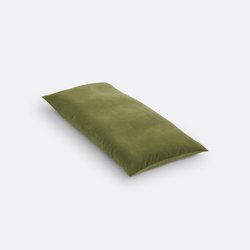
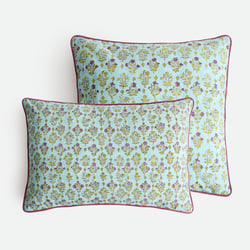
Start with Your Sofa
Your sofa is the largest block of colour in most living rooms, so it is a useful starting point when choosing cushions. Blue and green can sit quietly against grey upholstery, bring contrast to a cream sofa or add depth to a darker seating area. Before you settle on a shade, look at your sofa in daylight and with your evening lamps switched on. A blue that appears soft beside a window may look much darker under warm lighting.
At La Redoute, we suggest building your arrangement around one main cushion colour, one supporting shade and a small amount of pattern. For example, try two mid-blue cushions, one soft green cushion and a striped cover on a beige three-seater. This gives you a clear colour connection without making every cushion identical.
Build Your Colour Palette Around the Upholstery
Light and neutral sofas
Beige, cream and pale grey sofas give blue and green plenty of room to stand out. On a warm beige sofa, denim blue and olive green work alongside wooden tables and woven rugs. Against cooler grey upholstery, try blue-green shades such as teal, balanced with a lighter blue or a soft grey-green.
If your sofa is very pale, include at least one medium or dark cushion to define the seating area. A navy cushion at each end can frame a cream sofa, while lighter green cushions towards the centre keep the arrangement from looking too heavy. When browsing blue cushion covers, compare the shade with your curtains or rug rather than viewing it as a separate purchase.
Dark sofas and stronger colours
A navy or charcoal sofa benefits from cushions that are visibly lighter than the upholstery. Pale blue, soft sage and cream-backed patterns create contrast without introducing lots of competing colours. If you prefer darker cushions, vary the surface: a ribbed green cover will be easier to distinguish from smooth navy upholstery than another smooth, dark fabric.
On a brown leather sofa, blue adds a cooler counterpoint, while olive green connects easily with the leather’s warm colouring. Try a blue-and-cream stripe beside a plain olive cover, then repeat the cream in a nearby lampshade or rug. That small repetition helps the cushions feel connected to the rest of your room.
Layer Blue and Green for a Fresh Coastal Look
You do not need shell prints or nautical accessories to create a coastal feel. Layer blue and green cushions on a cream or sandy-coloured sofa, using washed blue, sea green and a little off-white. A broad stripe can provide structure, while plain covers stop the seating area becoming too busy.
Vary the depth of colour rather than choosing every cushion in the same pale tone. For a three-seater sofa, place a larger blue cushion towards each end, add a smaller green cushion in front of one, and finish with a striped rectangular cushion on the other side. Leave the centre clear enough for someone to sit comfortably.
- Use navy with sea green when a pale sofa needs a stronger outline.
- Combine sky blue, soft green and cream beside light wood furniture.
- Repeat one cushion colour in a throw if your rug and curtains are plain.
- Keep patterns to a similar palette, but vary their scale so they remain distinct.
Choose Covers for the Way You Use Your Seating
Fabric, fastening and everyday comfort
Think about who uses the sofa and how often the cushions move. For a busy family seating area, removable covers with accessible fastenings make routine cleaning more manageable. A smooth cotton cover may suit a cushion that is regularly tucked behind your back, while a textured weave can add visual interest to a plain armchair.
If you are considering velvet cushion covers, check the care instructions before buying. Velvet can look lighter or darker depending on the direction of its pile, which is useful when you want subtle variation across a row of plain cushions. Keep this effect in mind when comparing green and blue shades: turn the cover in the light before deciding whether the colours sit comfortably together.
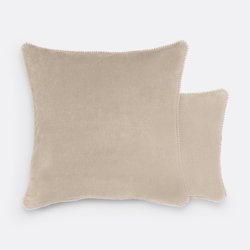
At La Redoute, the Halo Fringed Velvet Cushion by FURN. can add a pop of personality to a sofa, with its fringe providing a decorative detail beside simpler covers. Give a fringed cushion room at the front of an arrangement so its edging is visible rather than hidden behind a larger cushion.
Size and shape without overcrowding
Check both the cover measurements and the insert guidance before ordering. If you are replacing existing covers, measure the inserts you already own and read the product details rather than assuming all square cushions are the same size. When looking at 50cm cushion covers, also consider whether that size leaves enough usable seating space on your sofa.
Larger 60 x 60 cushions can provide a generous back layer on a deep sofa or wide daybed. On a compact two-seater, however, several large cushions may need to be moved every time you sit down. Combine fewer large squares with a smaller rectangular cushion if you want variety without filling the seat.
Use Pattern Where It Has a Clear Role
Pattern can connect colours already present in your room. A green botanical cover with a cream background can link a neutral chair to nearby green curtains. A blue geometric design can echo the straight lines of a shelving unit without needing an exact match.
For a relaxed reading corner, mix patterned green cushion covers with a neutral armchair and a plain blue footstool or throw. Keep the cushion small enough to support your lower back without pushing you towards the edge of the seat. If you enjoy a stronger contrast, leopard print cushions can sit alongside plain blue and green covers; repeat the print’s tan or dark brown elsewhere, such as in a wooden side table or picture frame.
Let one pattern lead and keep the neighbouring covers simpler. A large leaf print, a narrow stripe and two plain cushions are easier to coordinate than several bold prints of the same size.
Keep Blue and Green Covers Looking Fresh
Use washable covers to protect blue cushions from everyday spills and crumbs, especially on the sofa where you eat snacks or watch television. Check that each cover is suitable for machine washing, as decorative trims, backing fabrics and different fibres can require different care.
- Blot spills promptly with a clean cloth rather than rubbing them further into the fabric.
- Remove loose crumbs before taking off the cover, so they do not fall into the insert.
- Follow the stated wash temperature and drying instructions for each cover.
- Wash similar colours together, taking particular care with new, dark blue or green covers.
- Allow covers to dry fully before putting them back on the inserts.
For seating beside a sunny window, check whether the product information includes advice about direct sunlight. Rotating cushions between positions can help distribute everyday use, while an occasional gentle vacuum with a suitable upholstery attachment can remove dust between cleans. Keep a spare washable cover for the cushion used most often, so a spill does not leave your sofa arrangement incomplete while laundry dries.
Practical Colour Advice for Your Living Room
What colour cushions work with a blue sofa in a living room?
Green, cream, lighter blue and warm earthy shades can all work with a blue sofa. The most useful choice depends on how dark the upholstery is and whether its blue looks cool or slightly green. A navy sofa usually needs some lighter cushions to make their shapes visible, while a pale blue sofa can take deeper green or navy accents without looking crowded.
Start with these sofa colour pairing options, then check them against your rug and curtains:
- Navy sofa: soft green, cream and a blue-and-white stripe for clear contrast.
- Mid-blue sofa: olive green and warm beige beside oak furniture or a tan leather chair.
- Pale blue sofa: deeper blue, sage and a small amount of rust for a warmer accent.
Avoid choosing every cushion in a blue almost identical to the sofa unless you deliberately want a very subtle arrangement. Even then, use different textures so the cushions remain visible. For a practical three-seater example, place two cream-backed patterned cushions at the ends and a plain green rectangular cushion towards one side. This introduces contrast while keeping blue as the room’s main colour. Take a fabric sample or a clear daylight photograph of your sofa when comparing options, remembering that screen settings can alter how colours appear.
What colour goes with green cushions?
Blue, cream, beige, grey and warm brown all work with green cushions, but the shade of green should guide your choice. Olive green sits comfortably with tan leather, warm cream and muted blue. Soft sage works with pale grey and light wood, while a deeper forest green can stand out against cream upholstery or sit beside navy for a darker arrangement.
Use the surrounding furniture to narrow down your palette:
- With a beige sofa: combine olive cushions with denim blue and a cream-based pattern.
- With a grey chair: try sage green and a small blue geometric cushion.
- With a cream sofa: use forest green, navy and one lighter cover to separate the darker shades.
The main pitfall is treating every green as interchangeable. A yellow-leaning olive and a cool blue-green may need a patterned cover containing both shades to connect them. Similarly, several dark green cushions can disappear against dark upholstery unless you introduce a lighter colour or a distinct texture. For a reading corner, place one patterned green cushion on a neutral chair, then add a plain blue throw over the arm. Check the combination under your reading lamp as well as in daylight, since that is where you will use it most.