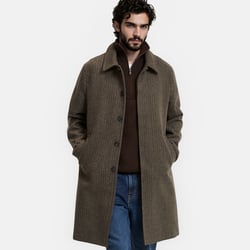
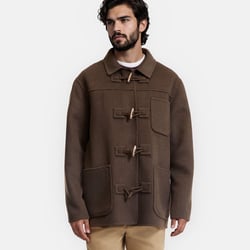
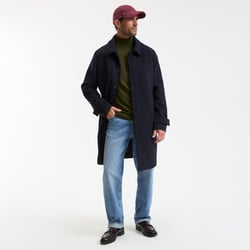
Choosing a wool blend coat for warmth, comfort and everyday wear
A wool blend coat needs to feel comfortable on a chilly platform, sit neatly over your work clothes and fit into your care routine. Its composition gives you useful clues, but the percentage of wool is only part of the picture. Fabric thickness, lining, cut and fastening all affect how warm the coat feels when you step outside.
At La Redoute, we recommend starting with the journeys you make most often. Layer your wool blend coat over office clothes on chilly commutes, and you will need enough room for a blazer without tightness across the shoulders. For brisk school pickup walks, a secure front fastening and practical pockets may matter more than a sharply fitted waist. Here is how to compare your options before choosing.
Read the composition before judging the warmth
Check the full fibre composition, not just the word wool. A wool blend combines wool with one or more other fibres, each of which can change the fabric’s feel, weight, appearance and care requirements. Two coats with the same wool percentage can still feel quite different because their weave, thickness and finishing differ.
What the other fibres contribute
Wool helps trap insulating air within the fabric and can absorb moisture vapour, which is useful when your commute alternates between cold streets and warmer transport. Other fibres can adjust how the material behaves during regular wear. Use the composition label alongside a close look at the fabric rather than treating any single ingredient as a guarantee.
- Wool with polyester: polyester can help the fabric retain its shape and adds strength. Check the surface feel and lining, particularly if you plan to wear the coat over short sleeves.
- Wool with polyamide: polyamide can improve resistance to abrasion, which is useful around cuffs, pocket edges and areas that rub against a shoulder bag.
- Wool with viscose: viscose can give the fabric a softer feel and more fluid drape. The finished garment may still require professional cleaning.
- Wool with cashmere: cashmere can bring softness, particularly around the neck, but the fabric still needs gentle handling and careful storage.
- Wool with acrylic: acrylic can contribute a wool-like feel. Check reviews and care instructions rather than assuming the blend will resist bobbling or tolerate machine washing.
A higher wool content may suit you if you enjoy the feel and insulating qualities of wool. A lower wool content may suit a different budget or give you the structure you prefer. Neither percentage tells you everything: a densely woven, lined coat can provide better protection from draughts than a lighter, loosely woven alternative with more wool.
Construction matters as much as composition
A lined coat usually slides more easily over knitwear and office jackets. That matters when you are taking it off in a crowded train carriage or pulling it on over a blazer before a meeting. Check that the lining allows you to reach forwards without pulling across the back.
A double faced fabric has two finished surfaces and may be used in an unlined design. It can give the coat a softer outline and reduce bulk, but do not assume it offers the same wind protection as a heavier, fully lined style. For exposed bus stops, consider fabric density, overlapping fronts and coverage at the neck together.
Match the cut to your layers and daily journeys
Try the coat over your thickest regular layer. Fasten it, sit down and reach forwards as though holding a steering wheel. The shoulders should not pull, the sleeves should cover your wrists and the front should close without strain. If you are shopping online, compare garment measurements with a coat you already wear comfortably.
An oversize wool coat gives you space for chunky jumpers and relaxed tailoring. Check the shoulder placement and sleeve length, however: extra room through the body should not leave your hands hidden. If you prefer a tailored outline, look for shaping through the seams while leaving enough space for the clothes you actually wear beneath it.
Length, fastening and neckline
A long coat gives your legs more coverage when you are waiting outside school or walking to the station. A shorter jacket can be easier for frequent car journeys because there is less fabric to gather beneath you. For petite proportions, check the stated length against your own measurements rather than relying only on the model photograph.
A double breasted coat has overlapping front panels, which can help reduce draughts when fully fastened. A single-breasted style generally creates less bulk at the front. With either design, try sitting down while it is buttoned: tightness across the hips is a sign to reconsider the size or cut.
A funnel neck provides extra coverage on breezy mornings, while an open neckline leaves space for a scarf. Check whether the fabric feels comfortable against your chin. A belted coat lets you adjust the waist over different layers, but consider where you will put the belt when the coat is open, especially on busy commutes.
Colour and pattern with a practical purpose
Think about the trousers, footwear and bag you use most often. If you are searching for women's long grey coat styles, compare pale and charcoal shades against your usual work clothes. Charcoal can be useful with navy trousers and black boots, while lighter grey creates more contrast with dark layers.
An animal print coat can add pattern to a simple outfit of jeans, a plain jumper and ankle boots. If you are looking at women's pink coats, consider whether a muted or brighter shade works with the scarves you already own. Check the cleaning guidance too: pale cuffs and collars may show everyday marks sooner than darker ones.
Plan for everyday warmth and manageable care
Wear your wool blend coat for crisp weekend farmers’ market mornings, with a jumper underneath and shoes suited to standing on cold paving. Deep pockets are useful for gloves, but avoid overfilling them with keys and a heavy phone, which can pull the pocket openings out of shape. A cross-body bag can keep your hands free, although repeated rubbing may encourage bobbling where the strap rests.
When comparing women's wool winter coats, look beyond the product photograph. Check the composition, lining, length and care label, then consider whether you will wear the coat mainly for short journeys or extended walks. Wool blends are not automatically waterproof; for persistent rain, you may need a separate weather-resistant outer layer rather than relying on the coat alone.
Build care into your routine from the first wear. Use a broad, supportive hanger and leave the coat space to air after use. If it becomes damp, let it dry naturally away from radiators. Empty the pockets before hanging it up, and use a suitable clothes brush gently to remove surface dust. These small steps can reduce the need for frequent full cleaning.
Material and washing guidance before you buy
How to wash a wool blend jacket?
Follow the garment’s care label before choosing any washing method. A wool blend jacket may be washable, hand-wash only or suitable only for professional cleaning. Its wool percentage cannot tell you which method is safe. The lining, internal shaping, trims and dyes also affect how it responds to water, movement and heat.
If the label permits machine washing, use the specified wool or delicate programme, the recommended temperature and a detergent suitable for wool. Follow any instructions about spin speed and wash the jacket separately if directed. Do not use an ordinary hot wash simply because the blend contains synthetic fibres: wool can shrink or felt, and a structured jacket can lose its shape.
- If hand washing is allowed, use water at the stated temperature and gently move the garment without rubbing or twisting it.
- After washing, remove excess water gently. Do not wring the sleeves or body.
- Dry as the label directs, reshaping carefully if required. Do not tumble dry unless this is explicitly permitted.
- If professional cleaning is required, point out stains and explain what caused them, if you know.
For example, a splash of coffee on your commute does not automatically mean the whole jacket needs washing. Blot gently with a clean cloth rather than scrubbing, then follow the stain-care guidance for that garment. Test any permitted cleaning product on a hidden area first. Avoid soaking a stain on a structured front panel, as local wetting can leave marks or affect its shape. When instructions are unclear, ask a professional cleaner before proceeding.
Is 100% wool or wool blend better?
Neither is automatically better: the right choice depends on the warmth, feel, shape and care routine you need. A 100% wool coat can offer good insulation and moisture management, but its thickness and construction still matter. A lightweight pure wool fabric will not necessarily feel warmer outdoors than a dense, lined wool blend.
A blend can bring different advantages. Polyamide may improve abrasion resistance, polyester may support shape retention, and cashmere may soften the feel. However, blending does not automatically make a coat machine washable, prevent bobbling or make it warmer. Compare the finished garment as well as its fibre percentages.
- For long walks in cold weather, prioritise coverage, fabric density, a secure fastening and room for warm layers.
- For office commutes, check how smoothly the coat fits over a blazer and whether it is comfortable when seated.
- For frequent wear with a shoulder bag, consider surface texture and inspect rubbing areas regularly.
- For a simpler cleaning routine, choose according to the actual care label, not assumptions about the blend.
For example, if you walk for twenty minutes before boarding a warm train, a medium-weight wool blend with enough room for removable layers may be more convenient than a very heavy coat. If you spend longer standing outdoors, fuller coverage and a closer-fitting neckline may be more useful. Before buying a new coat, check how it feels at the neck and wrists, how freely you can move and whether its cleaning requirements suit your week. Those checks give you a more reliable basis for choosing than the wool percentage alone.