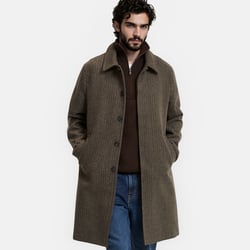
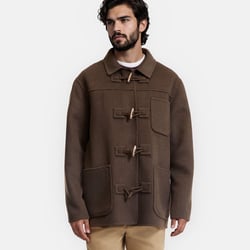
Find your cold-weather fit
A camel coat earns its place in your wardrobe when it fits comfortably over the clothes you actually wear. That might mean a tailored jacket for chilly morning commutes, a chunky jumper for Saturday errands or a sweatshirt for walking the dog on cold evenings. Before settling on a style, think about those everyday layers, the distance you walk and where you need the hem to fall.
At La Redoute, we suggest approaching your camel overcoat through four practical checks: fit, fabric, length and care. Start with how it sits across your shoulders, then consider its composition, coverage and cleaning instructions. The result should be a coat you can button, move in and look after without changing your routine around it.
Start with the fit you need day to day
Check the shoulders, chest and sleeves together
Try on your coat over a layer similar in thickness to your usual winter clothing. A fine shirt will not tell you whether there is enough room for your thickest office jumper. For a traditionally tailored shape, the shoulder seam should sit close to your natural shoulder edge. A dropped shoulder is different: its seam sits further down the arm by design, so judge the overall shape rather than applying the same rule.
Fasten the coat and look for pulling across the chest or around the buttons. The front should lie comfortably rather than forming tight diagonal creases. Then reach forward as though holding a steering wheel, fold your arms and sit down. You need enough room to move with the coat fastened, not simply enough space to stand still in front of a mirror.
Sleeves should cover your wrists when your arms rest by your sides, without swallowing your hands. If you regularly wear a blazer underneath, check that its cuffs do not bunch inside the coat sleeves. Alterations may help with excess sleeve length, but cuffs with buttons, tabs or other details can make adjustments more involved.
Decide between tailored and relaxed shapes
A tailored camel overcoat follows the body more closely and works neatly over office clothes. Wear it over straight-leg trousers, a shirt and a fine knit for a chilly morning commute, checking that the jacket underneath does not push the coat out at the shoulders. A single-breasted front has less overlapping fabric than a double-breasted design, which may suit you if you prefer less bulk through the torso.
A relaxed cut leaves more space for layering. If you are considering an oversize wool coat, look for a deliberately roomy silhouette rather than automatically buying a larger size in a fitted style. Sizing up can leave the sleeves too long or move the pockets below a comfortable position. Check the product measurements and size guide, then assess whether the shoulder line and hem still sit where you want them.
- Wear your usual winter layer when checking the fit.
- Fasten every main button to assess room across the chest and hips.
- Reach forward and sit down to test movement.
- Put your hands in the pockets without lifting your shoulders.
- Check the side and back views for pulling or excess fabric.
Read the fabric label before deciding
Look at composition as well as appearance
Camel describes the colour here, not necessarily the fibre. A camel-coloured coat may contain wool, synthetic fibres, cashmere or a blend, and the proportions vary between designs. Check the full fabric composition and care label rather than judging warmth or maintenance from a photograph.
Wool can provide useful insulation, but fibre content alone does not tell you how warm a coat will feel. Fabric weight, construction, lining and the space available for layers all affect comfort. A lighter wool-blend coat may be convenient for short walks between heated buildings, while a denser fabric and a higher-closing neckline may be more suitable for longer waits at exposed bus stops.
If you are comparing women's wool winter coats, assess the whole garment rather than choosing solely by wool percentage. Look at whether the front closes securely, how much of your neck remains exposed and whether the sleeves accommodate a jumper. These details have practical consequences when you are standing on a cold station platform rather than moving briskly along a sheltered street.
Consider the surface, lining and weather
A brushed surface can feel different from a smooth, closely woven finish. If your skin is sensitive to wool, pay particular attention to the collar, since it may brush your neck even when the body is lined. A smooth lining can also help the coat slide over knitwear instead of catching at the sleeves as you put it on.
Do not assume a tailored camel coat is waterproof. Unless the product description states suitable weather protection, plan to carry an umbrella when rain is forecast. For a crisp weekend market stroll, layer your coat over knitwear and add a scarf that fills the neckline without forcing the lapels outwards. If you expect prolonged heavy rain, choose outerwear designed for those conditions instead.
Match coat fit and length to your routine
Balance coverage with freedom to walk
A shorter coat can be convenient if you spend much of your day getting in and out of a car, though it leaves more of your legs exposed. Knee-length styles offer additional coverage without a very low hem. A calf-length camel overcoat covers more of your outfit, but you should check its stride room, particularly if the cut narrows towards the bottom.
Check the hem with your usual winter shoes on. A coat that looks manageable with heeled boots may sit much closer to wet pavements when you wear flat trainers. Walk up a step, take a longer stride and sit on a chair. A back vent can help movement, but its presence does not replace a practical fit check.
If you are also looking at women's long grey coats, use the same length checks when comparing grey and camel options. Product photographs can make hems difficult to judge because models differ in height. Where measurements are provided, compare the stated coat length with a coat you already own, following the retailer's measuring guidance.
Make pockets and fastenings part of the decision
Small details become noticeable after several days of wear. Pocket openings should be easy to reach, while the pockets themselves should comfortably hold what you need without distorting the front. A phone placed in a shallow pocket may slip out when you sit down, so check the depth rather than assuming every pocket has the same capacity.
When walking the dog on cold evenings, button your camel coat before leaving and check that you can bend to clip on a lead without strain across the back. If you wear gloves, test whether you can manage the buttons while wearing them. A belt may help draw the coat closer around you, but make sure its loose ends do not hang low enough to become awkward on steps or muddy paths.
Choose a camel shade that works with your clothes
Compare the colour beside familiar layers
Camel shades range from pale sandy tones to deeper golden browns. Hold the coat beside the colours you wear most often, especially scarves and jumpers that sit near your face. A warmer shade will look different beside cream knitwear than beside a cool grey sweatshirt, so check in daylight where possible.
For office days, a camel coat over navy trousers and a cream jumper keeps the outfit straightforward to put together. At weekends, try it over dark denim and a striped knit, with boots suited to the weather. Build around clothes you already reach for so you can assess the coat as part of an outfit rather than as an isolated purchase.
If you are also considering an animal print coat, compare how each option works with your patterned scarves or checked trousers. Camel offers a plain outer layer when you want those pieces to remain visible. Similarly, if you have also looked at women's pink coats, place both colour choices beside your everyday bag and footwear before deciding which you would wear more often.
Keep fabric and care manageable
Establish a simple routine between wears
Follow the garment's care label first, as cleaning requirements depend on its fibres, lining and construction. Some coats require professional cleaning; others have different instructions. Do not machine-wash a coat unless its label allows it. An unsuitable wash can affect the shape, surface or fit.
After wearing your coat, empty the pockets and hang it on a broad, supportive hanger. This helps avoid concentrated weight at the shoulders and prevents forgotten items from pulling on the pockets. Allow space around it rather than squeezing it between other garments, especially after a damp commute.
- Air the coat in a well-ventilated place after wear.
- If the fabric permits, use a suitable clothes brush gently to remove surface dust.
- Follow the care instructions for spills; avoid vigorous rubbing.
- Let a damp coat dry naturally away from radiators and direct heat.
- Check buttons and seams occasionally so loose areas can be repaired before they worsen.
Plan cleaning and storage before the season ends
If professional cleaning is required, take that cost and convenience into account before buying. A coat worn daily on public transport may need attention sooner than one reserved for occasional outings, but there is no single cleaning schedule that suits every fabric or routine. Check for marks regularly and follow the label or seek advice from a professional cleaner when needed.
Before storing your coat for warmer months, make sure it is clean and completely dry. Keep it on a supportive hanger in a dry wardrobe, using a breathable garment cover where appropriate. Avoid packing it tightly under other clothes, which can leave the lapels and sleeves creased.
Your final check is practical: put on your usual layers, fasten the coat, walk, sit and reach for your pockets. If the fit allows movement, the length suits your journeys and the care instructions work for you, your camel overcoat is ready for the commute, the weekend market and the walk home.