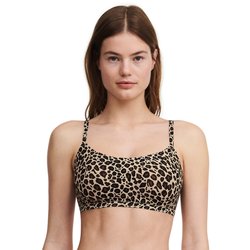
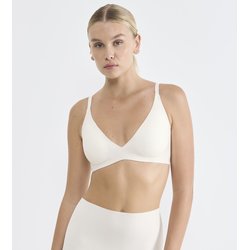
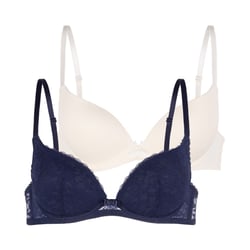
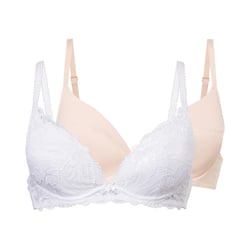
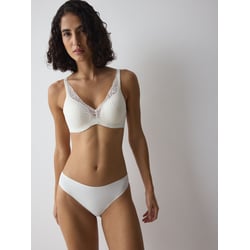
Find your preferred lift
A white padded bra can give you gentle everyday shape, a little extra lift or fuller coverage, depending on its construction. The useful starting point is not how much padding you can see on the hanger, but how the bra feels beneath the clothes you wear most. A fitted T-shirt calls for a smooth cup edge, while a work blouse may need secure straps and a neckline that stays hidden when you lean forward.
We recommend comparing three details before you choose: padding level, cup fit and coverage. Padding affects shape and thickness; fit determines whether the bra stays comfortably in place; coverage influences how it sits beneath different necklines. Looking at these separately helps you avoid buying extra padding when what you actually need is a better-fitting band or a different cup shape.
Compare padding levels before choosing your shape
Light padding for gentle everyday definition
Lightly padded bras usually have a thin layer of foam or a similar lining across the cups. This helps soften the outline of nipples beneath clothing and gives a more consistent shape without adding much volume. If you want your white padded cups to smooth T-shirts while adding gentle everyday shape, look for a smooth outer fabric and cup edges that lie flat against your chest.
This level of padding can be useful for women who prefer a less structured feel during a day spent moving between a desk, errands and the school run. However, light padding does not automatically mean a flexible cup: some moulded designs hold their shape firmly. Check the product description for details about the cup construction rather than judging by thickness alone.
Graduated padding for a more noticeable lift
Graduated padding is thicker in certain areas, often towards the bottom or outer side of the cup. Its placement helps move breast tissue upwards or towards the centre. A white push up bra may use this construction to create more definition beneath a lower neckline, although the amount of lift varies between designs.
Within the push-up bra category, compare padding placement as well as thickness. A softly padded style can provide a modest boost, while a more heavily padded design may add visible fullness. More padding does not mean more support: the band, cup shape and overall construction still need to fit your body. If a heavily padded cup presses into your breast tissue, choosing a larger cup or a different style is more useful than loosening the straps.
Removable pads for a choice of shape
Some bras have removable inserts, allowing you to adjust the amount of padding or accommodate a small difference between breasts. Check whether inserts are included and whether the cup has a secure pocket. Before dressing, flatten each insert inside its pocket so that folded edges do not show through a close-fitting top.
For your padding level choice, consider how often you want to make adjustments. Fixed padding is straightforward when you want the same shape each morning; removable pads give you options but need checking after washing. Neither construction replaces a well-fitting cup.
Get the fit right before adjusting the lift
Start with a stable band and comfortable cups
The band should sit level around your body rather than climbing up your back. On a new bra, the loosest hook setting should normally feel secure, leaving the tighter settings available as the fabric stretches with wear. You should be able to breathe deeply and sit comfortably without the band digging in. Check your measurements against the relevant size guide, as sizing can differ between brands and styles.
The cup should contain your breast tissue without cutting across it or leaving a pronounced gap. With padded cups, a gap can be especially visible beneath a fitted shirt because the cup keeps its own shape. If you are looking for a 32A push-up bra, check both band and cup rather than assuming a smaller cup will create more lift. A cup that is too small may cause spillage instead of the shape you want.
Adjust the straps without relying on them for support
Adjustable straps help fine-tune the fit, but they should not carry all the weight. Tighten them enough to remove slack without pulling the back band upwards. If you need to shorten them excessively to keep the cups in place, reassess the band and cup size.
For workdays, adjustable straps keep the white bra comfortable beneath work blouses when set to suit your shoulders. Try reaching towards a shelf and moving your arms forwards while wearing your blouse. This checks whether the straps stay put and whether the cup edges become visible as the fabric moves.
- Raise both arms: the band should remain close to your body rather than sliding upwards.
- Lean forwards, then stand upright: breast tissue should remain contained within the cups.
- Sit down: the lower edge should not press painfully into your ribs.
- Put on a fitted top: check for cup edges, wrinkling and visible spillage.
- Walk around for a few minutes: straps should stay in place without digging into your shoulders.
Choose coverage and fabric for your everyday outfits
Smooth cups beneath T-shirts and summer tops
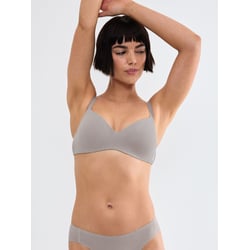
A smooth padded cup is a practical starting point beneath fine jersey because it has less surface texture to show through the fabric. Soft padding provides modest coverage under light-coloured summer tops, although it cannot guarantee that the colour or outline of the bra will be invisible. Check the result in daylight, especially with thin white cotton.
Coverage also matters. A fuller cup may sit neatly beneath a crew-neck T-shirt but appear above a low scoop neckline. A plunge shape leaves more space at the centre front, which can suit lower-cut tops. Match the cup neckline to the garment neckline before deciding whether you need more or less padding.
Lace details and patterned finishes
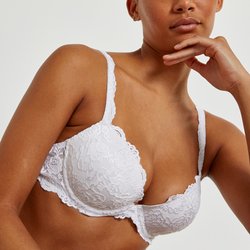
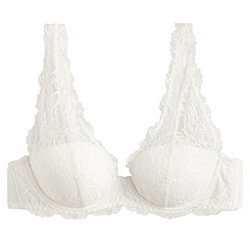
Lace gives you another option when the outer fabric of your outfit is thick enough to conceal its texture. At La Redoute, our Lison Push-Up Bra in Lace from LA REDOUTE COLLECTIONS features fine, delicate lace in a graphic pattern. When considering a design like this, try it beneath your usual blouse to see how the lace texture sits under the fabric.
A floral lace pattern can look different beneath clothing from a flatter graphic design, so check the surface rather than relying on the pattern name. Lace placed along the band may have little effect on the front of a T-shirt, while raised detailing across the cups can be more noticeable. Stretch lace may accommodate movement, but the padded section beneath it still needs to fit without pressing or gaping.
Underwired and non-wired options
An underwired bra uses a wire around the base of each cup to help define its shape and separate the breasts. The wire should follow the breast root without resting on breast tissue. A non-wired padded style avoids this rigid element and may suit you if you dislike the feel of wires during long periods of sitting.
Neither option guarantees comfort on its own. A non-wired band can still feel restrictive if it is too small, while a correctly fitted underwired design may feel secure throughout your working day. Compare how each style behaves when you sit, stretch and bend, rather than choosing solely by its label.
Build a useful lingerie drawer around your clothes
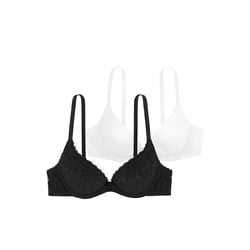
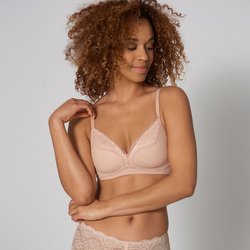
When browsing women's lingerie, start with the outfits you repeat each week. If you mainly wear white shirts, pale knitwear and cotton T-shirts, check colour visibility as carefully as padding. A nude push up bra in a shade close to your skin tone will often be less noticeable beneath a white top than a bright white style. Keep your white bra for outfits where it remains discreet or where its colour is intentionally visible.
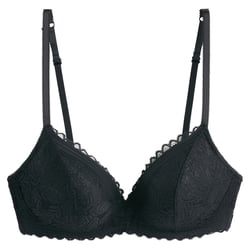
A black push up bra can be useful beneath dark tops when you want similar shaping without a pale cup showing at the neckline or armhole. Choosing comparable cup shapes in different colours also makes it easier to keep a consistent fit across your everyday wardrobe.
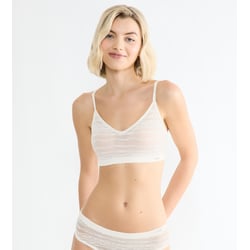
If you would like a matching set, check the briefs separately for cut, fabric and available size; your preferred bra size does not determine your brief size. Compare price alongside practical details such as adjustable straps, care instructions and cup finish. The best choice for regular wear is one that works with several outfits and remains comfortable through your usual routine, rather than one with the most padding or decoration.
Practical answers for choosing padding and wearing white
What is the difference between lightly padded and heavily padded bras?
Lightly padded bras use a thinner layer of padding, usually to smooth the cup outline and provide modest coverage with little added volume. Heavily padded bras contain more material, which can create a fuller-looking shape. However, thickness alone does not determine lift: where the padding sits and how the cups are constructed also affect the result. A thick, evenly padded cup behaves differently from a cup with extra padding concentrated at the base.
- Choose light padding when you want gentle shaping beneath everyday T-shirts.
- Consider graduated padding when you want more lift beneath a lower neckline.
- Check heavier padding beneath fitted clothing, as the cup edge may be more noticeable.
Do not size down to increase the push-up effect. This can leave breast tissue spilling over the cup or being compressed uncomfortably. For example, if a lightly padded bra fits smoothly beneath your work shirt but a heavily padded version creates a ridge, the second style may have less usable cup space or a shape that does not suit you. Try another cup size or construction and repeat the check with the same shirt. Your preferred padding should give you the outline you want without requiring repeated adjustments during the day.
What bra to wear with a white top?
For the least visible result beneath a white top, choose a bra close to your skin tone, with a smooth finish and cup coverage that stays inside the garment's neckline. White fabric can be translucent, so a white bra may create a visible contrast against your skin even though it matches the top. The right option depends on the thickness of the fabric, the lighting and whether you want the lingerie to remain hidden.
- Under a thin white T-shirt, try smooth, lightly padded cups in a skin-matching shade.
- Under a thicker white work blouse, check whether a white padded style remains discreet when you move.
- Under a low-cut summer top, choose a cup neckline that does not rise above the garment.
Check your outfit in daylight before leaving home. Indoor lighting can hide contrast that becomes obvious outdoors. For example, put on your white cotton shirt, stand near a window and look at both the cup edges and straps. Then sit and lean forwards to check whether the neckline shifts. Avoid assuming that thicker padding will solve transparency: it may improve nipple coverage, but colour contrast and raised lace can still show through. A smooth surface and a suitable shade usually matter more when discretion is your priority.