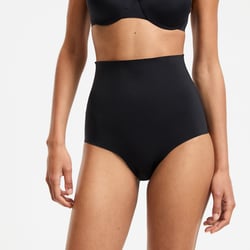
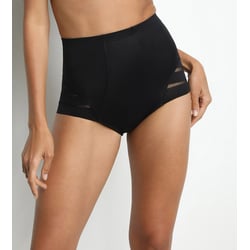
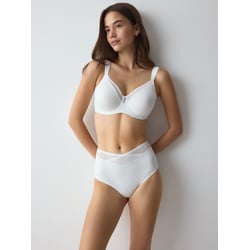
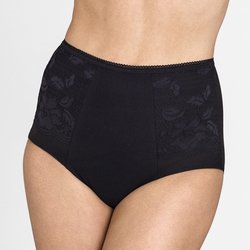
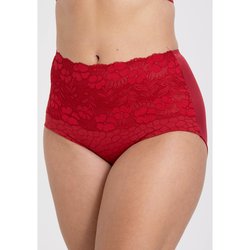
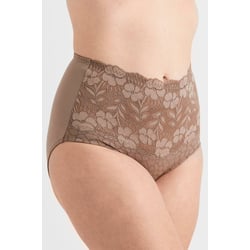
Smooth support for everyday wear
Tummy control knickers can help clothing sit more smoothly around your middle without the feel of a separate shaping layer. For everyday wear, the starting point is coverage: enough fabric across your tummy and bottom to stay comfortable when you sit, walk and bend. Midi styles are worth considering if you prefer a waistband below your natural waist, while fuller briefs offer more coverage higher up your body.
At La Redoute, we recommend looking at coverage, fit, support and comfort in that order. A pair that feels supportive while standing still also needs to work through a seated morning at your desk, a school run in jeans and an afternoon of errands. The best fit supports your tummy without making you adjust your underwear throughout the day.
Start with midi coverage and where it sits
A practical middle ground for everyday outfits
Midi knickers generally sit between lower-cut briefs and higher full-coverage styles, although the exact rise varies by brand. They cover more of the lower abdomen than a low-rise cut, without necessarily reaching your natural waist. This makes them a useful starting point when you want gentle tummy-control support beneath mid-rise jeans, everyday trousers or skirts.
Look at both the front rise and the back coverage rather than relying on the style name alone. On a longer torso, a midi waistband may sit noticeably below the waist; on a shorter torso, the same cut may reach higher. Product photographs and measurements, where available, help you judge where the top edge is likely to sit.
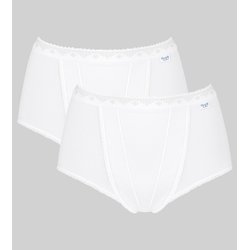
If you already like the coverage of your blue knickers, compare their shape with a shaping style before choosing something new. A familiar leg opening and similar back coverage can make it easier to assess the difference a supportive front panel makes.
When fuller coverage makes more sense
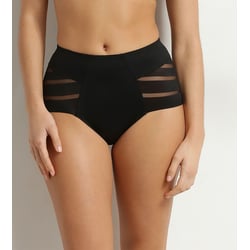
Midi and full coverage serve slightly different needs. A midi cut focuses coverage lower on the tummy, whereas a higher full brief can extend support further up the abdomen. Match the height of the knickers to the area you want supported, rather than expecting a lower waistband to smooth above its top edge.
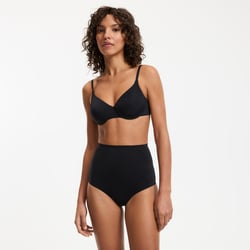
At La Redoute, our selection includes Soft Sculpt Maxi Knickers by TRIUMPH, full-coverage maxi knickers with a bandeau waistband, made from soft, smooth polyamide. This gives you a specific fuller-coverage option to compare with midi cuts, particularly if you prefer a broader waistband. Check the product details for the stated level of support, as coverage alone does not tell you how firmly a pair will hold.
Get the fit right before choosing stronger control
Use measurements rather than sizing down
Start with your current waist and hip measurements, then follow the size guide for the individual brand. Sizing down does not reliably create a smoother result: it can make the waistband dig in, pull the gusset out of position or leave the leg openings feeling tight. Women with the same waist measurement may need different cuts because their hip proportions and torso lengths differ.
Your knickers should lie flat without pinching or leaving excess fabric. If the front feels loose but the leg openings are tight, a different cut may be more useful than a smaller size. If you fall between sizes, follow the product's fitting advice rather than assuming firmer control requires less fabric.
- Check that the waistband sits level rather than dipping sharply at the front or pulling down at the back.
- Sit on a chair to see whether the top edge presses into your tummy.
- Walk and bend to check that the leg openings stay comfortable.
- Look for fabric gathering beneath clothing, which may indicate excess length or an unsuitable cut.
- Notice whether you keep pulling the briefs up; repeated adjusting is a reason to reassess the fit.
Assess the fit beneath your usual clothes
A fit check is more useful with the outfits you actually wear. Try the shape beneath work trousers or a skirt rather than judging it only in a mirror without clothing. If you usually wear white knickers under pale outfits, remember that colour visibility and seam visibility are separate issues: a low-profile seam can still show if the fabric colour contrasts with your skin beneath a lightweight garment.
When assessing a new pair, follow the retailer's hygiene and returns guidance. Stand, sit and take a few steps while checking the waist and leg edges. A supportive fit should let you breathe normally and move without bracing your stomach against the waistband.
Choose support that suits your day
Gentle shaping for jeans and school runs
For school runs in jeans, gentle tummy support is often more practical than a firm shaper. You need room to sit in the car, bend to fasten a child's coat and walk comfortably. A midi cut can work well beneath mid-rise denim when its waistband sits flat and does not compete with the jeans' fastening.
Check how the two waistbands meet when you sit down. If the knickers finish directly beneath a stiff denim waistband, the combined pressure may feel uncomfortable. A slightly different rise can help, but the answer depends on your torso and jeans. Avoid stacking tight waistbands over the same point on your tummy.
A smoother line beneath office dresses and skirts
Under fitted dresses during everyday office hours, tummy control knickers can smooth the waistline by providing a more even layer beneath the fabric. Look for flat edges and enough front coverage for the dress's fitted section. Then sit at a desk for a few minutes: a waistband that feels comfortable standing up may press more firmly when your abdomen naturally changes shape as you sit.
The same approach applies beneath skirts while running errands. A supportive front panel can help the abdomen look streamlined, while secure back coverage reduces the need to readjust between walking and sitting. If you wear white tummy control knickers beneath cotton wrap dresses, check the underwear beneath the overlapping front panels and around the waist tie, where extra layers can make edges more noticeable.
Descriptions such as slimming or sculpting refer to the effect of the garment while you wear it, not a change to your body. Choose the support level for the outfit and activity rather than treating the strongest control as automatically better.
Keep comfort at the centre of the choice
Consider fabric, seams and waistband width together
A smooth fabric surface can help clothing glide over your underwear, while stretch allows the garment to accommodate movement. Seamless construction may reduce visible lines, but it does not guarantee that every edge will disappear beneath every outfit. A narrow elasticated leg opening can still show through close-fitting jersey, so examine the finishing as well as the fabric description.
A wider waistband can spread pressure across a larger area, provided it fits without folding or digging in. Its comfort also depends on the firmness of the elastic and where it meets your body. If an edge rolls repeatedly, check the rise, size and support level rather than assuming you simply need tighter control.
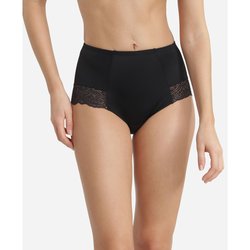
If you enjoy lace knickers, look closely at where the lace sits on a shaping design. Decorative side panels may work beneath looser clothing, while raised detailing across the front can be more visible under a fitted skirt. Keep your choice tied to the clothes you plan to wear.
Leave room for normal movement
You should feel free to take a full breath, climb stairs and sit through a meal. Persistent discomfort, numbness or restricted movement are signs to remove the garment and reconsider the fit. Everyday support should not require you to tolerate pain through a working day.
Care also affects how underwear fits over time. Follow the care label for washing and drying, and avoid guessing the temperature or drying method. If the waistband loses its recovery or the fabric no longer sits securely, reassess the pair before relying on it beneath a close-fitting outfit.
Build a practical everyday underwear rotation
Start with the clothes you wear most often. Navy knickers may suit darker trousers and skirts, while a shade close to your skin tone is often less noticeable beneath pale clothing. Keep colour, coverage and edge finish as separate checks so that a comfortable pair also works beneath its intended outfit.
On a product page, compare the rise, fabric composition, support description and size guidance. Some listings use the word panties rather than knickers; focus on the construction details rather than the label. Check delivery information alongside the product details if you need underwear for a particular work week or event.
Choose midi coverage for a comfortable lower-tummy fit, or fuller coverage when you want support higher up. Then test that choice against the movements in your day. Knickers that stay flat beneath jeans, feel comfortable through office hours and need little adjusting under a skirt are doing the practical job you chose them for.