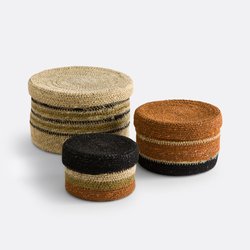
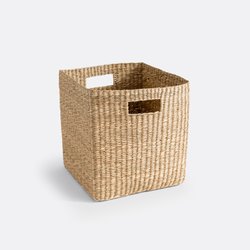
A straw basket for the things you reach for every day
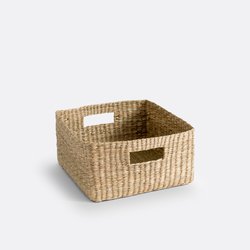
Gather the knitting beside your chair, the napkins waiting for dinner or the small accessories scattered across a shelf: a straw basket gives everyday items a clear place to live. Its open top lets you see what is inside, while its textured sides bring a softer contrast to painted furniture, metal shelving and smooth tabletops. Start with one job you need it to do, then choose the size, shape and position around that task.
For useful storage, the details matter more than an empty corner that needs filling. Woven straw construction affects how a basket feels and what you can put inside it. Capacity determines whether your belongings sit neatly or spill over the edge. Placement decides whether you will actually return things to it, and straightforward care helps keep the material clean and dry.
Understand the material before choosing your basket
Straw texture and woven construction
Straw has a dry, plant-based texture that suits household storage away from splashes and prolonged damp. Depending on the design, the weave may feel smooth in places and slightly uneven in others. Run your hand gently around the inside before storing delicate fabric, as loose fibres or raised joins can catch fine knits. A removable fabric liner helps protect snag-prone contents and makes it easier to lift out small items together.
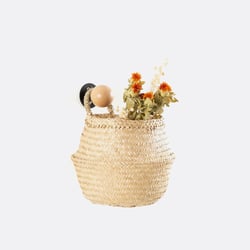
The structure also matters. Some straw baskets have flexible sides, while others hold a more defined shape. A flexible design can accommodate a folded throw; a firmer one may be easier to position neatly on a shelf. Check the individual product description rather than assuming that every woven basket will support the same contents. An open weave can allow airflow, but it will not keep dust away from items left untouched for weeks.
Straw and wicker are not interchangeable descriptions
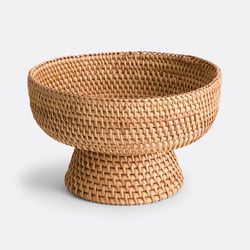
When comparing straw with wicker, look at the stated material as well as the appearance. Wicker commonly describes a weaving technique used with materials such as willow or rattan, rather than identifying one particular fibre. Straw is a material description. This distinction helps you compare flexibility, finish and care instructions instead of choosing on colour alone. If you want natural storage baskets for several rooms, check each design separately: similar shades do not necessarily mean similar strength or suitability.
Match capacity to the contents, not just the room
Before you shop, gather the items you intend to store and measure the space they occupy. Fold napkins as you normally would, stack your magazines or arrange your yarn in a loose group. Then compare that footprint with the basket's internal dimensions, where available. External measurements can include thick sides, a flared rim or projecting handles, leaving less usable space than you expect.
Leave enough room to remove one item without emptying the basket. This is particularly useful for yarn, rolled tea towels and children's soft toys. A tightly packed basket may look tidy at first, but it becomes awkward when you need the item at the bottom. A large design is helpful for bulky, lightweight belongings; it is not automatically the best choice for heavy books or jars.
- For folded picnic napkins, choose a base that accommodates the folded fabric without forcing the corners upwards.
- For knitting yarn, allow space for several balls to sit loosely, with your current project accessible on top.
- For hallway accessories, choose a size that separates gloves and scarves from shoes and outdoor equipment.
- For a shelf, measure the opening height and allow clearance above the rim so you can reach inside.
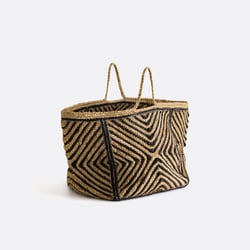
- For moving items between rooms, check the handles and any stated load guidance before filling the basket.
When comparing woven storage baskets, think about access as well as volume. A deep basket can accommodate a throw, but small sewing accessories may disappear at its base. Keep needles, stitch markers and scissors in a separate pouch so that sharp ends do not press against the weave.
Put open-top storage where you will use it
Keep knitting yarn beside your chair
A straw basket near your usual seat gives your current knitting project a stopping place between sessions. Keep yarn neatly contained inside, with the work resting above it rather than underneath magazines or remote controls. If the inside feels rough, add a smooth liner and check that the yarn feeds freely over the edge. Store needles in a case rather than pushing them through the weave.
Position the basket beside the chair rather than in the route through the room. You should be able to reach it without stretching across a drink or moving a side table. In a shared living room, one basket for the active project is often easier to manage than bringing out your entire yarn collection.
Store folded napkins beside the dining table
Keep folded picnic napkins inside a straw basket beside the dining table, ready for an outdoor lunch or an everyday meal. A low-sided design makes it easy to see the colours and take the number you need. Place it on a sideboard or a dry shelf, away from serving dishes that may drip. If you also keep napkin rings inside, gather them in a small pouch so they do not work their way beneath the fabric.
This arrangement also adds natural-texture decor without taking up the dining surface. You can carry the basket over when setting the table, then return it to its usual spot after the meal. Put only clean, fully dry napkins back inside; damp cloth left against straw can encourage marks and musty smells.
Carry garden tomatoes with a little preparation
A breathable straw basket can be useful for carrying fresh-picked tomatoes from the garden, provided the design is suitable for carrying produce and its handles are secure. Use a shallow layer so ripe fruit is not crushed under the weight above. A clean, dry, washable cloth can cushion the base and catch loose soil, although it should not be left damp inside afterwards.
Do not assume decorative straw is intended for direct food contact. Check the product information and use a suitable liner where needed. Lift the basket from beneath if there is any doubt about the handles, and transfer the tomatoes to appropriate kitchen storage once indoors. Remove the liner promptly and check for moisture or juice before putting the basket away.
Choose a position that works with your home
Open-top household storage is most useful for things you use regularly and want to keep in view. On an open shelf, align the basket with the shelf edge without allowing it to overhang. Under a console, leave enough space to pull it out without scraping the rim. Beside a bed, use it for a lightweight throw rather than an open water bottle or skincare products that could leak.
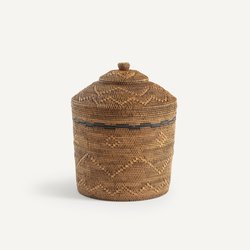
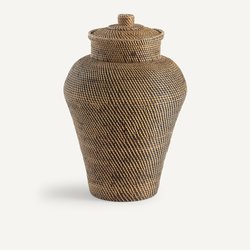
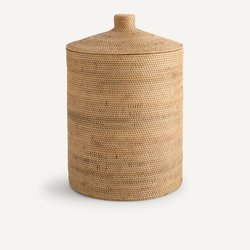
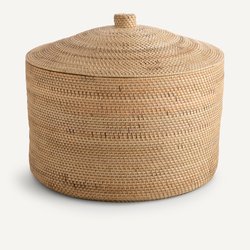
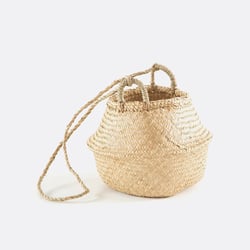
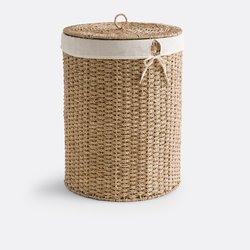
If floor space is limited, hanging storage baskets may suit light accessories, provided their fittings and intended load match the position. For items that need protection from dust, compare an open straw design with a basket with lid. A lid can help conceal spare cables or occasional-use accessories, while an open top makes daily sorting quicker.
Keep straw away from damp bathroom floors, radiator surfaces and areas beside a sink. In a kitchen, a dry dresser shelf is a more suitable position than the worktop next to the kettle. These small placement choices reduce exposure to steam, spills and direct heat.
Build a useful set rather than adding more containers
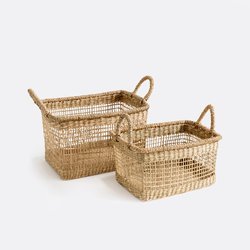
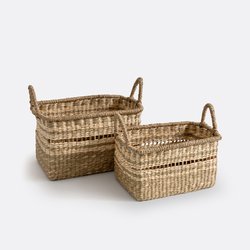
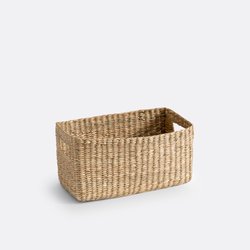
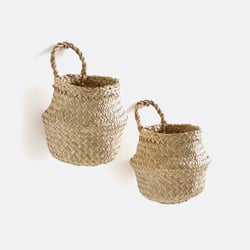
At La Redoute, our collection includes the Set of 2 Sola Woven Straw Baskets in natural by LA REDOUTE INTERIEURS, an option if you want to organise two groups of everyday belongings. You could assign one to folded napkins and the other to lightweight living-room accessories, checking the listed dimensions against each space before ordering.
When choosing a new basket, decide what it will replace or gather together. We suggest giving each one a defined role, such as picnic textiles, current knitting or spare scarves. Check what a brand lists for materials, dimensions and care, and compare what different designs offer for your chosen task. This keeps your home storage practical rather than leaving you with containers that are attractive but awkward to use.
A straw basket can also hold a gift of folded tea towels or serve as a presentation hamper for wrapped items, if its size and construction suit the contents. Keep heavy bottles supported separately, and avoid packing loose products that could stain the fibres.
Care for straw with a light, dry approach
Follow the product's care instructions before using water or cleaning products. For routine dust, empty the basket and use a soft brush to loosen debris around the weave and base. If permitted by the care guidance, a vacuum on low suction with a brush attachment can help, but avoid pulling at loose fibres.
Deal with spills promptly by lifting out the contents and blotting rather than rubbing. Where spot cleaning is allowed, use minimal moisture and let the basket dry fully in a ventilated place, away from strong direct heat. Do not soak it or return textiles while the fibres still feel damp.
Check the rim, base and handles occasionally, especially if you carry the basket between rooms. If a handle loosens or the base becomes damaged, stop using it to carry a load. With a suitable position, sensible contents and regular light cleaning, your straw basket can keep everyday belongings together without making them difficult to reach.