Choose a square garden table that leaves room for everyday life
Plan the seating first, then choose the tabletop. A square garden table gives each person a defined side, making it easier to arrange four chairs without filling a modest patio with a long stretch of furniture. That compact footprint can leave space for a route to the back door, a row of plant pots or somewhere to park a pushchair. The key is to measure the table together with the room needed to sit down, pull out a chair and walk past.
Picture your regular outdoor routine before settling on a size. Neighbours gathering for sunny breakfasts need room for mugs, plates and a shared bread basket. Children spreading crayons across the garden table need a surface that wipes clean before lunch. We recommend choosing around these everyday uses rather than the largest gathering you might host once a year.
Compare square table dimensions with your available space
Match the tabletop to the number of seats
A square shape keeps everyone within easy conversation distance, but not every square table offers the same dining space. A smaller model can suit two people eating outside, while a larger four-seater gives each diner more room for plates and glasses. Check the stated seating capacity alongside the dimensions: wide chairs and substantial armrests can reduce the number of seats that fit comfortably.
- A tabletop around 60-70cm square can work for two people enjoying coffee or a light breakfast, depending on the base and chair size.
- A tabletop around 80-90cm square is a useful starting point for four-person dining, although serving dishes may need a separate surface.
- A tabletop around 100cm square gives four diners more space for shared bowls, a water jug and larger place settings.
These are planning guides rather than fixed capacities. Check the clearance between the legs as well as the tabletop width. A generous surface can still feel cramped if angled legs stop chairs sliding underneath. A central pedestal may provide more freedom around the edges, but its foot can affect where you place your feet.
Allow space for chairs and passing traffic
Mark the proposed footprint on the patio with removable tape or pieces of cardboard. Add the chairs, then test the arrangement with someone seated. As a starting point, allow roughly 75cm from the table edge to a wall or other fixed obstacle for pulling out a chair; a route behind occupied seats will usually need more. Test this against your own chairs and the way you move through the space.
Keep the route to doors, steps and gates clear when chairs are occupied. A table that fits neatly when every chair is tucked away may block the kitchen door during dinner. On a narrow patio, moving the dining area towards one end can preserve a straightforward walking route along the other side.
Choose outdoor materials around the care you can manage
Wood for a garden dining setting
A wooden table works well beside timber fencing, brick walls and planted borders because you can repeat similar brown tones across the setting. Look beyond the colour to the specific wood, finish and care instructions. Some surfaces need periodic treatment, while others are intended to change in appearance with exposure. The product details should explain what to expect.
For regular meals, wipe away food spills promptly and avoid leaving wet placemats or plant saucers against the surface. Follow the care guidance for the exact material and finish. Applying an unsuitable oil or cleaner can alter the appearance, so do not assume that every wooden outdoor table needs the same treatment.
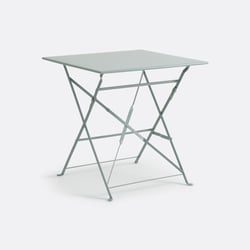
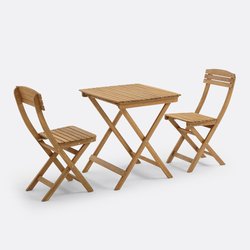
If you need to clear the patio after eating, an outdoor wood folding table is worth comparing with a fixed design. At La Redoute, our Salome Solid Wood Folding Garden Table from SO'HOME has a foldable design that helps you save space when the table is not in use. Check its listed dimensions and folded depth against your storage area before deciding where it will live between meals.
Metal for straightforward cleaning
Metal tables are worth considering when you want a surface that can be wiped after breakfast or an afternoon drawing session. Aluminium models are often lighter to move than comparable steel designs, although construction and overall dimensions affect the final weight. Steel can provide a heavier feel, which may suit a table that stays in one position.
With coated metal furniture, inspect the finish periodically, especially around edges and joints. Follow the manufacturer's advice if the coating becomes damaged. Protective feet can also help prevent scraping on a paved patio, provided they are suitable for the table and checked for wear.
Other tabletop finishes and their practical differences
Glass, ceramic and synthetic surfaces each need a closer look at the product specification. Glass makes crumbs easy to spot, but fingerprints may show after children have been drawing outdoors. Ceramic can provide a firm dining surface, though you should check guidance on impacts and hot dishes. Synthetic materials vary in their resistance to heat, staining and outdoor exposure, so compare the stated care instructions rather than judging by appearance alone.
A grey table can sit alongside charcoal planters and pale paving without introducing another strong colour. White provides a clear contrast beside green planting, but splashes and soil marks may be more noticeable. Choose a finish you are happy to wipe after the uses you have planned, particularly if the table will double as a place for repotting small herbs.
Plan the placement around meals, shade and movement
Position your table on a stable surface
A square table is simple to align with paving joints, a straight garden wall or the edge of a deck. Start with a level area and check that every foot rests securely. Uneven slabs can make a table rock when someone cuts food or leans on one corner. Adjustable feet, where included, may help with minor differences, but they are not a substitute for a suitable base.
Test stability before setting out plates, glasses or hot drinks. Grass can be uneven or soften after rain, allowing narrow legs to sink. If you plan to move the table between lawn and patio, check that the design is suitable for both locations and reassess its stability each time.
Think about the view from each seat as well as from the house. Turning the arrangement slightly may let you face the planting rather than a storage box, provided the chairs still have enough clearance. Keep climbing plants and overhanging branches far enough away that they do not brush diners or drop debris directly onto meals.
Make a separate plan for an umbrella
If you want shade during lunch, check whether the tabletop has an umbrella hole and confirm its diameter. A compatible pole still needs a suitable base, with enough room beneath the table for both the base and diners' feet. Check the umbrella supplier's guidance on support, positioning and wind conditions.
A freestanding umbrella can shade a table without a central hole, but its base needs its own floor space. Mark that footprint when planning the layout. Do not rely on the tabletop alone to support an umbrella. Close and secure it as directed when conditions change or the garden is unattended.
Make one square table work for more than dining
From sunny breakfasts to outdoor drawing
For breakfast with neighbours, put a mug and plate at each setting before adding shared food. This quick trial shows whether the centre has enough room for a bread basket and teapot. If the tabletop is compact, carry extra food out on a tray and set it on a separate, stable surface rather than squeezing everything between diners.
Later, children can spread crayons and paper across the same garden table. Use a washable protective mat that is suitable for the surface, and keep colouring materials in a box that can be lifted away before dinner. Check beneath the mat afterwards so that trapped moisture or stray marks do not remain against the tabletop.
Potted herbs can occupy one corner beside the patio between meals. Stand them on suitable saucers, check for leaks and move them before watering if necessary. On a small square surface, a single tray of herbs is easier to remove than several separate pots when you need four place settings.
Distinguish dining height from coffee-table height
A garden coffee table suits low lounge chairs and a sofa, with drinks and small plates within reach. It is not a direct replacement for a dining-height model. Check the seat height, arm height and table height together so you are not reaching upwards for a cup or leaning down throughout a meal. If eating outdoors is your main priority, start with dining furniture and add a lower table only if the space allows.
Compare price, storage and the details behind each design
When reviewing La Redoute Interieurs garden tables, compare dimensions, materials and care requirements alongside the price. Check whether the listing is for the table alone or a set, and include any chairs, cover or umbrella base in your budget. A lower initial price may not represent the same overall cost once those separate items are added.
When browsing SO'HOME garden tables, use your storage measurements to narrow down folding options. Check how the mechanism operates, whether the legs lock into position and whether you can carry the folded table through the relevant doorway. Measure the storage opening, not just the empty space inside. A shed may have enough floor area but a doorway too narrow for the folded frame.
If you are considering AM.PM garden tables, compare the base shape and overall proportions with the chairs you intend to use. Product photographs help you judge appearance, while dimension drawings and specifications help you establish whether chair arms fit underneath. For a new table joining existing furniture, measure those chairs before ordering.
A sale can help you save on a model that already suits your layout, but keep the same checklist you would use at the regular price. Confirm seating capacity, delivery arrangements, assembly requirements and care instructions. A discount does not solve a blocked doorway or create storage space for a table that is too large.
Set up your square garden table for regular use
Once your table is in place, check the fixings and any folding locks according to the assembly instructions. Keep the recommended cleaning supplies within easy reach so that crumbs, spilled coffee and drawing marks can be dealt with promptly. If you use a cover, follow the guidance on fit and ventilation, and let the furniture dry before covering it where instructed.
Choose the smallest footprint that comfortably supports your usual meals. That leaves room for chairs to move, people to pass and garden life to carry on around the table. With dimensions, materials and placement checked together, your square garden table can serve breakfast, an afternoon activity and dinner without requiring a fresh patio layout each time.