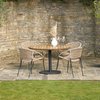
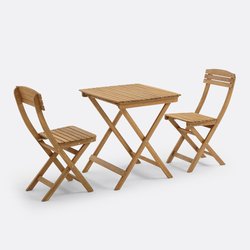
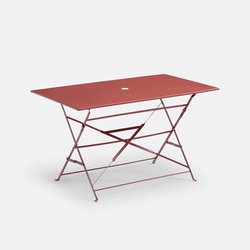
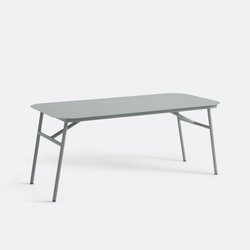
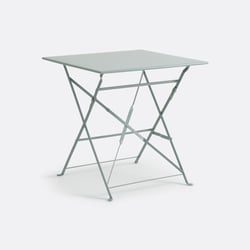
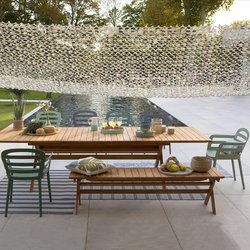
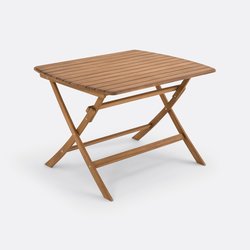
Unfold extra table space outdoors
A folding garden table gives you somewhere to serve lunch, arrange seed trays or share a pot of tea without leaving a large piece of furniture outside all week. Open it when you need a usable surface, then fold it away to leave room for moving chairs, watering containers or stretching out a sunlounger. For a compact patio or a garden that serves several purposes, fold-away convenience starts with easy handling and sensible storage, rather than simply choosing the smallest tabletop.
At La Redoute, we suggest starting with the activities you want to make room for: breakfast for two, occasional family dining or an afternoon of planting. From there, you can match the table’s dimensions, folding mechanism and material to your available space. A little measuring before you choose helps avoid a table that fits neatly when open but has nowhere convenient to go afterwards.
Make fold-away convenience work every day
Check the folded size as carefully as the open dimensions
The open measurements tell you whether a table will fit on your terrace; the folded measurements tell you whether you can put it away. Check its folded length, width and depth against the actual storage spot, including any shelf, door frame or pipe that narrows access. A table that folds into a broad, flat panel may slide beside a garage cabinet, while one with legs tucked underneath may need more depth in a shed.
Measure the route between the garden and the storage area, not just the space at either end. A narrow side passage or a tight turn beside the back door can make a wide folded tabletop awkward to carry. If you will move it alone, look at the listed weight and any carrying handle. Portable should mean manageable for your routine, whether that involves a few steps across the patio or carrying it down from a balcony.
Choose a mechanism you can use comfortably
Folding systems vary. Some tables have legs that collapse beneath a fixed top, while others have a hinged top or folding sides. Read the operating instructions to understand where to hold the table and how the supports lock into place. A mechanism that needs the table to be turned upside down may be less convenient if you regularly set it up on damp paving.
- Check that the legs or braces lock securely before placing dishes on the surface.
- Look for a closed position that stays secure while the table is being carried.
- Keep fingers clear of hinges and closing joints during setup and storage.
- Confirm whether the table needs assembly before its first use.
- Allow room around it to fold the legs without hitting pots or nearby furniture.
If the table will be opened and closed several times a week, these details deserve more attention than a decorative edge. A straightforward locking action makes it easier to clear the patio after dinner rather than leaving the table out because putting it away feels like a chore.
Match the tabletop to your outdoor dining space
Leave room for chairs and everyday movement
Measure the area with the chairs pulled out, not tucked underneath. You need space to sit down, stand up and walk past without brushing against a hot barbecue or stepping into a planted border. Mark the proposed tabletop on the ground with removable tape, then position your existing chairs around it. This gives you a practical sense of how much room remains for opening a door or carrying a tray.
A round table can make movement easier where sharp corners would interrupt a narrow route. A rectangular design may sit more neatly along a wall when only one or two people are eating. However, legs and support bars also affect seating: check that each person has somewhere comfortable to place their knees and feet. Usable seating space matters more than the stated number of places when your chairs have wide arms.
Get the height right for the activity
For dining, compare the table height with the seat height and arm height of your chairs. You should be able to sit close enough to reach your plate without leaning forward throughout the meal. If you are comparing dimensions across international listings, check whether measurements are given in centimetres or inches before judging the fit.
An adjustable table can suit different activities, provided its intended uses and locking positions are clearly stated. A lower setting may work beside relaxed seating, while a higher setting may be more comfortable for light planting tasks. If you only need a surface for drinks next to a sofa, a garden coffee table could suit that arrangement better than a dining-height model.
Choose materials for the conditions in your garden
Wood and teak for a warm-looking dining area
An outdoor wood folding table can sit comfortably beside timber chairs, planted containers and a paved terrace. Before choosing, check the type of wood, the finish and the care instructions. Teak and other woods do not all need the same treatment, so avoid assuming that one oil or cleaner suits every surface. Follow the product guidance for cleaning, drying and seasonal storage.
A brown finish may work well with existing wooden seating, but colour alone will not tell you how the table handles exposure. Check whether covered storage is recommended and whether the surface needs periodic treatment. Slatted tops also need a little practical thought: narrow glass bases or small seed pots may sit less securely across wide gaps, so a suitable tray can help when serving drinks or organising planting supplies.
Steel, plastic and painted finishes
A steel frame can provide firm support, although its protective finish needs care. Check joints and edges for damage, and follow the care instructions if scratches appear. On a tiled balcony, suitable feet can help prevent scraping; on uneven paving, check for wobble before laying out plates. Do not use improvised supports that could slip when someone leans on the table.
Plastic tabletops are often straightforward to wipe after a picnic or a messy afternoon with compost, but check the stated load limit and heat guidance. Hot pans and disposable barbecues should not be placed directly on a surface unless it is specifically designed for them. A white finish can make crumbs, soil and drink marks easy to spot, which is useful when cleaning, though you may prefer a darker colour if planting is a frequent activity.
Put one folding table to several practical uses
Weekend brunch beneath the pergola
Unfold the garden table for weekend brunch beneath the pergola, placing it where everyone can pull out their chair without catching a climbing plant or post. Set out plates first to check the available serving space. On a smaller tabletop, keeping the coffee pot and extra dishes on a separate tray indoors leaves more room for breakfast.
If your pergola has a narrow paved base, position every table foot on the same stable surface. Avoid leaving one leg on soil and another on paving, as the softer ground may settle during the meal. Check stability before adding food, drinks or tableware, especially after rain has softened the ground.
Planting beside the flowerbeds
Set up the folding table beside flowerbeds for seedling repotting, with compost, pots and labels within reach. Use trays to contain loose soil and protect the tabletop according to its care instructions. Keep heavier bags of compost on the ground rather than stacking them at one end, where an uneven load could affect balance.
Fold it flat after potting herbs to reclaim patio space for chairs or a drying rack. Brush off soil, clean the surface as directed and let it dry before storage. This routine keeps loose compost out of the hinges and avoids trapping moisture between folded sections.
Occasional trips beyond the patio
If you want to take the table camping, check its packed dimensions against your car boot and consider whether you can carry it alongside the rest of your equipment. A foldable garden dining table is not automatically intended for travel or rough ground. Look for clear guidance on outdoor use, weight limits and suitable surfaces, and never use the tabletop as a seat or step.
Compare styles without losing sight of the practical details
When browsing garden tables from La Redoute Interieurs, compare the open dimensions, folded dimensions and care requirements alongside the appearance. A slim tabletop may look well suited to a small terrace, but the folded legs and locking braces still determine how much storage room it needs.
Apply the same checks when looking through garden tables from So'Home. Picture your usual setup with real objects: two dinner plates, glasses, a water jug and any serving dishes you regularly use. This helps you distinguish between a table suited to a quick breakfast and one with enough surface for a shared evening meal.
As you explore garden tables from AM.PM, keep your existing chairs and garden layout in mind. A new table should work with their dimensions as well as their colour. Before making your final choice, return to three measurements: the room available when open, the space needed when folded and the clearance required to carry it between the two. With those checked, your garden can accommodate dining when you want it and remain clear for everything else afterwards.